
Understanding this injury
Patellofemoral Pain Syndrome (PFPS), often called 'runner's knee,' is a common condition where you feel pain at the front of your knee and around your kneecap (patella). This happens when the kneecap does not track smoothly in the groove of your thigh bone as you bend and straighten your leg. Instead of gliding perfectly, it may rub against the bone, causing irritation and inflammation.
You might notice this dull, aching pain most when you are active or when you sit for a long time with your knees bent, such as in a movie theater or on a flight. While it can feel frustrating and limiting, the good news is that PFPS is highly treatable without surgery. Understanding the mechanics of how your hip, knee, and foot work together is the first step toward getting back to the activities you love without discomfort.
Common symptoms
- Dull aching pain around the kneecap
- Pain worsened by stairs, squatting, or prolonged sitting
- Grinding or clicking in the knee
- Knee stiffness after inactivity
What causes it
- Overuse from repetitive activities like running, jumping, or climbing stairs
- Improper tracking of the kneecap within the femoral groove
- Muscle imbalances, particularly weakness in the hips and quadriceps
- Sudden changes in physical activity intensity or duration
- Worn-out footwear or improper athletic shoes for your foot type
- Flat feet or high arches that change how the knee absorbs shock
Who's most at risk
- Athletes involved in running, soccer, or cycling
- Teenagers and young adults, particularly female athletes
- Individuals with 'knock-knees' or specific lower body alignment issues
- People who have recently increased their workout frequency
- Workers who spend a lot of time squatting or kneeling
- Those with a history of previous knee injuries or dislocations
How we treat it
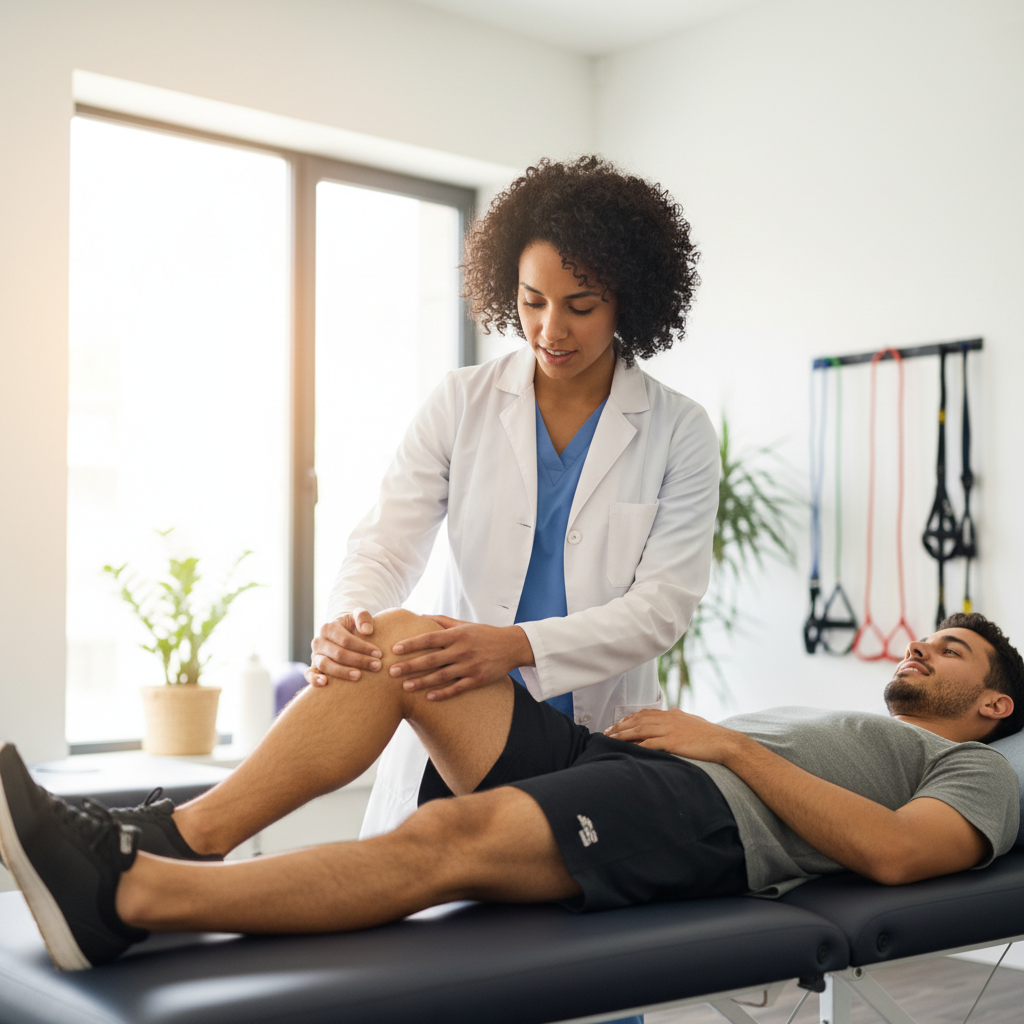
At Physical Therapy Now, we take a comprehensive approach to healing your knee. You will work one-on-one with a licensed physical therapist who will first assess your movement patterns. Treatment often begins with manual therapy, where your therapist uses hands-on techniques to improve joint mobility and release tight muscles around the knee and hip. We may also use modalities like electrical stimulation or ultrasound to help manage your initial pain and swelling.
As you progress, we focus on specific strengthening exercises. This isn't just about the knee; we often find that strengthening the glutes and hip stabilizers is the key to keeping the kneecap in its proper track. We will also work on 'quad' activation to ensure the muscles supporting the knee are firing correctly. You will learn stretching routines for your hamstrings and calves to take the pressure off the joint.
The final stage of your treatment involves functional training. This means practicing the specific ways you move during your daily life or sport—like squatting, lunging, or running—with perfect form to prevent the pain from coming back. Our goal is to empower you with a 'toolkit' of movements that keep you pain-free. If your knee pain persists, isn't improving in 2-3 weeks, or is getting worse, please call us or schedule an appointment today at Physical Therapy Now.
Recovery timeline
Recovery from Patellofemoral Pain Syndrome typically takes between 6 to 12 weeks of consistent physical therapy. The first 2-3 weeks focus on reducing inflammation and correcting basic movement errors. By weeks 4-8, most patients see a significant increase in strength and a decrease in daily pain. The final weeks are dedicated to returning to full sports or high-impact activities. Your specific timeline depends on the severity of the irritation and how closely you follow your home exercise plan.
What you can do at home today
- Rest from activities that cause sharp pain, like running or heavy squatting
- Apply ice to the front of the knee for 15 minutes after activity
- Perform gentle calf and hamstring stretches daily
- Check your sneakers and replace them if the soles are worn down
- Avoid sitting with your knees tucked under you for long periods
- Use a foam roller on your outer thigh (IT band) and quads
- Try low-impact movements like swimming or cycling if they are pain-free
- Elevate your leg when resting to help manage any minor swelling
These tips support recovery but don't replace a professional evaluation. If you're unsure or symptoms worsen, please reach out.
When to call us right away
While most knee pain can be managed with therapy, you should seek help immediately if you experience a total inability to bear weight, a visible deformity of the joint, or sudden, severe swelling. If you feel your knee 'locking' or 'giving out' completely, contact us right away for a professional evaluation to rule out more serious structural damage.