
Understanding this injury
The Medial Collateral Ligament, or MCL, is a strong band of tissue located on the inner side of your knee. Its main job is to keep your knee stable and prevent it from buckling inward. When this ligament is stretched too far or torn, it results in an MCL sprain. Patients often describe feeling a 'pop' followed by pain and tenderness along the inner edge of the knee joint.
Because the MCL has a good blood supply, many of these injuries can heal successfully without surgery through focused rehabilitation. You might notice swelling, a feeling of instability as if your knee might 'give out,' or stiffness that makes it hard to straighten your leg fully. Understanding the severity of your sprain is the first step toward getting back to your favorite activities.
Common symptoms
- Pain on the inner side of the knee
- Swelling along the inner knee
- Feeling of instability
- Pain with bending or straightening the knee
What causes it
- A direct blow to the outside of the knee while the foot is planted
- Sudden twisting or changing direction quickly during sports
- Falling in a way that forces the knee inward
- Heavy impact during a car accident or stumble
- Repetitive stress from activities that involve frequent pivoting
- Hyperextension of the knee joint during exercise
Who's most at risk
- Athletes in contact sports like football, soccer, or rugby
- Skiers whose tips catch or move apart suddenly
- Individuals with weak hip and gluteal muscles
- People returning to high-intensity exercise after a long break
- Previous history of knee ligament injuries
- Improper footwear for the specific training surface
How we treat it
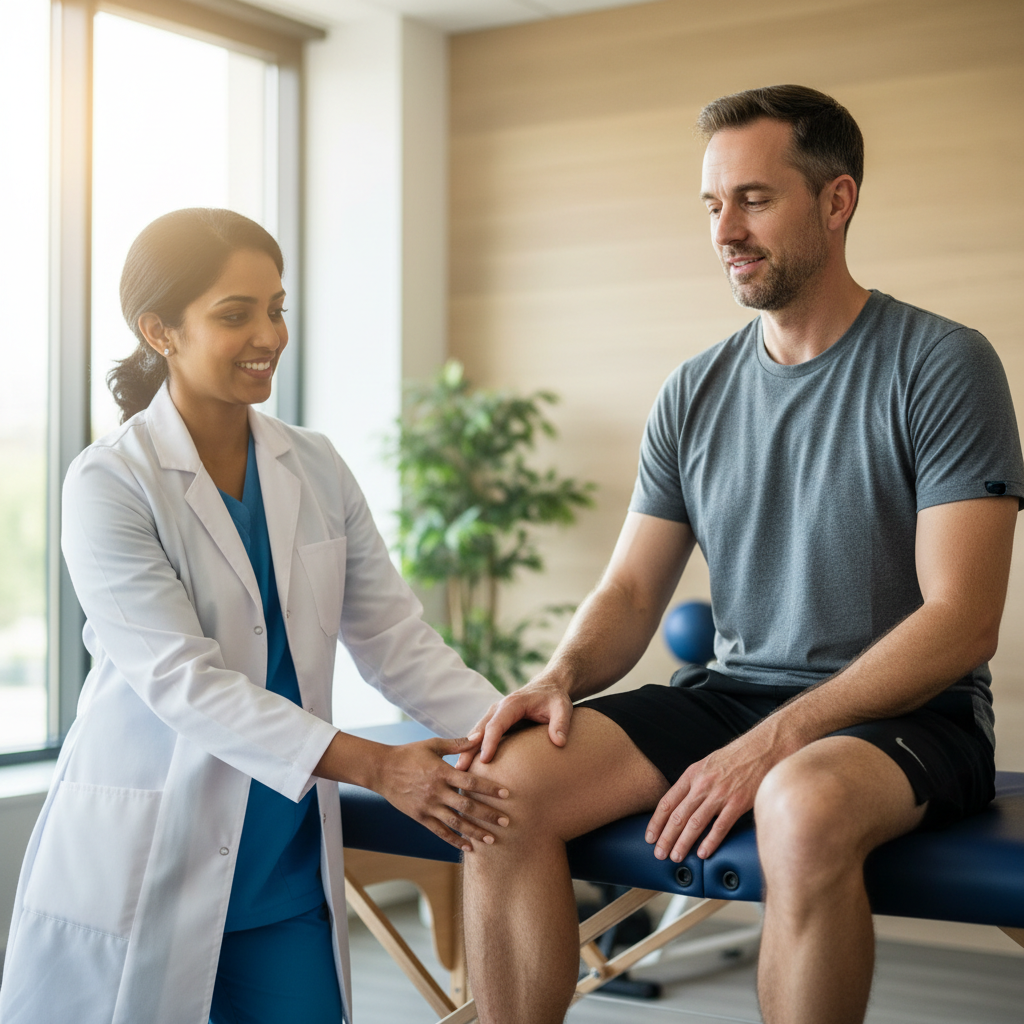
At Physical Therapy Now, we take a hands-on, personalized approach to healing your MCL. You will work 1-on-1 with a licensed physical therapist who will first focus on reducing pain and inflammation. In the early stages, we use modalities like ultrasound, electrical stimulation, or cold compression to calm the joint. Manual therapy is a key component; your therapist may use gentle joint mobilizations and soft tissue massage to improve circulation and break up scar tissue around the inner knee.
As you progress, we transition into therapeutic exercises designed to restore your range of motion. We focus heavily on strengthening the muscles that support the knee, particularly the quadriceps, hamstrings, and hip abductors. Strengthening the hips is vital because it prevents the knee from collapsing inward, protecting the MCL from future stress. We also incorporate balance and proprioception training—like standing on foam pads—to help your brain and body communicate better after the injury.
In the final phase of your recovery, we introduce 'return-to-sport' or 'return-to-work' movements. This includes controlled pivoting, jumping, and agility drills tailored to your specific goals. Our team ensures your knee is stable and strong before you head back to full activity to prevent re-injury. If your pain persists, isn't improving in 2-3 weeks, or is getting worse, call us today or schedule an appointment at one of our locations.
Recovery timeline
MCL recovery varies based on the grade of the sprain. A mild (Grade 1) sprain often feels better within 1 to 3 weeks of physical therapy. A moderate (Grade 2) tear may take 4 to 8 weeks to fully stabilize. Severe (Grade 3) tears require a more intensive program and can take 3 to 6 months to return to high-impact sports. Consistency with your PT sessions is the fastest way to shorten these timeframes.
What you can do at home today
- Follow the R.I.C.E protocol: Rest, Ice, Compression, and Elevation
- Apply ice for 15-20 minutes several times a day to manage swelling
- Wear a supportive knee sleeve or brace as recommended by your PT
- Avoid activities that involve twisting or pivoting for the first few weeks
- Perform gentle ankle pumps to maintain circulation while resting
- Sleep with a pillow between your knees if you are a side sleeper
- Avoid sitting in low chairs that force the knee into deep flexion
- Stay hydrated to support soft tissue healing and flexibility
These tips support recovery but don't replace a professional evaluation. If you're unsure or symptoms worsen, please reach out.
When to call us right away
You should seek care immediately if you cannot put any weight on your leg, if your knee feels completely 'loose' or unstable, or if you notice significant bruising and rapid swelling. If your knee is locked in one position or you experience numbness in your foot, please contact us or a medical professional right away.