
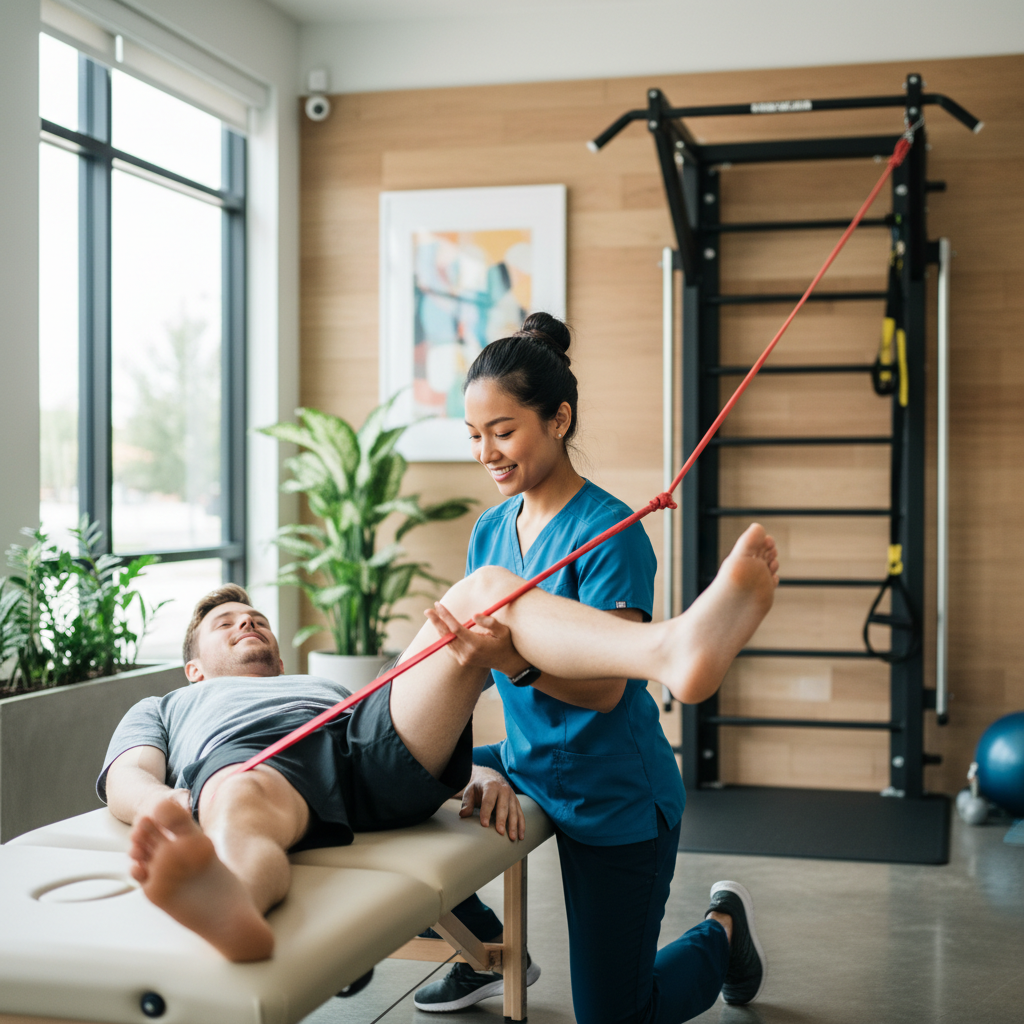
Understanding this injury
The Anterior Cruciate Ligament (ACL) is one of the four main ligaments that hold your knee joint together. Think of it as a strong rope that prevents the shin bone from sliding out in front of the thigh bone. When this ligament tears, it is often felt or heard as a loud 'pop' followed by swelling and a feeling that your knee will no care for your weight. It is one of the most common knee injuries, especially among those who lead an active lifestyle.
Living with an ACL tear can feel frustrating because it affects your stability. You may feel like your knee is 'giving out' during simple daily movements like walking or turning a corner. Whether the tear is partial or complete, it changes how your leg moves. At Physical Therapy Now, we focus on restoring that lost stability and helping you regain confidence in your knee's strength so you can return to the activities you love.
Common symptoms
- Popping sensation at the time of injury
- Rapid swelling within hours
- Knee instability or giving way
- Loss of range of motion
What causes it
- Sudden changes in direction or pivoting (cutting) while running
- Landing awkwardly from a jump and having the knee buckle inward
- A direct blow or collision to the side of the knee during sports
- Stopping suddenly while running at high speeds
- Overextending the knee joint beyond its normal range of motion
- Workplace accidents involving falls from ladders or onto hard surfaces
Who's most at risk
- Athletes playing high-impact sports like soccer, basketball, or football
- Female athletes, due to differences in anatomy and muscle balance
- Individuals with poor conditioning or weak hip and core muscles
- Using improperly fitted or worn-out athletic footwear
- Playing on artificial turf surfaces which can provide too much grip
- A previous history of knee sprains or minor ligament injuries
How we treat it
Physical therapy is a vital first step in managing an ACL tear, whether you are preparing for surgery or pursuing a non-surgical recovery path. When you visit Physical Therapy Now, you will work 1-on-1 with a licensed physical therapist who will create a personalized plan to stabilize your joint. In the early stages, we focus on reducing swelling and restoring your range of motion. We use manual therapy techniques, such as gentle joint mobilizations and soft tissue massage, to help your knee move smoothly without pain. Modalities like electrical stimulation or cold compression may also be used to manage inflammation.
As you progress, your therapist will guide you through specific strengthening exercises. We focus heavily on the quadriceps, hamstrings, and glutes, because these muscles act as 'secondary stabilizers' for the knee, taking the pressure off the damaged ACL. We also incorporate proprioception training—exercises that challenge your balance and teach your brain to better control your knee's position. This one-on-one attention ensures you are using the correct form to prevent further injury.
In the final phases of your treatment, we transition to functional movements tailored to your lifestyle. This includes controlled agility drills, jumping mechanics, and sport-specific movements to ensure your knee can handle the demands of your daily life or athletic goals. Our goal is to make your leg stronger than it was before the injury. If your pain persists, isn't improving in 2-3 weeks, or is getting worse, call us today or schedule an appointment online to get started on your recovery.
Recovery timeline
Recovery from an ACL tear is a gradual process that usually takes several months. The initial phase focuses on reducing swelling and lasts 2–4 weeks. The middle phase, focused on building strength and balance, typically lasts 2–3 months. Full return to high-impact sports or heavy labor usually takes 6–9 months, depending on the severity of the tear and your individual goals. Consistency with your physical therapy sessions is the most important factor in meeting these milestones safely.
What you can do at home today
- Follow the RICE method: Rest, Ice, Compression, and Elevation for the first 72 hours
- Apply an ice pack for 15–20 minutes several times a day to control swelling
- Wear a supportive knee sleeve or brace as recommended by your therapist
- Avoid pivoting or twisting on the injured leg when standing up or walking
- Perform gentle 'quad sets' by squeezing your thigh muscle while sitting with a straight leg
- Keep your leg elevated above your heart level while resting or sleeping
- Wear supportive, flat-soled shoes to maintain better balance and alignment
- Stay consistent with the home exercise program provided by your physical therapist
These tips support recovery but don't replace a professional evaluation. If you're unsure or symptoms worsen, please reach out.
When to call us right away
You should call us or seek immediate medical attention if you experience a total inability to bear weight on the leg, severe and rapid swelling, or if your knee feels completely 'loose' or locked in place. Seek help immediately if you notice coldness in the foot, blue-tinted toes, or a loss of feeling in your lower leg.