
Understanding this injury
A meniscus tear is a common injury to the rubbery, C-shaped discs that act as shock absorbers between your thighbone and shinbone. Each of your knees has two menisci that provide stability and help distribute your body weight evenly across the joint. When one of these pieces of cartilage tears, it can cause pain, swelling, and a feeling that your knee is catching or giving out when you try to move.
While some tears happen suddenly during sports, others develop slowly over time as the cartilage wears down. Because the inner part of the meniscus has a poor blood supply, these injuries often struggle to heal on their own. Physical therapy is a primary, non-surgical way to restore function by strengthening the surrounding muscles and improving how the joint moves, allowing many patients to return to their favorite activities without pain.
Common symptoms
- Popping sensation during injury
- Swelling and stiffness
- Catching or locking of the knee
- Difficulty fully straightening the knee
What causes it
- Sudden twisting or pivoting movements during sports like soccer or basketball
- Deep squatting or heavy lifting that puts excessive pressure on the knee joint
- Degenerative changes where the cartilage becomes brittle and thin with age
- Direct impact to the knee during a fall or vehicular accident
- Repetitive kneeling or crawling required for certain occupations
- A forceful 'tweak' of the knee while the foot is firmly planted on the ground
Who's most at risk
- Athletes participating in contact sports or activities requiring quick directional changes
- Individuals over the age of 40 due to natural wear and tear of the cartilage
- Being overweight, which places extra stress on the knee joints
- Previous knee injuries that may have localized joint instability
- Jobs that involve heavy manual labor, frequent stairs, or prolonged kneeling
- Muscle weakness in the quadriceps and hamstrings that leaves the joint unsupported
How we treat it
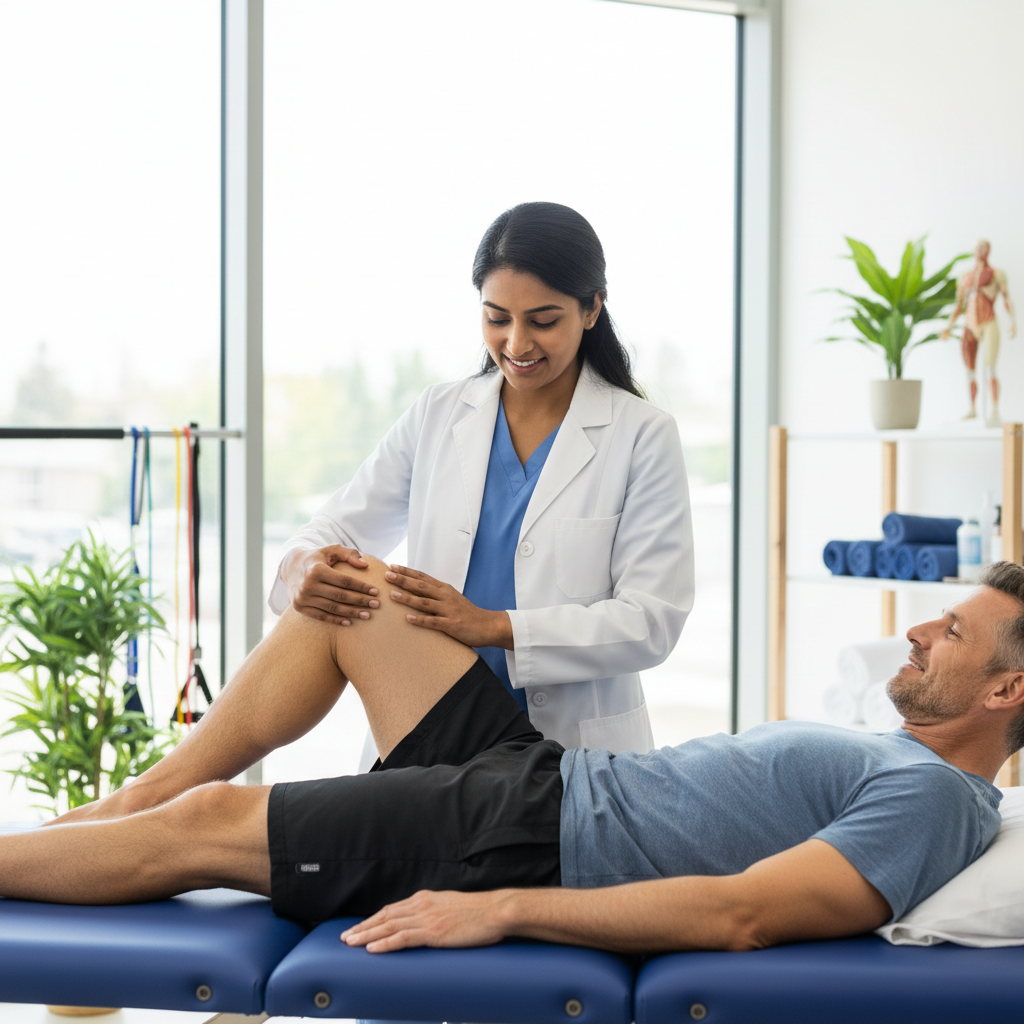
At Physical Therapy Now, we treat meniscus tears through a personalized, conservative approach focused on restoring mobility and joint stability. You will work 1-on-1 with a licensed physical therapist who will first focus on reducing inflammation and pain. We use specialized manual therapy techniques, including joint mobilizations and soft tissue massage, to improve your range of motion and decrease stiffness. We may also use modalities like electrical stimulation or cold compression to manage swelling during the initial phase of your recovery.
As your pain decreases, your therapist will guide you through a progression of targeted exercises. We focus heavily on strengthening the 'supporting cast' of the knee, specifically the quadriceps, hamstrings, and gluteal muscles. By building a stronger foundation around the joint, we take the pressure off the torn cartilage. We also incorporate balance training and proprioception exercises to ensure your knee feels stable when you walk or turn. This helps prevent future 'shifts' or 'catches' in the joint.
The final phase of your treatment involves functional movement training tailored to your lifestyle, whether that means returning to the gym or simply walking up the stairs pain-free. Our goal is to help you avoid surgery by making your knee as resilient as possible. If your knee pain is persistent, isn't improving after 2-3 weeks of rest, or is getting worse, call us or schedule an appointment today for a professional evaluation.
Recovery timeline
Recovery from a meniscus tear varies based on the size and location of the tear. With consistent physical therapy, most patients begin to see significant improvement in pain and mobility within 4 to 6 weeks. A full return to high-impact sports or heavy labor typically takes 3 to 4 months of progressive strengthening. If the tear is degenerative, the focus is on long-term management and maintaining muscle strength to keep the joint stable for years to come.
What you can do at home today
- Follow the R.I.C.E. method: Rest, Ice, Compression, and Elevation.
- Apply an ice pack for 15-20 minutes several times a day to control swelling.
- Avoid activities that require deep squatting or sharp pivoting until cleared.
- Wear supportive, flat shoes to ensure even weight distribution while walking.
- Perform gentle 'quad sets' by tightening your thigh muscle while sitting with a straight leg.
- Use a compression sleeve if it provides a sense of stability and reduces minor swelling.
- Avoid sitting in low chairs or couches that make it difficult to stand up.
- Maintain a healthy weight to reduce the daily load on your knee joints.
These tips support recovery but don't replace a professional evaluation. If you're unsure or symptoms worsen, please reach out.
When to call us right away
You should seek care immediately if your knee 'locks' in place and you cannot straighten it, or if the joint feels completely unstable as if it will buckle under your weight. Significant, rapid swelling or an inability to bear any weight on the leg are also red flags that require an urgent evaluation by a healthcare professional.