
Understanding this injury
Patellar tendinitis, often called Jumper’s Knee, is a common injury where the tendon connecting your kneecap (patella) to your shinbone becomes irritated and inflamed. This thick band of tissue is responsible for helping your muscles extend your knee so you can kick, run, and jump. When the tendon is overworked, tiny tears develop that the body struggles to repair quickly, leading to pain just below the kneecap.
At first, you might only feel a dull ache after a workout or a long day on your feet. However, if left untreated, the pain can become sharper and more frequent, making it difficult to climb stairs or even sit comfortably for long periods. It is important to address this early to prevent the tendon from weakening further or developing chronic structural changes.
Common symptoms
- Pain just below the kneecap
- Stiffness after prolonged sitting
- Pain worsened by jumping or squatting
- Tenderness at the patellar tendon
What causes it
- Repetitive jumping or landing on hard surfaces
- Sudden increases in exercise intensity or duration
- Tight quadriceps or hamstring muscles pulling on the tendon
- Improper landing mechanics during sports activities
- Walking or running in worn-out or unsupportive footwear
- Muscle imbalances where the hips or calves are too weak
Who's most at risk
- Athletes participating in basketball, volleyball, or track and field
- Individuals with a high Body Mass Index (BMI) which increases joint load
- People with uneven leg lengths or foot arch issues
- Individuals with tight leg muscles that lack flexibility
- Middle-aged adults participating in recreational 'weekend warrior' sports
- History of previous knee injuries that weren't fully rehabilitated
How we treat it
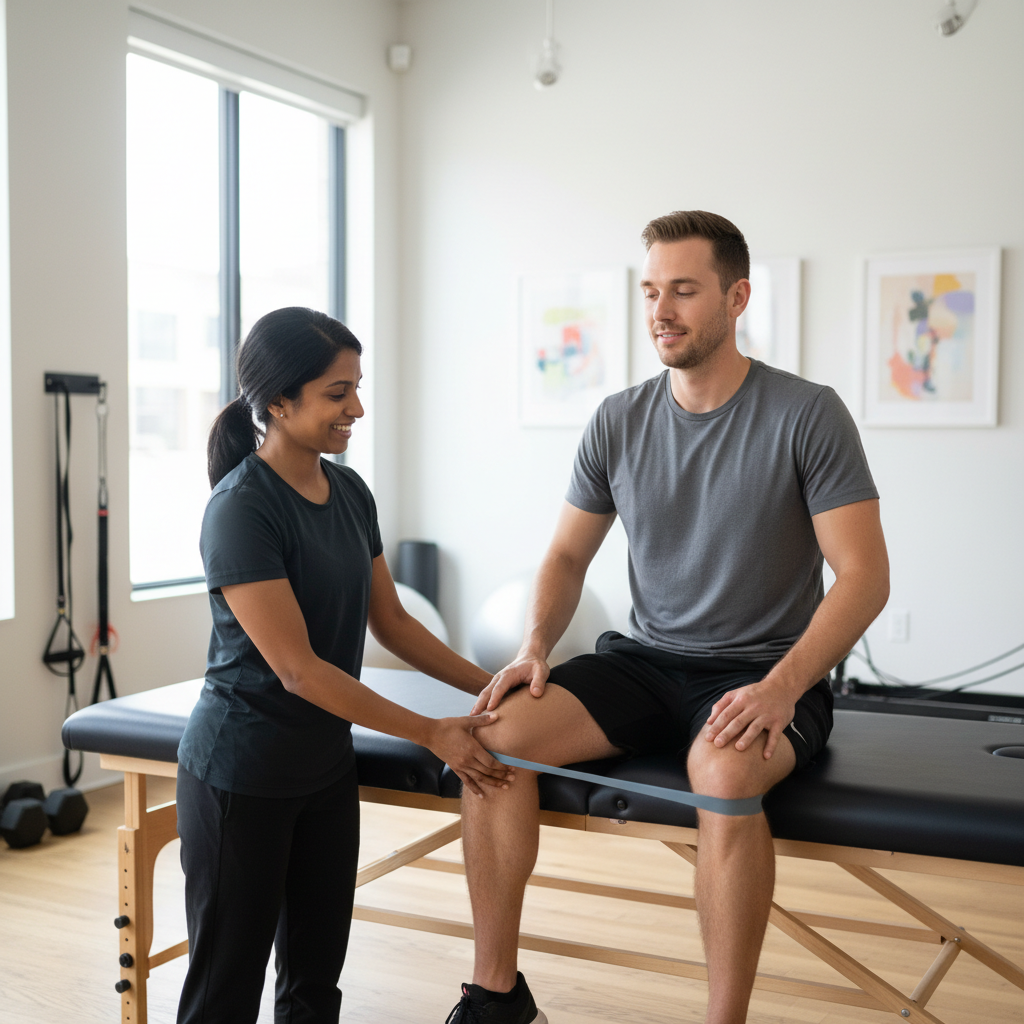
Physical therapy is the gold standard for treating patellar tendinitis without surgery. When you visit Physical Therapy Now, you will work 1-on-1 with a licensed physical therapist who will create a customized plan to reduce your pain and rebuild your strength. Initial treatment often focuses on 'calming down' the angry tendon. We may use modalities like therapeutic ultrasound, electrical stimulation, or cold compression to reduce acute inflammation and provide immediate relief.
As you progress, manual therapy becomes a key component. Your therapist may use instrument-assisted soft tissue mobilization (IASTM) or specific massage techniques to break up scar tissue and improve blood flow to the tendon. We also focus heavily on eccentric loading exercises—this means strengthening the muscle while it is lengthening—which has been scientifically proven to help the patellar tendon heal and thicken for better durability.
In the final phases of your recovery, we move toward functional training. This includes correcting your jumping and landing form, improving your balance, and strengthening your core and hips to take the 'load' off your knees. We don't just treat the symptom; we fix the movement patterns that caused the injury in the first place. Please call us or schedule an appointment online if your knee pain persists, isn't improving after 2-3 weeks of rest, or is getting worse during daily activities.
Recovery timeline
Recovery from patellar tendinitis typically happens in phases over 6 to 12 weeks. The first 2 weeks focus on pain management and avoiding aggravating activities. Between weeks 3 and 8, we focus on progressive strengthening and flexibility. Most patients return to light sports by week 10, with full competition usually occurring by week 12. However, long-standing cases may take several months of consistent physical therapy to fully remodel the tendon tissue and prevent future flare-ups.
What you can do at home today
- Apply ice to the area below your kneecap for 15 minutes after activity
- Perform gentle calf and hamstring stretches daily to reduce pull on the knee
- Avoid deep squatting or jumping movements until the sharp pain subsides
- Wear shoes with good arch support and replace old running shoes
- Use a patellar tendon strap (cho-pat strap) during necessary walking
- Identify and limit activities that involve hard pavement or concrete surfaces
- Modify your workout to include low-impact cardio like swimming or cycling
- Elevate your leg when resting to help manage any visible swelling
These tips support recovery but don't replace a professional evaluation. If you're unsure or symptoms worsen, please reach out.
When to call us right away
While most knee pain can be managed with therapy, you should call us immediately if you experience a sudden 'pop' followed by intense pain, if your knee buckles or feels unstable, or if you can no longer fully straighten your leg. These signs may indicate a more serious tear or injury that requires an immediate professional evaluation.