
Understanding this injury
Knee Osteoarthritis, often called 'wear and tear' arthritis, is a condition where the protective cartilage that cushions the ends of your bones gradually thins and wears away. As this cartilage disappears, the space between the bones decreases, which can eventually lead to bone rubbing against bone. This process doesn't just affect the cartilage; it can also cause changes to the bone itself and lead to inflammation of the joint lining.
For most people, this develops slowly over years. You might first notice a dull ache after a long walk or a feeling of stiffness when you wake up in the morning. While it is a degenerative condition, it does not mean you have to stop being active. With the right care and movement strategies, you can significantly reduce your pain, improve your mobility, and get back to the activities you love without relying solely on invasive procedures.
Common symptoms
- Gradual onset of knee pain
- Morning stiffness lasting less than 30 minutes
- Crepitus (grinding or crackling)
- Reduced range of motion
What causes it
- Natural age-related thinning of the joint cartilage over time
- Previous knee injuries, such as ACL tears or meniscus damage, even from years ago
- Repetitive stress on the joint from high-impact physical jobs or sports
- Structural issues like bow-leggedness or knock-knees that put uneven pressure on the joint
- Metabolic changes that affect how the body maintains joint tissue
- Excess body weight that puts additional mechanical load on the knee surface
Who's most at risk
- Adults over the age of 50, as the risk increases with age
- Women are statistically more likely to develop knee osteoarthritis than men
- People with a family history of osteoarthritis or joint issues
- Individuals with occupations requiring frequent kneeling, heavy lifting, or stair climbing
- Athletes who have participated in high-impact sports for many years
- Individuals carrying extra body weight, which increases stress on the weight-bearing joints
How we treat it
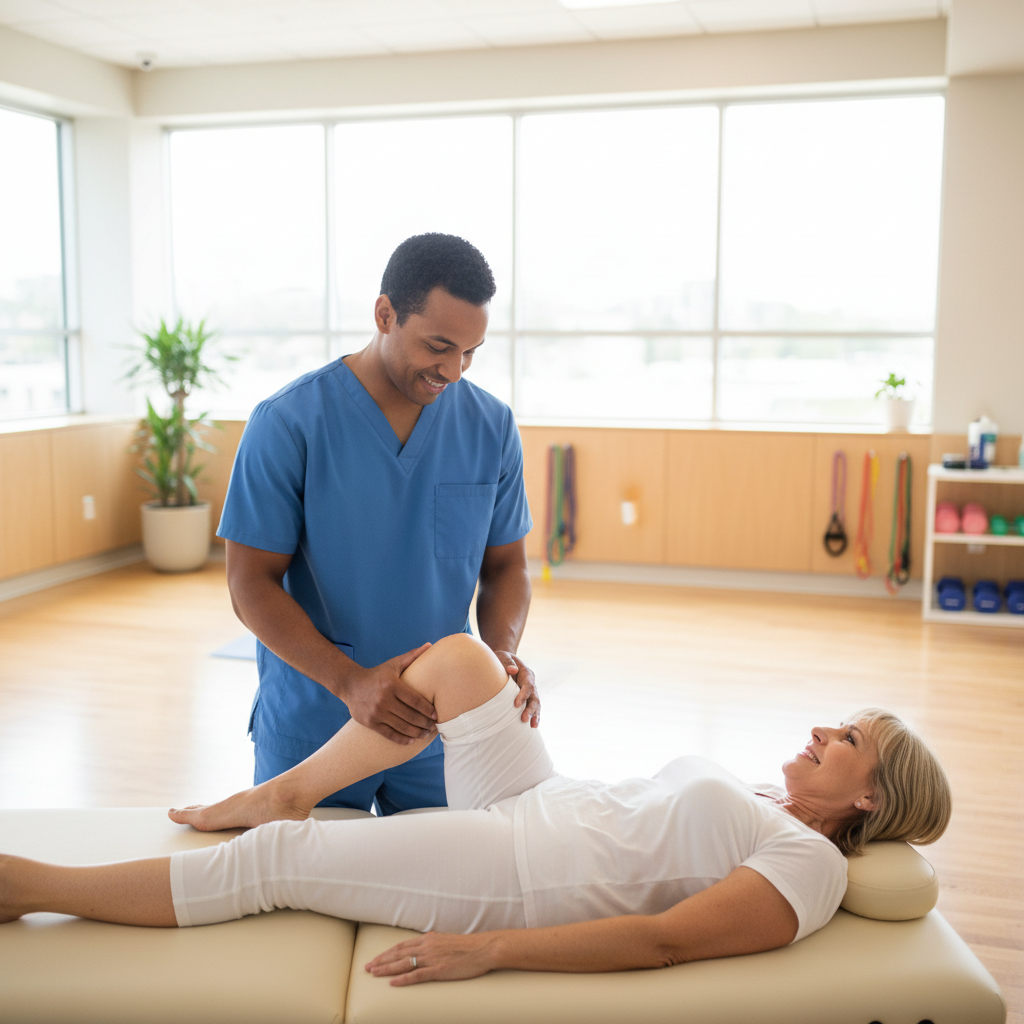
Physical therapy is considered one of the most effective first-line treatments for knee osteoarthritis. When you visit Physical Therapy Now, you will work 1-on-1 with a licensed physical therapist who will create a customized plan just for you. We focus on strengthening the muscles around the knee, like the quadriceps and hamstrings, which act as shock absorbers for the joint. By building strength, we take the pressure off the bone and cartilage, significantly reducing pain during daily tasks.
Our therapists use a variety of techniques to get you moving again. This includes manual therapy, where the therapist uses hands-on techniques to improve joint movement and reduce stiffness. We may also use modalities like electrical stimulation or heat/cold therapy to manage swelling and discomfort. You will learn specific exercises to improve your range of motion and balance, ensuring you feel steady on your feet and less prone to flare-ups.
As you progress, we gradually increase the challenge of your exercises to match your goals, whether that is walking a mile or playing with your grandkids. Our mission is to help you regain your independence and avoid more invasive options through expert, conservative care. If your knee pain persists, is not improving after 2 to 3 weeks of home care, or is getting worse, please call us to schedule an appointment with our specialist team.
Recovery timeline
Managing knee osteoarthritis is a journey rather than a quick fix. Most patients begin to feel a noticeable reduction in stiffness and pain within 4 to 6 weeks of consistent physical therapy. A typical program lasts 8 to 12 weeks to build the necessary muscle strength to protect the joint long-term. Because this is a chronic condition, the goal is reaching a maintenance phase where you have the tools to manage your symptoms independently for years to come.
What you can do at home today
- Apply a warm compress for 15 minutes in the morning to loosen up stiff joints.
- Use an ice pack after activity to reduce inflammation and swelling.
- Choose low-impact activities like swimming or cycling instead of running on hard surfaces.
- Wear supportive, well-cushioned shoes to reduce the impact on your knees.
- Incorporate gentle stretching for your calves and hamstrings every day.
- Avoid sitting for long periods; get up and move every 30 minutes to keep the joint lubricated.
- Use a walking aid or brace if recommended by your therapist to improve stability.
- Maintain a healthy weight to reduce the daily load on your knee joints.
These tips support recovery but don't replace a professional evaluation. If you're unsure or symptoms worsen, please reach out.
When to call us right away
While some aching is common, you should seek help if your knee 'locks' in place or 'gives out' suddenly. Seek immediate care if you experience severe swelling, redness, or warmth around the joint, or if you have a fever accompanied by joint pain. If you can no longer bear weight on your leg, call us or visit an emergency facility right away.