
Understanding this injury
A groin strain, also known as an adductor strain, happens when one of the muscles on the inside of your thigh is stretched or torn. These muscles, called the adductors, help pull your legs together and are vital for stabilizing your pelvis when you walk, run, or jump. When these muscles are overstretched beyond their limit, it can cause sharp pain, swelling, and a loss of strength in the hip area.
This injury is often felt as a sudden pull or 'pop' in the inner thigh during physical activity. While it is common among athletes, a groin strain can happen to anyone during a slip or a sudden movement. The pain can range from a mild ache to severe discomfort that makes it difficult to walk or climb stairs. At Physical Therapy Now, we focus on helping you heal naturally by restoring the flexibility and strength of these essential muscles.
Common symptoms
- Pain in the inner thigh or groin
- Bruising or swelling
- Pain with squeezing the legs together
- Difficulty running or changing direction
What causes it
- Sudden changes in direction while running or sprinting
- Kicking a ball with force or pivoting on one leg
- Overstretching the inner thigh during a fall or slip
- Lifting heavy objects with an improper or wide stance
- Repetitive movements that put constant stress on the hip joint
- Inadequate warm-up routines before intense physical activity
Who's most at risk
- Athletes playing soccer, hockey, football, or basketball
- Individuals with previous groin or hip injuries
- People with weak or tight hip adductor muscles
- Sudden increases in exercise intensity or duration
- Poor core stability that puts extra strain on the pelvis
- Inflexible hamstrings or hip flexors
How we treat it
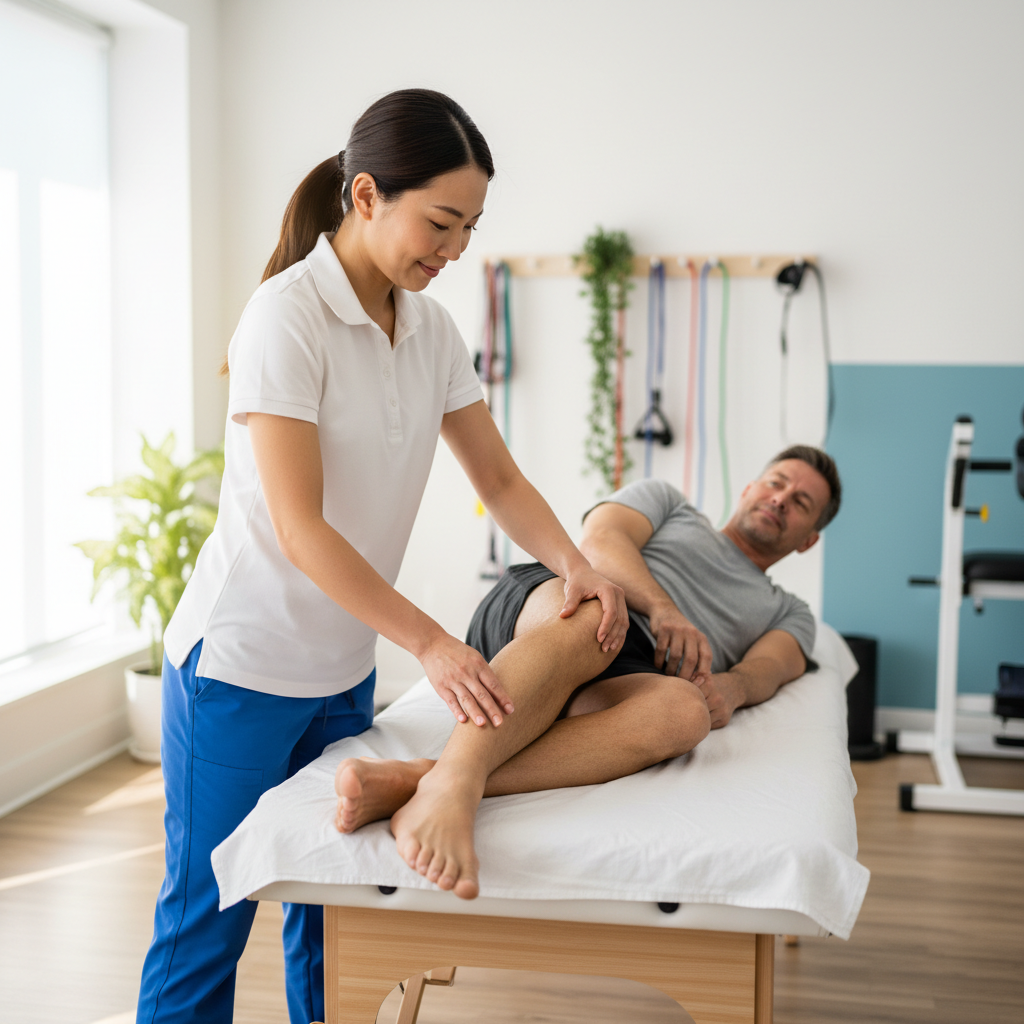
Physical therapy is the most effective way to recover from a groin strain and prevent it from happening again. When you visit Physical Therapy Now, you will work 1-on-1 with a licensed physical therapist who will create a customized recovery plan. In the early stages, we use soothing modalities like ice, heat, or ultrasound to reduce inflammation and manage pain. Manual therapy is a key part of our approach; your therapist will use hands-on techniques to gently mobilize the tissues and improve blood flow to the injured area.
As you begin to heal, your therapist will guide you through specific stretching and strengthening exercises. We start with 'isometric' moves, where you contract the muscle without moving the joint, and progress to dynamic movements like side lunges or resistance band work. We also focus on your core and glute strength, which helps take the pressure off your inner thigh muscles. This step-by-step progression ensures that your hip is stable and ready for the demands of daily life or sports.
Our goal is to get you back to your favorite activities safely. If your groin pain persists, isn't improving after 2 to 3 weeks of rest, or is getting worse with movement, please call us today or schedule an appointment online so we can help you start the healing process.
Recovery timeline
Recovery time depends on the severity of the strain. A mild (Grade 1) strain usually feels better within 2 to 4 weeks with proper physical therapy. A moderate (Grade 2) strain may take 6 to 8 weeks to fully heal. Severe tears (Grade 3) require a longer, more structured rehabilitation program that can last several months. Following your therapist’s guidance is the best way to ensure you don't re-injure the area before it is fully strong.
What you can do at home today
- Rest the area and avoid activities that cause sharp pain
- Apply ice packs for 15-20 minutes every few hours for the first 48 hours
- Use a gentle compression wrap around the upper thigh for support
- Keep your legs elevated on a pillow when sitting or lying down
- Perform gentle ankle pumps to maintain circulation while resting
- Avoid deep or aggressive stretching until the initial pain subsides
- Sit in chairs with good support rather than low, soft couches
- Stay hydrated to help your muscle tissues recover faster
These tips support recovery but don't replace a professional evaluation. If you're unsure or symptoms worsen, please reach out.
When to call us right away
You should seek care immediately if you hear a loud 'pop' at the time of injury, have severe bruising that spreads down the leg, or are unable to walk more than a few steps. If you experience significant swelling or a visible bump in the groin area, contact us or a healthcare provider right away to rule out a more serious tear or a hernia.