
Understanding this injury
A hip labral tear involves a rip in the ring of specialized cartilage, called the labrum, which lines your hip socket. Think of the labrum as a rubber seal or gasket that helps hold the ball of your thighbone securely in place. When this cartilage tears, it can cause a catching or clicking sensation and deep pain in the groin or hip area. Left untreated, it can make simple movements like walking, sitting, or climbing stairs quite uncomfortable.
At Physical Therapy Now, we understand how frustrating hip pain can be. Many patients describe the pain as a dull ache that occasionally becomes sharp during certain movements. Because the labrum helps with joint stability and shock absorption, a tear can lead to a feeling of instability in the hip. Our goal is to help you regain your mobility and reduce inflammation so you can get back to the activities you love without constant discomfort.
Common symptoms
- Deep groin pain
- Clicking or locking of the hip
- Stiffness and limited range of motion
- Pain with prolonged sitting or walking
What causes it
- Repetitive pivoting or twisting motions common in sports like golf or soccer
- Structural abnormalities like hip impingement where the bones don't fit perfectly
- A sudden injury or trauma, such as a fall or a car accident
- Wear and tear over time from high-impact activities
- Chronic instability of the hip joint leading to cartilage strain
- Overuse from repetitive deep squatting or long-distance running
Who's most at risk
- Athletes participating in sports that require frequent hip rotation
- Individuals born with hip dysplasia (a shallow hip socket)
- People with Femoroacetabular Impingement (FAI)
- Middle-aged adults experiencing age-related cartilage thinning
- Individuals with naturally hypermobile or 'loose' joints
- People with physically demanding jobs that involve heavy lifting and twisting
How we treat it
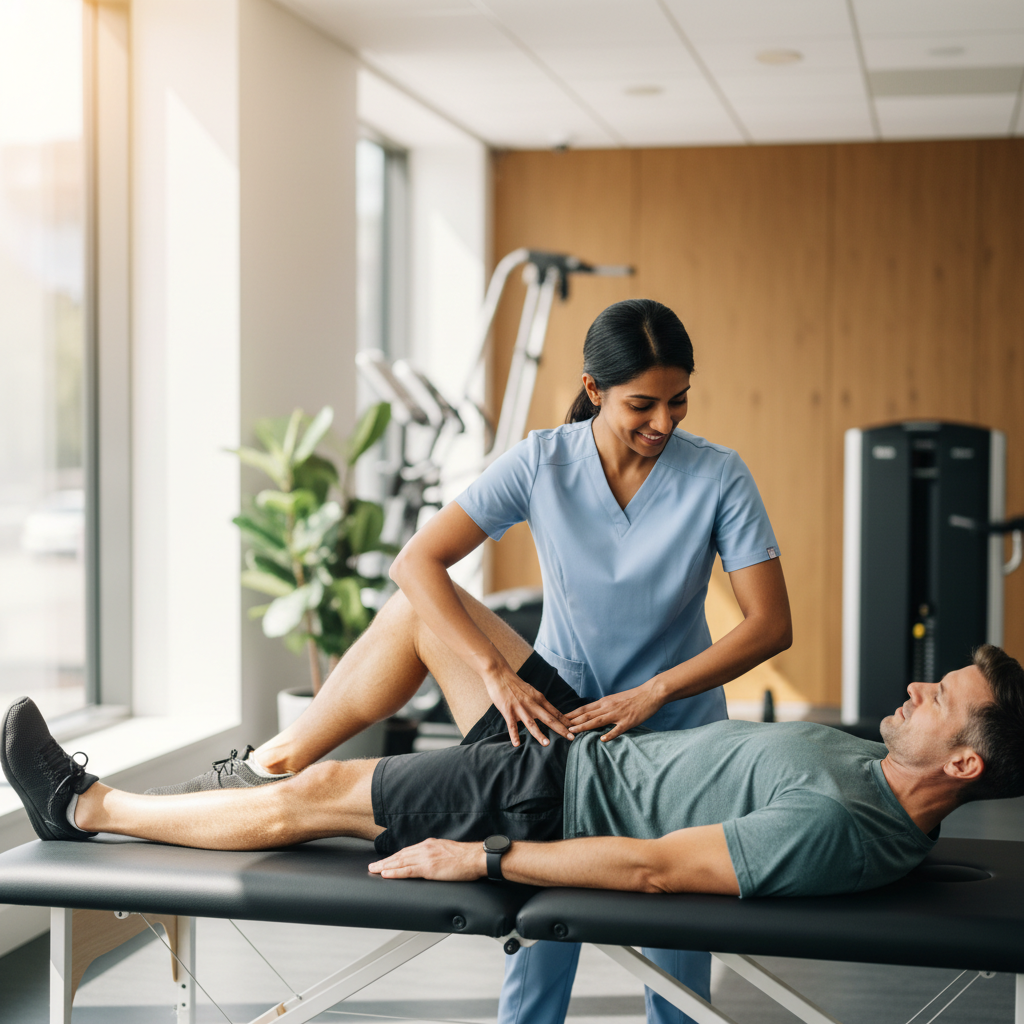
Physical therapy is the gold standard for managing a hip labral tear without surgery. When you visit us, you will work 1-on-1 with a licensed physical therapist who will design a personalized recovery plan. Treatment usually begins with calming down the inflammation. We use advanced modalities like ultrasound, electrical stimulation, or specialized heat and ice protocols to manage your initial pain levels. Your therapist will also use manual therapy techniques, such as joint mobilizations and soft tissue massage, to improve the way your hip joint glides and to release tight muscles in the hip flexors and glutes.
As you progress, we focus on 'dynamic stability.' This means we perform specific exercises to strengthen the muscles surrounding the hip, particularly the gluteus medius and core. Strengthening these muscles takes the pressure off the torn labrum by providing better support for the joint. We also work on movement mechanics—teaching you how to squat, pivot, and walk in ways that don't aggravate the injury. Finally, we incorporate balance and functional training to ensure you are ready for the demands of daily life or sport.
Our professional team is here to guide you through every phase of healing with compassion and expertise. If your hip pain persists, is not improving within 2-3 weeks, or is getting worse despite rest, please call Physical Therapy Now or schedule an appointment on our website today.
Recovery timeline
Recovery from a hip labral tear varies based on the severity of the tear. Generally, a conservative physical therapy program lasts between 6 to 12 weeks. The first 2-4 weeks focus on pain reduction and restoring basic range of motion. The middle phase, weeks 4-8, emphasizes significant strengthening. By weeks 8-12, most patients return to higher-level activities and sports. Consistency with your therapist and home exercise program is the biggest factor in a fast recovery.
What you can do at home today
- Avoid sitting in low, deep chairs that pinch the front of the hip
- Sleep with a pillow between your knees to keep your hips aligned
- Apply ice to the groin or side of the hip for 15 minutes after activity
- Avoid high-impact activities like running or jumping until cleared by your PT
- Perform gentle pelvic tilts to keep your core engaged without straining the hip
- Modify your workout to include swimming or cycling instead of treadmill running
- Set a timer to stand and stretch every 30 minutes if you have a desk job
- Wear supportive, cushioned footwear to reduce impact on the hip joint
These tips support recovery but don't replace a professional evaluation. If you're unsure or symptoms worsen, please reach out.
When to call us right away
While most hip pain can be managed with therapy, you should seek immediate care if you experience a total 'locking' of the joint where you cannot move it, sudden inability to bear weight on the leg, or if you notice significant swelling, redness, and fever. If your pain is sharp and prevents sleep, call us right away.