
Understanding this injury
A hip flexor strain occurs when the group of muscles at the front of your hip and thigh is stretched too far or torn. These muscles are responsible for lifting your knee toward your chest and stabilizing your pelvis during movement. When these muscles are overstressed, you might feel a sharp pain, tenderness, or a pulling sensation in the groin or where the hip meets the thigh.
This injury can range from a minor stretch to a more severe tear that makes simple tasks like walking or climbing stairs difficult. While it can be frustrating to deal with limited mobility, most hip flexor strains respond exceptionally well to a structured rehabilitation plan. Understanding how to support these muscles through the healing process is the first step toward regaining your full strength and returning to the activities you love.
Common symptoms
- Pain in the front of the hip or groin
- Pain worsened by lifting the knee
- Swelling or bruising
- Difficulty walking or climbing stairs
What causes it
- Sudden explosive movements like sprinting or kicking a ball
- Overstretching the hip through repetitive high-knee motions
- Changing directions quickly while running or playing sports
- A direct fall or trauma to the front of the hip joint
- Long periods of sitting that cause the muscle to shorten and tighten
- Weak core muscles that force the hip flexors to work too hard
Who's most at risk
- Athletes involved in soccer, football, or martial arts
- Runners who frequently train on uneven terrain or hills
- Individuals with tight hip muscles from sedentary desk work
- Weekend warriors who skip a proper dynamic warm-up
- People with previous history of hip or groin injuries
- Cyclists who do not supplement their riding with flexibility training
How we treat it
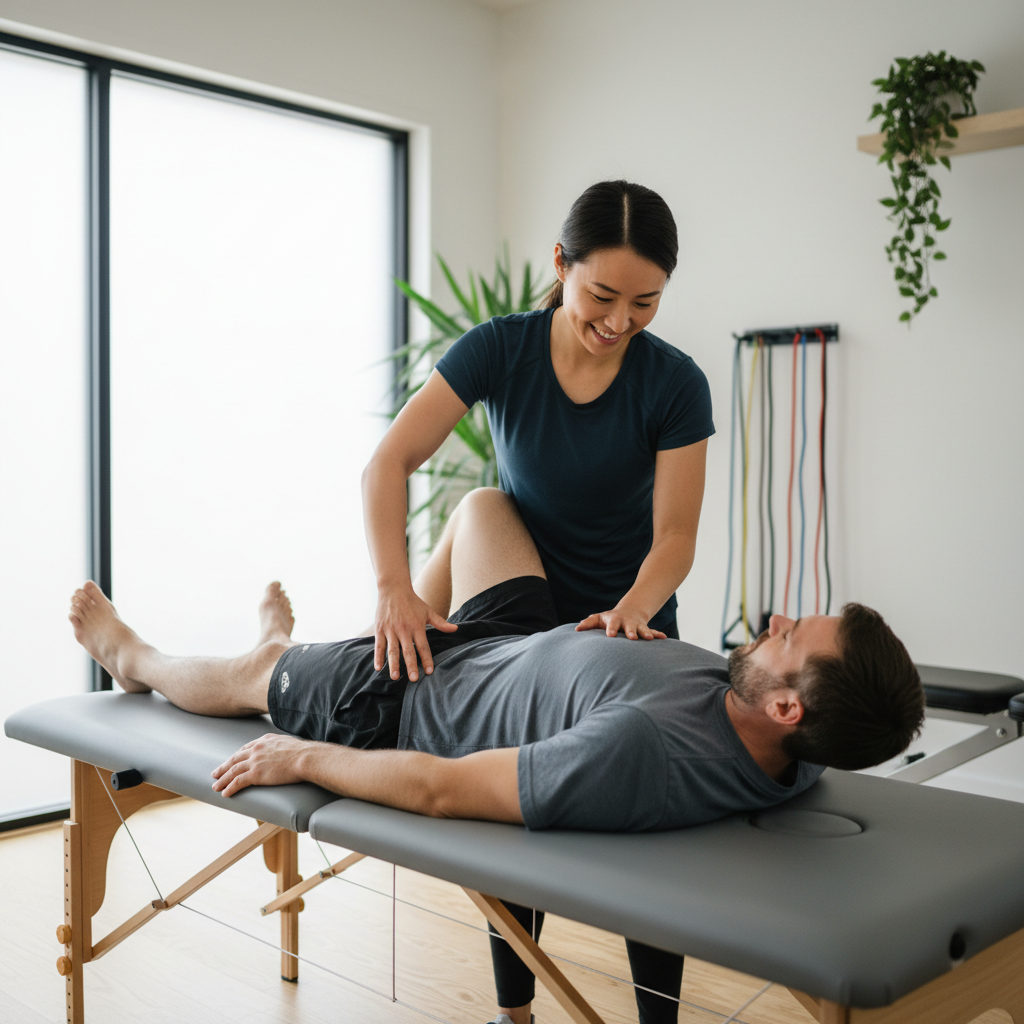
At Physical Therapy Now, we prioritize a personalized approach to healing your hip flexor. You will work 1-on-1 with a licensed physical therapist who will first assess the severity of your strain. In the initial phases, your therapist may use manual therapy techniques like myofascial release or gentle soft tissue mobilization to reduce muscle guarding and improve blood flow to the injured area. We may also use modalities such as ultrasound or electrical stimulation to help manage discomfort and decrease inflammation around the hip joint.
As your pain subsides, your progression will focus on restoring a full range of motion. We incorporate specific, gentle stretching and isometric strengthening exercises that engage the psoas and iliacus muscles without overstressing them. Your PT will also guide you through core stabilization and glute strengthening, which are vital for taking the repetitive load off your hip flexors. This holistic approach ensures that we don't just fix the current pain, but we also correct the movement patterns that led to the injury in the first place.
In the final stages of recovery, therapy shifts toward functional movements tailored to your lifestyle, such as squatting, lunging, or sport-specific drills. Our goal is to ensure you feel confident and stable before returning to full activity. If your pain persists, isn't improving after 2-3 weeks of rest, or is getting worse, please call us to schedule an appointment so we can help you get back on track.
Recovery timeline
Recovery time depends on the severity of the strain. A mild (Grade 1) strain usually resolves within 2 to 3 weeks with proper care. A moderate (Grade 2) strain may take 4 to 8 weeks to fully heal. Severe tears (Grade 3) require a much longer recovery period of several months. Consistently following your physical therapy plan is the most effective way to ensure the muscle heals correctly and to prevent the injury from becoming a chronic issue.
What you can do at home today
- Apply ice to the front of the hip for 15 minutes every few hours in the first 48 hours
- Avoid activities that involve lifting the knee high or sprinting
- Sleep with a pillow under your knees to take tension off the hip
- Gently move your ankle up and down (pumps) to keep circulation moving
- Avoid sitting for more than 30 minutes at a time to prevent muscle shortening
- Wear supportive, flat shoes to maintain a level pelvis while walking
- Perform gentle pelvic tilts to engage your core without straining the hip
- Hydrate well to support soft tissue healing and muscle elasticity
These tips support recovery but don't replace a professional evaluation. If you're unsure or symptoms worsen, please reach out.
When to call us right away
While most strains heal with conservative care, you should contact us or seek medical attention immediately if you hear a 'pop' at the time of injury, experience significant swelling, are unable to bear weight on the leg, or notice any bruising extending down the thigh. These can be signs of a more serious tear or avulsion injury.