
Understanding this injury
Hip bursitis, specifically trochanteric bursitis, is a common condition that causes sharp or aching pain on the outer side of your hip. Around your hip joint are small, fluid-filled sacs called bursa. These act like cushions between your bones and the surrounding soft tissues, helping to reduce friction when you move. When the bursa on the bony point of your hip (the greater trochanter) becomes inflamed, it can make simple activities like walking, climbing stairs, or sleeping on your side very painful.
While the pain can be intense, it is important to know that this is a soft-tissue injury that usually responds very well to conservative care. You might feel the pain most when you first get out of bed or after sitting for a long period. At Physical Therapy Now, we focus on calming down that inflammation and correcting the underlying movement patterns so you can return to your favorite activities without that nagging outer hip pain.
Common symptoms
- Pain on the outside of the hip
- Tenderness when lying on the affected side
- Pain worsened by walking or climbing stairs
- Stiffness after prolonged sitting
What causes it
- Repetitive stress or overuse from activities like running, cycling, or standing for long periods.
- A direct fall or 'bump' onto the side of the hip bone.
- Biomechanical issues like having one leg slightly longer than the other.
- Inflammation stemming from lower back problems or hip arthritis.
- Developing bone spurs or calcium deposits within the tendons that rub against the bursa.
- Sudden increases in physical activity levels without proper conditioning.
Who's most at risk
- Middle-aged or elderly adults, though it can affect active younger people.
- Women are more frequently affected by hip bursitis than men.
- Individuals with weakness in the gluteal (buttock) muscles.
- People with scoliosis or other spinal misalignments that change their gait.
- Those with previous hip surgeries or prosthetic implants.
- Individuals with tight IT (iliotibial) bands that pull across the hip bone.
How we treat it
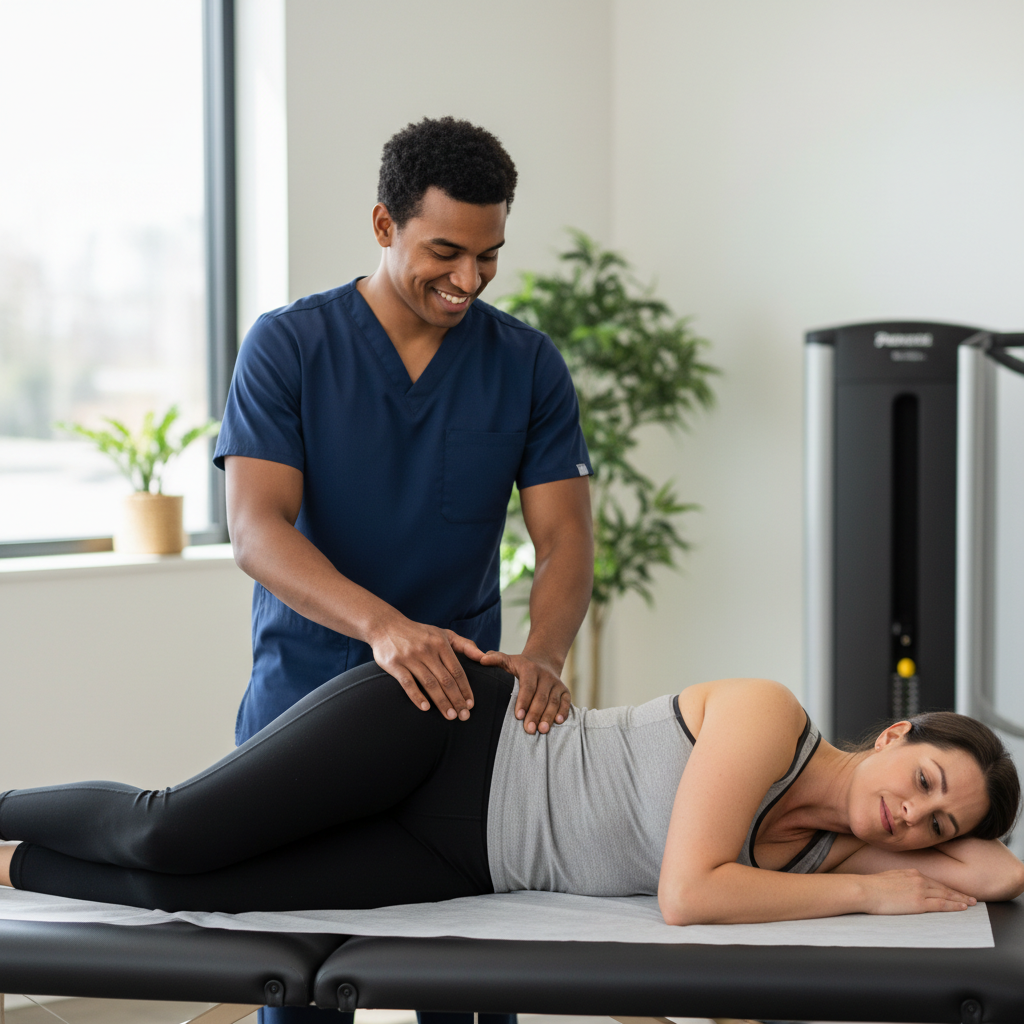
Physical therapy is the gold standard for treating hip bursitis without invasive procedures. When you visit Physical Therapy Now, you will work 1-on-1 with a licensed physical therapist who will first focus on reducing your pain and inflammation. We use specialized modalities such as therapeutic ultrasound, electrical stimulation, or cold laser therapy to soothe the irritated bursa. Your therapist may also use manual therapy, which involves hands-on techniques to mobilize the hip joint and massage the surrounding tight muscles to take the pressure off the painful area.
As your pain decreases, your sessions will progress into a customized exercise program. We focus heavily on strengthening the 'glute' muscles and the core, which helps stabilize your pelvis and ensures your hip bone doesn't rub unnecessarily against the bursa. We also utilize gentle stretching and flexibility drills for the IT band and hip flexors. This progression ensures that we aren't just masking the pain, but actually fixing the muscle imbalances that caused the inflammation in the first place.
Our goal is to get you back to a full, active lifestyle. Throughout your recovery, your PT will analyze your gait (the way you walk) to make sure you aren't overcompensating and causing issues elsewhere. If your hip pain persists, is not improving after two to three weeks of rest, or is getting worse, please call us to schedule an appointment so we can start your recovery journey.
Recovery timeline
Most patients begin to feel significant relief within 2 to 4 weeks of starting consistent physical therapy. The initial phase focuses on pain control, followed by 4 to 6 weeks of targeted strengthening to prevent the bursitis from returning. While every body is different, a total recovery usually takes about 6 to 12 weeks. Sticking to your home exercise plan is the fastest way to ensure your hip remains stable and pain-free for the long term.
What you can do at home today
- Avoid sleeping on the painful side; try sleeping on your back or the opposite side with a pillow between your knees.
- Apply ice to the outer hip for 15-20 minutes several times a day to reduce swelling.
- Avoid sitting in low, soft chairs that require you to 'sink' into the seat.
- Modify your activity by avoiding long periods of standing or repetitive stair climbing.
- Wear supportive, well-cushioned shoes to reduce the impact on your hips while walking.
- Perform gentle seated stretches for your glutes as directed by your therapist.
- Use a 'standing' transition: push off your armrests rather than using just your hip strength to stand up.
- Avoid crossing your legs while sitting, as this can compress the bursa.
These tips support recovery but don't replace a professional evaluation. If you're unsure or symptoms worsen, please reach out.
When to call us right away
While hip bursitis is rarely an emergency, you should call us immediately or seek medical attention if you experience a fever, if the hip area feels hot to the touch and looks very red, or if you lose the ability to bear weight on the leg. These can be signs of an infection or a more serious hip injury that requires immediate evaluation.