Post-Surgery Physical Therapy Recovery Timeline
Recovering from surgery is a process, not a race. Physical therapy can help you rebuild movement, strength, balance, and confidence as your body heals. While the details vary by procedure and individual, knowing the general stages of rehabilitation can help you set realistic expectations and take an active role in recovery.
At Physical Therapy NOW™ in Davie, FL, your care is shaped around your surgery, your surgeon’s instructions, and your everyday goals. Your therapist can explain what to expect and adjust your plan as your abilities change. The timeline below is a general guide, not a substitute for recommendations from your surgeon or care team.
Before Therapy Begins
Your rehabilitation plan may begin before surgery, soon afterward, or once your surgeon confirms you are ready. Before your first visit, gather your discharge instructions, current medication list, and any guidance about weight bearing, movement restrictions, or wound care. Share these details with your physical therapist so your exercises match your medical instructions.
Ask your surgeon which activities are safe, when you can put weight through the affected area, and what symptoms should prompt a call to their office. If you will use a walker, crutches, or another assistive device, let your therapist know. Planning ahead can make the transition home safer and less stressful.
The Early Recovery Phase
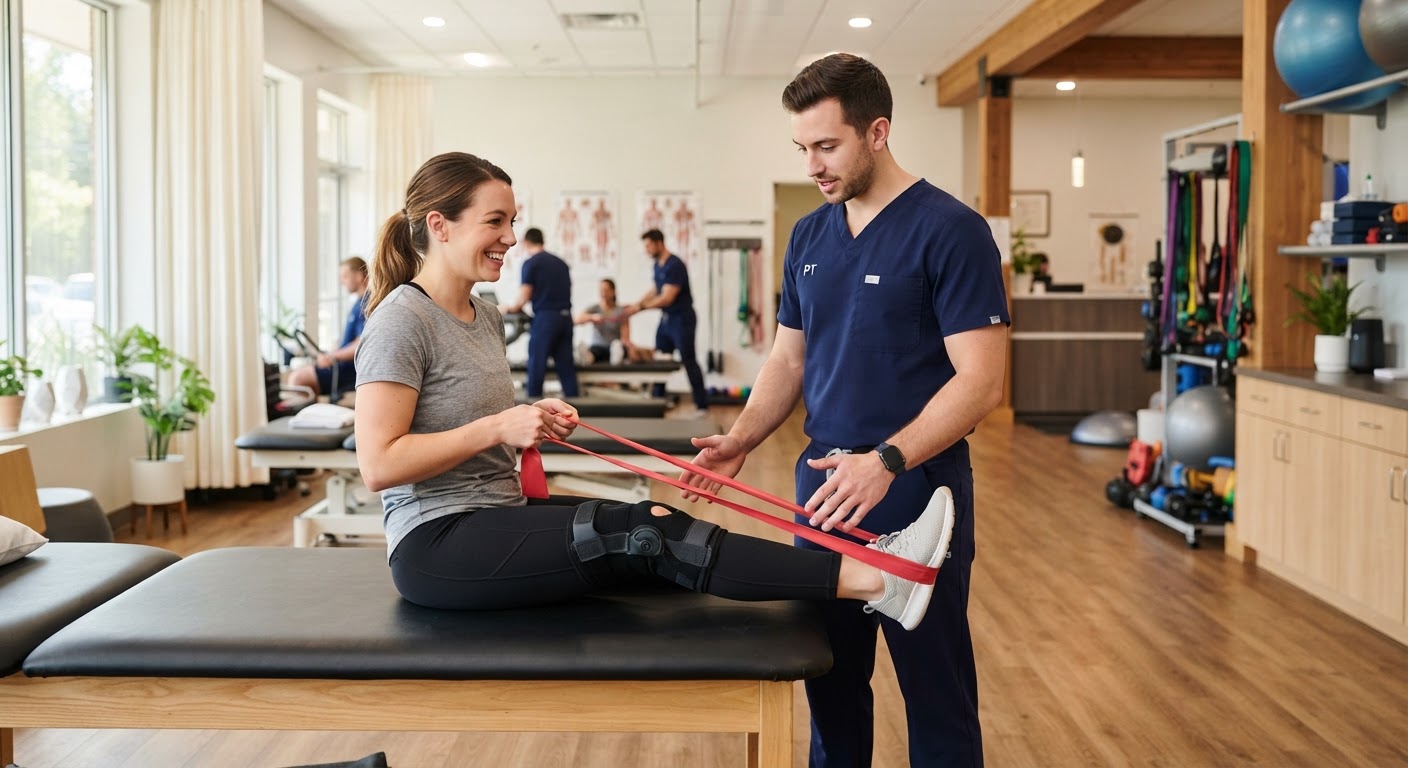
The first days or weeks after surgery often focus on protecting the healing area while preventing avoidable stiffness and loss of mobility. Depending on the procedure and your surgeon’s protocol, therapy may include gentle range-of-motion exercises, safe transfers, walking practice, breathing techniques, or instruction in using an assistive device.
Some soreness, fatigue, and swelling may occur during recovery. Your therapist can help you understand how to pace activity and use approved strategies for comfort. Follow your care team’s directions about icing, elevation, wound care, and medication. Do not add exercises, stretch beyond restrictions, or change your activity level based on someone else’s experience.
A useful habit is to keep a simple daily log of your exercises, walking, discomfort, and energy. This can help you and your therapist notice patterns and make appropriate adjustments. Short, manageable activity periods with rest between them may be more practical than trying to do too much at once.
Building Mobility And Strength
As healing progresses and restrictions change, rehabilitation may gradually address joint or muscle movement, strength, flexibility, balance, and endurance. Your physical therapist will select activities based on your procedure and progress. The goal is to increase function safely, not simply to make exercises harder at every visit.
For example, after some orthopedic procedures, a program may progress from gentle movement to supported strengthening and then to more demanding daily activities. Other surgeries require a different approach altogether. Your recovery timeline depends on factors such as the type of surgery, your health, your symptoms, and how your body responds to activity.
Consistency matters. Follow the home program you were given, and ask for clarification if an exercise feels confusing or uncomfortable. Avoid adding extra repetitions or equipment without checking first. If pain increases significantly, lasts longer than expected after activity, or comes with new symptoms, contact your therapist or surgeon for guidance.
Returning To Everyday Activities
Later stages of therapy often focus on the tasks that matter most to you, such as climbing stairs, getting in and out of a car, returning to work, caring for family, or resuming a preferred activity. Your therapist can practice these movements with you, identify barriers, and help you build capacity step by step.
A return to driving, work, sports, or lifting should be guided by your surgeon and rehabilitation team. Feeling better does not always mean the healing process is complete. Ask what milestones you should meet before resuming a particular activity, and discuss any job duties or recreation goals early so they can be included in your plan.
If progress feels uneven, remember that recovery is rarely a straight line. A busy day, poor sleep, or doing more than usual may temporarily affect how you feel. Share changes with your therapist rather than trying to push through or stopping all activity on your own. Adjustments can help maintain steady progress while protecting your healing tissues.
Practical Tips For A Smoother Recovery
Keep your follow-up appointments and bring questions about pain, movement, sleep, or daily tasks. Set up your home to reduce fall risks and keep frequently used items within easy reach. Use mobility aids as instructed, even if you feel ready to manage without them. Build rest breaks into your day, stay hydrated, and follow any nutrition guidance from your medical team.
Your exercise plan should be challenging only within the limits set for you. Contact your surgeon promptly about concerning symptoms such as a sudden increase in pain or swelling, fever, wound changes, new numbness, or other warning signs listed in your discharge instructions. For severe or urgent symptoms, seek emergency care.
Personalized Support In Davie
There is no single post-surgery timeline that fits everyone. Your physical therapist can help you understand your next steps, work toward pain relief, and adapt rehabilitation as your needs change. Physical Therapy NOW™ provides individualized support at its Davie location, with care centered on your goals and medical guidance.
If you are preparing for surgery or are ready to begin rehabilitation, contact Physical Therapy NOW™ at the Davie, FL location to ask about getting started. Call or visit the clinic to discuss your recovery goals and arrange a physical therapy appointment. A thoughtful plan and steady support can help you move forward with greater confidence.
Ready to start feeling better?
Physical Therapy NOW™ has 40+ Florida locations with same-week appointments. Most insurance, auto accident (PIP), workers' compensation and Medicare accepted.