Benefits of Physical Therapy After a Car Accident
A car accident can leave you with more than vehicle damage. Stiffness, soreness, headaches, or difficulty moving may appear right away or develop over the next several days. Even when an injury seems minor, changes in how you move can interfere with work, sleep, exercise, and everyday routines. Physical therapy can help you understand those changes and take practical steps toward recovery.
At Physical Therapy NOW™ in Brickell, Miami, FL, care is tailored to your symptoms, health history, and goals. A physical therapist can assess your movement, recommend an appropriate rehabilitation plan, and adjust it as your needs change. The right approach depends on your condition, so an evaluation is an important first step.
Why Symptoms May Appear Later
After a collision, your body may tense up or move differently to protect a sore area. Some symptoms are noticeable immediately, while others become clearer as you return to normal activities. Neck and back discomfort, reduced range of motion, muscle tenderness, or difficulty with balance may affect daily function.
Do not assume that delayed symptoms are unimportant. Contact a medical professional if you notice new or worsening problems after an accident. Seek emergency care for serious concerns such as severe pain, weakness, numbness, confusion, difficulty breathing, or other urgent symptoms. Physical therapy is not a substitute for emergency evaluation or medical care when those are needed.
How Physical Therapy Can Help
A physical therapist can evaluate how your body moves and how symptoms affect your daily activities. The assessment may include your range of motion, strength, posture, balance, and tolerance for functional tasks. Your therapist can also review relevant medical guidance and coordinate with other members of your care team when appropriate.
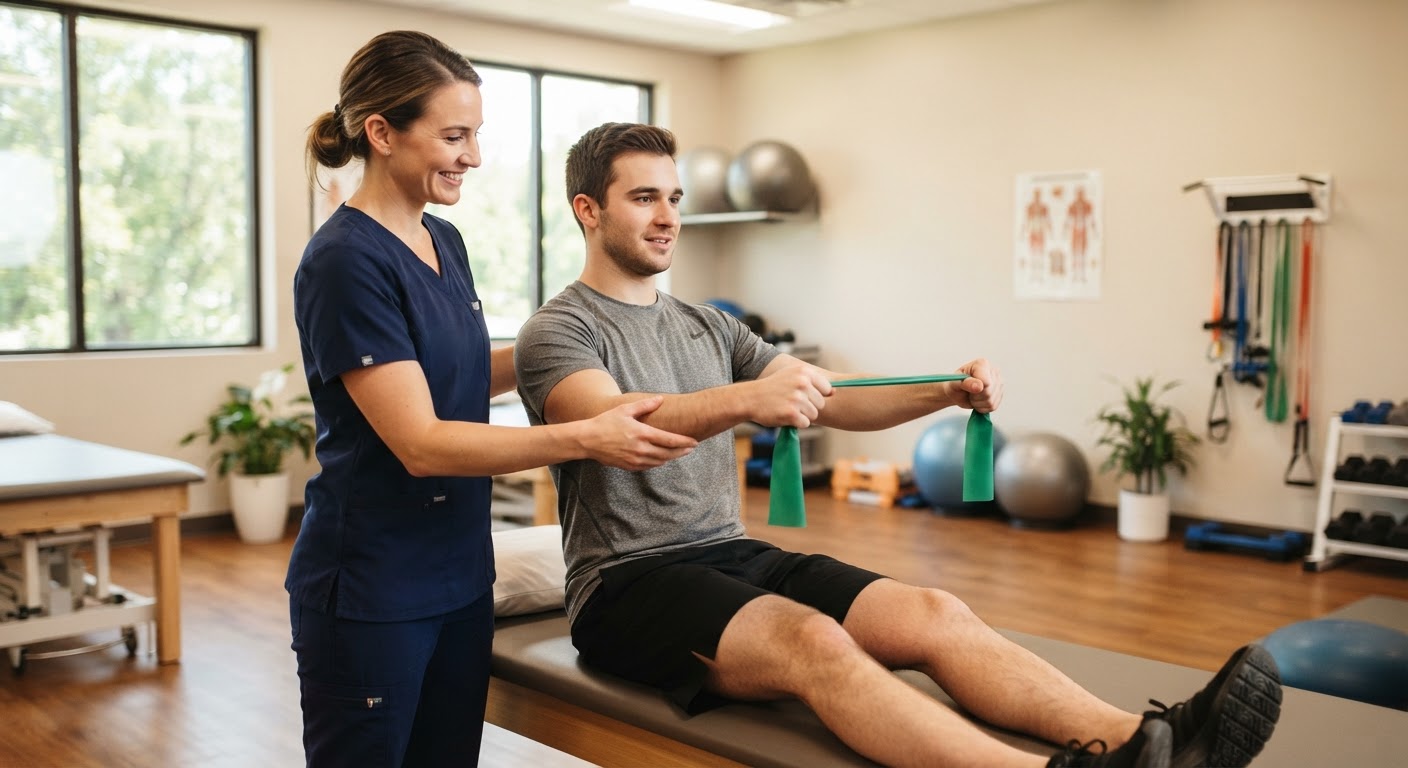
Based on the evaluation, rehabilitation may include gentle mobility exercises, strengthening, balance or coordination activities, and strategies for gradually returning to usual tasks. Your plan should reflect your symptoms and progress rather than follow a one-size-fits-all schedule. If an activity increases your symptoms significantly, tell your therapist so the plan can be adjusted.
Physical therapy may also help you learn how to move with greater confidence. After an accident, it is common to avoid certain movements because they feel uncomfortable or unfamiliar. With appropriate guidance and gradual practice, you can work toward safer, more comfortable movement without pushing beyond your current tolerance.
Potential Benefits During Recovery
A structured rehabilitation plan can support several parts of recovery. Depending on your injury and individual response, physical therapy may help improve mobility, build strength, and make everyday activities easier. It can also provide a clear way to monitor changes and discuss questions as you progress.
Pain relief is another common goal, but results vary. Your therapist may suggest movement, positioning, or activity adjustments that help you manage symptoms. Treatment should be based on your evaluation, and your care team can help determine what is appropriate for you. If pain changes, spreads, or becomes more severe, report it rather than trying to work through it without guidance.
Returning to normal activity is often gradual. Your therapist can help you plan progress toward tasks such as sitting comfortably, turning your head, lifting, walking, or returning to exercise, depending on your needs and medical recommendations. The aim is to build capacity thoughtfully, not to rush recovery.
Practical Steps You Can Take
Follow the advice you receive from your physician and other healthcare providers, including any instructions about imaging, medication, activity, or follow-up appointments. Keep a simple record of your symptoms and note what makes them better or worse. This information can help your care team understand your experience and refine your plan.
Break demanding tasks into manageable steps when possible. Take movement breaks during prolonged sitting, use comfortable positions, and avoid activities that your medical provider has advised against. Do not start intense exercise or aggressive stretching simply because you want to recover faster. Ask your physical therapist which movements are appropriate for your situation.
Attend scheduled appointments and share honest feedback. Recovery is not always a straight line, and a temporary increase in soreness or a change in function may be useful information for your therapist. Ask questions if you are unsure how to perform an exercise, how often to do it, or when to progress.
What to Expect at Your First Visit
Your initial visit typically begins with a discussion of the accident, your symptoms, medical history, and daily goals. The therapist may then assess relevant movement and function, within the limits of your comfort and medical guidance. Together, you can discuss what rehabilitation may involve and how progress will be reviewed.
Bring any available referral or medical instructions, a list of medications, and notes about your symptoms. Wear comfortable clothing that allows you to move. If you have concerns about an activity or position, mention them before the assessment so your therapist can take them into account.
Start Your Recovery With a Personalized Plan
You do not have to figure out every next step alone. Physical Therapy NOW™ can help you explore whether physical therapy is appropriate after your car accident and what an individualized plan may include. For convenient care in Miami, contact the Brickell location to ask questions or schedule an evaluation. Call or visit Physical Therapy NOW™ in Brickell and take a practical first step toward rehabilitation, improved movement, and pain relief.
Ready to start feeling better?
Physical Therapy NOW™ has 40+ Florida locations with same-week appointments. Most insurance, auto accident (PIP), workers' compensation and Medicare accepted.