
Understanding this injury
Lumbar Spinal Stenosis is a condition where the spaces within your lower spine begin to narrow. Think of your spinal canal as a tunnel that carries important nerves from your brain to your legs. When this tunnel gets smaller, it can put pressure on those nerves, leading to pain, tingling, or weakness in your lower back and down your legs. Many people notice that their symptoms feel worse when they are standing or walking, but feel much better when they lean forward or sit down.
While the word 'narrowing' might sound scary, it is a very common condition that often develops as we age. It typically happens slowly over time as the spine undergoes natural changes. The good news is that you do not have to live with the discomfort or give up your favorite activities. Focused physical therapy can help open up that space and take the pressure off your nerves so you can move clearly and comfortably again.
Common symptoms
- Pain or cramping in the legs when standing or walking
- Relief when bending forward or sitting
- Numbness or weakness in the legs
- Lower back pain
What causes it
- Natural age-related wear and tear of the spinal discs and joints
- Thickening of the ligaments that help hold the spine together
- Overgrowth of bone (bone spurs) caused by osteoarthritis
- Herniated or bulging discs that protrude into the spinal canal
- Previous injuries to the spine such as falls or car accidents
- Spondylolisthesis, where one vertebra slips forward over another
Who's most at risk
- Adults over the age of 50 are at the highest risk
- People with a history of osteoarthritis or degenerative joint disease
- Individuals born with a naturally narrow spinal canal
- Those with poor posture habits that place extra stress on the lower back
- People who have had previous back surgeries or spinal trauma
- Individuals with sedentary lifestyles and weak core muscles
How we treat it
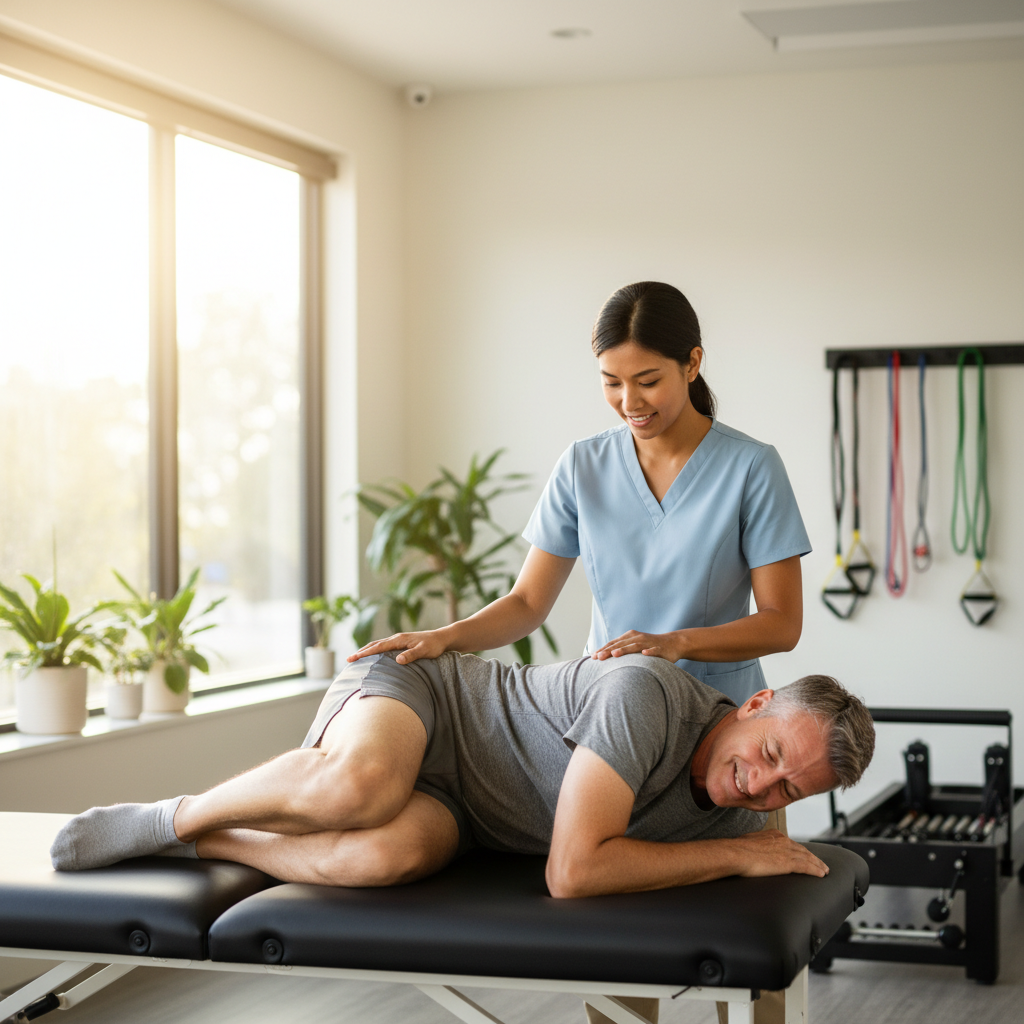
At Physical Therapy Now, we provide a personalized approach to managing Lumbar Spinal Stenosis without the need for invasive procedures. Working 1-on-1 with a licensed physical therapist, you will start with a comprehensive evaluation to see how your spine moves. Your therapist will use manual therapy techniques, such as gentle joint mobilization and soft tissue massage, to reduce stiffness and improve the flexibility of the structures surrounding your spinal canal. This hands-on care helps reduce nerve irritation and improves blood flow to the affected area.
Your treatment plan will also focus on 'flexion-biased' exercises, which are movements designed to gently round the spine to create more room for your nerves. We will teach you specific core stabilization exercises to support your back and pelvic tilting movements to take the pressure off your lumbar region. We may also use modalities like electrical stimulation or heat therapy to manage pain and prepare your muscles for movement. As you progress, we will work on functional training to help you walk longer distances with less discomfort.
The goal is to give you the tools and strength needed to manage your symptoms independently. By strengthening the muscles that support your spine, you can reduce the impact of the narrowing and return to your daily routine with confidence. We focus on movement as medicine to help you avoid long-term reliance on pain relief. If your symptoms are not improving within 2-3 weeks, are getting worse, or if the pain is preventing you from sleeping, please call us or schedule an appointment today.
Recovery timeline
Recovery from Lumbar Spinal Stenosis is a gradual process that focuses on symptom management rather than a 'cure' for the structural narrowing. Most patients begin to feel a reduction in leg pain and an increase in walking tolerance within 4 to 6 weeks of consistent physical therapy. Over the course of 3 months, you will likely achieve a maintenance phase where you have the strength and flexibility to manage flare-ups independently through your home exercise program.
What you can do at home today
- Try leaning forward on a shopping cart or walker to relieve back pressure while walking
- Practice pelvic tilts while lying on your back to gently stretch the lower spine
- Apply a heating pad to your lower back for 15-20 minutes to loosen tight muscles
- Avoid standing perfectly straight for long periods; try placing one foot on a small stool
- Perform gentle 'knees-to-chest' stretches every morning before getting out of bed
- Invest in supportive footwear to improve your overall standing posture
- Maintain a healthy weight to reduce the load on your lumbar vertebrae
- Sit in chairs with good lumbar support to prevent slouching or excessive arching
These tips support recovery but don't replace a professional evaluation. If you're unsure or symptoms worsen, please reach out.
When to call us right away
While physical therapy is highly effective, you should seek medical attention immediately if you experience sudden, severe weakness in both legs, numbness in the 'saddle area' (groin/inner thighs), or a sudden loss of bowel or bladder control. If your back pain is persistent and does not improve with rest, contact Physical Therapy Now for a professional evaluation.