
Understanding this injury
Scoliosis is a condition where the spine develops an abnormal sideways curve, often resembling an 'S' or a 'C' shape rather than a straight line. While many people think of this as just a cosmetic issue, these curves can cause the ribs, hips, and shoulders to become uneven. This shift in the body's alignment often leads to muscle imbalances, where some muscles become overly tight while others become weak and overstretched.
Learning to manage scoliosis is about more than just 'straightening' the back; it is about restoring balance and function to your body. Whether the curve is mild or more pronounced, it can cause persistent back pain, stiffness, and difficulty maintaining a comfortable posture while sitting or standing. Physical therapy focuses on stabilization and strengthening to help you move comfortably and prevent the curve from impacting your quality of life.
Common symptoms
- Uneven shoulders or waist
- One shoulder blade more prominent than the other
- Back pain and muscle fatigue
- Reduced trunk mobility
What causes it
- Idiopathic factors, which is the most common cause where the exact origin is unknown
- Congenital conditions where the spine bones did not form correctly before birth
- Neuromuscular conditions such as cerebral palsy or muscular dystrophy
- Degenerative changes in the spine that occur with aging and wear-and-tear
- Traumatic injuries to the back or spine that alter structural alignment
- Muscle imbalances or functional habits that pull the spine out of its natural position
Who's most at risk
- Growth spurts typically occurring just before puberty
- Family history or genetics related to spinal curvature
- Gender, as girls have a higher risk of curves that require treatment
- Age, specifically during the pre-teen and early teenage years
- Pre-existing neuromuscular disorders or connective tissue diseases
- Previous spinal surgeries or injuries that healed with imbalances
How we treat it
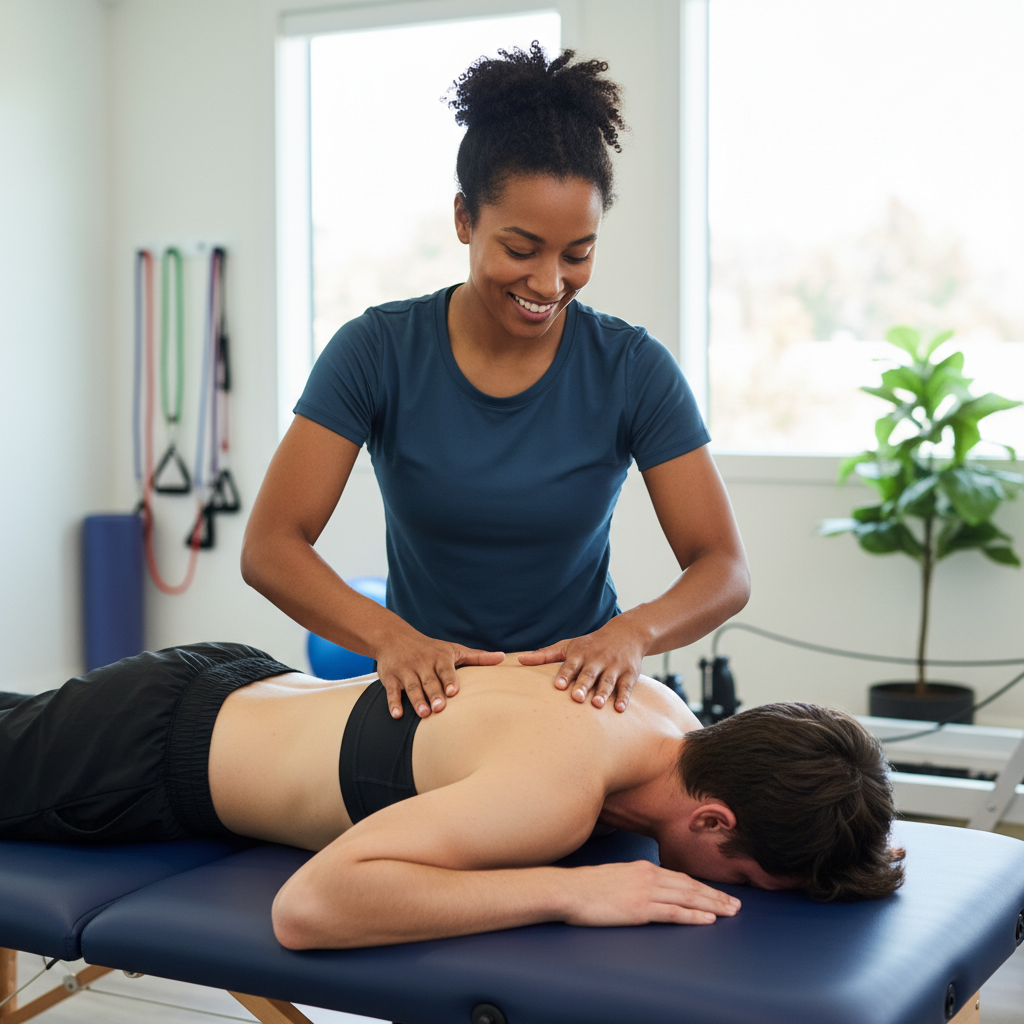
Physical therapy is the gold standard for managing scoliosis conservatively. When you visit Physical Therapy Now, you will work 1-on-1 with a licensed physical therapist who specializes in spinal alignment. The treatment begins with a detailed assessment of your curve, posture, and mobility. We use targeted manual therapy, such as soft tissue mobilization and myofascial release, to loosen tight muscles on the 'short' side of the curve. This helps reduce pain and allows for better movement during your corrective exercises.
Your program will focus heavily on core stabilization and functional strengthening. We use specific exercises designed to strengthen the 'long' or weak side of the curve while teaching your body how to find a neutral midline. We also incorporate postural retraining and breathing techniques to improve lung capacity and rib cage mobility. Modalities like heat, ice, or electrical stimulation may be used to manage acute pain, but the core of our approach is movement-based correction and education.
As you progress, we transition to more dynamic movements that help you maintain a corrected posture during your daily activities, sports, or work. The goal is to give you a 'physical toolbox' of movements that protect your spine for the long term. If your back pain persists, is not improving after two to three weeks of rest, or if you notice your posture is getting progressively worse, call Physical Therapy Now or schedule an appointment with our team today.
Recovery timeline
Managing scoliosis is a long-term journey rather than a quick fix. Initial pain relief and improved mobility are often achieved within 4 to 6 weeks of consistent physical therapy. However, structural stabilization and significant postural changes typically require 3 to 6 months of dedicated work. Because the spine is dynamic, maintaining these gains usually involves a lifelong commitment to the corrective exercises and postural habits learned during your clinical sessions.
What you can do at home today
- Practice 'tall sitting' by imagining a string pulling the top of your head toward the ceiling.
- Avoid carrying heavy bags or purses on only one shoulder; use a balanced backpack.
- Incorporate gentle core-strengthening exercises like bird-dogs or planks.
- Stretch the tight side of your torso daily to improve symmetry.
- Set a timer to change positions every 30 minutes if you work at a desk.
- Use a supportive mattress and try sleeping with a pillow between your knees.
- Stay active with low-impact exercises like swimming or walking to keep the spine mobile.
- Monitor your posture in a mirror to build better body awareness.
These tips support recovery but don't replace a professional evaluation. If you're unsure or symptoms worsen, please reach out.
When to call us right away
You should seek professional help immediately if you notice a sudden change in your posture, visible rib humping, or uneven hip height. Seek emergency care if you experience sharp, radiating pain down your legs, sudden weakness in your feet, or any loss of bowel or bladder control, as these can indicate severe nerve compression.