
Understanding this injury
A herniated disc, sometimes called a slipped or ruptured disc, occurs when the soft, jelly-like center of a spinal disc pushes through a tear in its tougher outer shell. Your spinal discs act as shock absorbers between your vertebrae, and when that inner material escapes, it can irritate or compress nearby nerves. This often leads to sharp pain, numbness, or weakness that can travel from your back down into your legs or from your neck into your arms.
While the pain can feel overwhelming, it is important to know that most herniated discs do not require surgery. The body has a natural ability to heal, and the right movement can significantly speed up that process. By focusing on reducing pressure on the nerve and strengthening the muscles that support your spine, you can get back to your favorite activities without the constant worry of a flare-up.
Common symptoms
- Sharp or burning pain in the back or neck
- Pain radiating into the arm or leg
- Numbness or tingling
- Muscle weakness in the affected area
What causes it
- Natural wear and tear due to aging, which makes discs less flexible and more prone to tearing.
- Using back muscles instead of leg muscles to lift heavy objects.
- Twisting or turning suddenly while lifting or carrying a heavy load.
- Repetitive movements that put constant stress on the spine over time.
- Acute trauma or injury from a fall or a sudden impact to the back.
- Sedentary lifestyles that lead to weakened core muscles and poor spinal support.
Who's most at risk
- Men and women between the ages of 30 and 50 are most commonly affected.
- Individuals with physically demanding jobs that involve frequent lifting, pulling, or pushing.
- People who sit for long periods, such as office workers or long-distance drivers.
- Those who are overweight, as excess weight adds stress to the discs in the lower back.
- Genetic predisposition or a family history of spinal disc issues.
- Smoking, which reduces oxygen supply to the discs and causes them to break down faster.
How we treat it
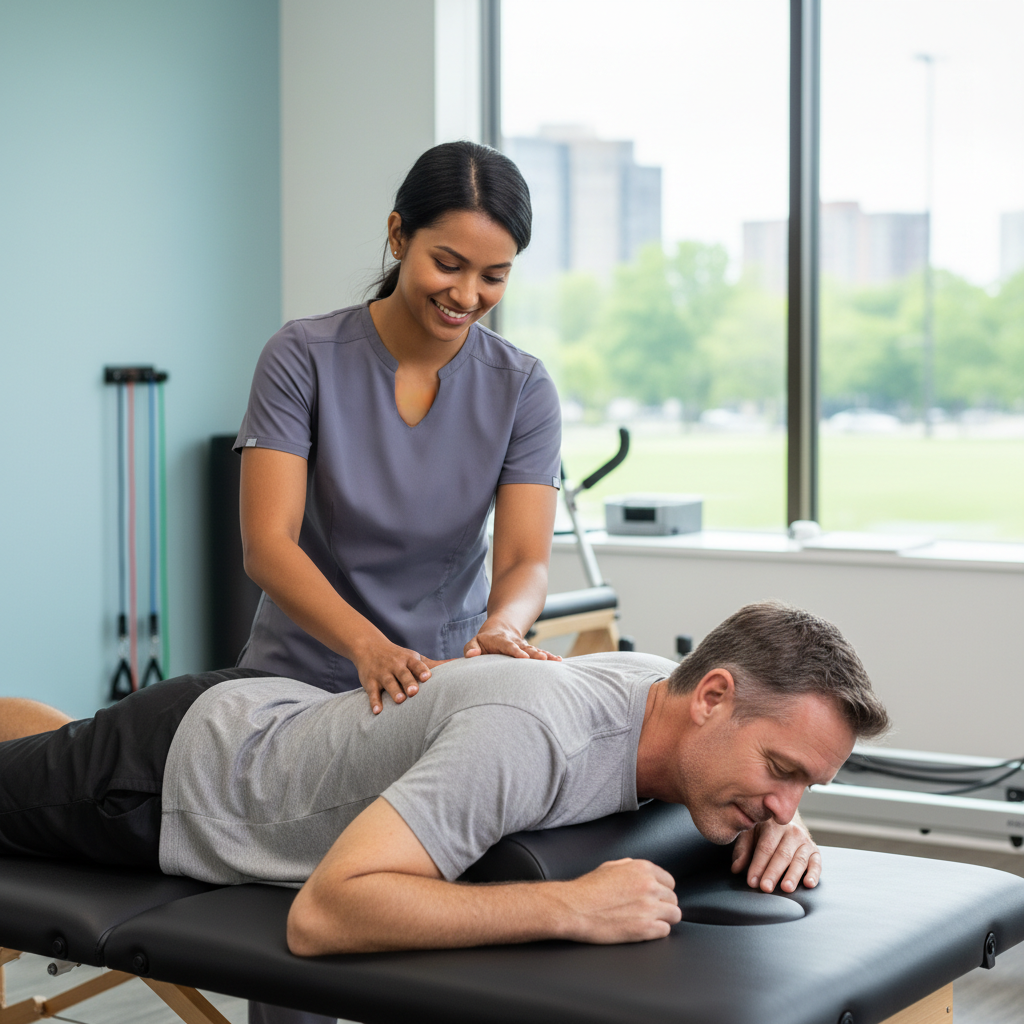
Physical therapy is the gold standard for treating a herniated disc conservatively. When you visit Physical Therapy Now, you will work 1-on-1 with a licensed physical therapist who will create a customized plan tailored to your specific symptoms. In the early stages, our focus is on pain relief and reducing inflammation. We use advanced modalities like electrical stimulation, heat/cold therapy, or ultrasound to soothe irritated nerves. Manual therapy is also a core part of our approach; your therapist may use gentle spinal mobilization and soft tissue massage to improve your range of motion and take pressure off the affected disc.
As your pain stabilizes, we progress to stabilization and strengthening exercises. You will learn specific movements, such as the McKenzie Method, which help 'centralize' the pain, moving it out of your limbs and back toward the spine where it can heal. We also prioritize core strengthening, as a strong 'internal corset' protects your discs from future injury. Along with exercise, we provide postural training to help you sit, stand, and move in ways that keep your spine neutral. Our goal is to empower you with the tools to manage your health independently.
If your back or leg pain persists for more than two to three weeks, is getting worse, or makes it difficult to perform daily tasks, call Physical Therapy Now or schedule an appointment today.
Recovery timeline
Most patients begin to feel significant relief within 4 to 6 weeks of starting a consistent physical therapy program. The initial phase focuses on reducing acute pain, followed by several weeks of rebuilding strength and flexibility. While the disc material may take a few months to fully resorb or stabilize, most people return to their normal daily routines fairly quickly. Consistency with your home exercise program is the biggest factor in preventing the injury from returning.
What you can do at home today
- Avoid bed rest; gentle movement like walking helps keep the spine flexible.
- Apply ice packs for 15 minutes every few hours during the first 48 hours to reduce inflammation.
- Switch to moist heat after the first two days to relax tight muscles.
- Practice 'neutral spine' posture by sitting upright with a small rolled towel behind your lower back.
- Avoid heavy lifting or sudden twisting movements while you are in pain.
- Sleep on your side with a pillow between your knees to take pressure off your lower back.
- Take short, frequent breaks from sitting to stand up and stretch.
- Stay hydrated to help maintain the height and health of your spinal discs.
These tips support recovery but don't replace a professional evaluation. If you're unsure or symptoms worsen, please reach out.
When to call us right away
Seek immediate medical attention or visit an emergency room if you experience a sudden loss of bowel or bladder control, profound weakness in your legs that makes standing difficult, or 'saddle anesthesia,' which is numbness in the inner thighs and groin area. These can be signs of a rare but serious condition that requires urgent care.