
Understanding this injury
Sacroiliac (SI) joint dysfunction involves pain in the lower back and buttocks where your spine meets your pelvis. These two joints, located on either side of your tailbone, act as shock absorbers between your upper body and your legs. When these joints move too much (instability) or too little (stiffness), it can lead to inflammation and sharp or aching pain that often radiates into the hip or groin area.
Many patients describe the sensation as a deep ache that makes sitting, standing, or climbing stairs difficult. Because the SI joint is so close to the lumbar spine, it is often mistaken for a herniated disc or general lower back strain. At Physical Therapy Now, we focus on identifying the exact source of your discomfort to ensure you get the right treatment to restore your mobility and comfort.
Common symptoms
- Pain in the lower back and buttocks
- Pain radiating to the groin or thigh
- Stiffness in the hips and lower back
- Pain worsened by standing or climbing stairs
What causes it
- Traumatic injury from a sudden impact, such as a fall or car accident
- Repetitive stress from high-impact sports or heavy lifting
- Changes in gait or walking patterns due to other leg or foot injuries
- Hormonal changes during pregnancy that loosen pelvic ligaments
- Uneven leg length putting lopsided pressure on the pelvis
- Post-surgical changes following a lumbar spinal fusion
Who's most at risk
- Pregnant or postpartum women due to ligament laxity
- Athletes involved in contact sports or long-distance running
- Individuals with existing osteoarthritis in the spine or hips
- People with jobs requiring heavy lifting or prolonged twisting
- Patients with a history of lower back or hip surgery
- Those with muscle imbalances in the core, glutes, or hamstrings
How we treat it
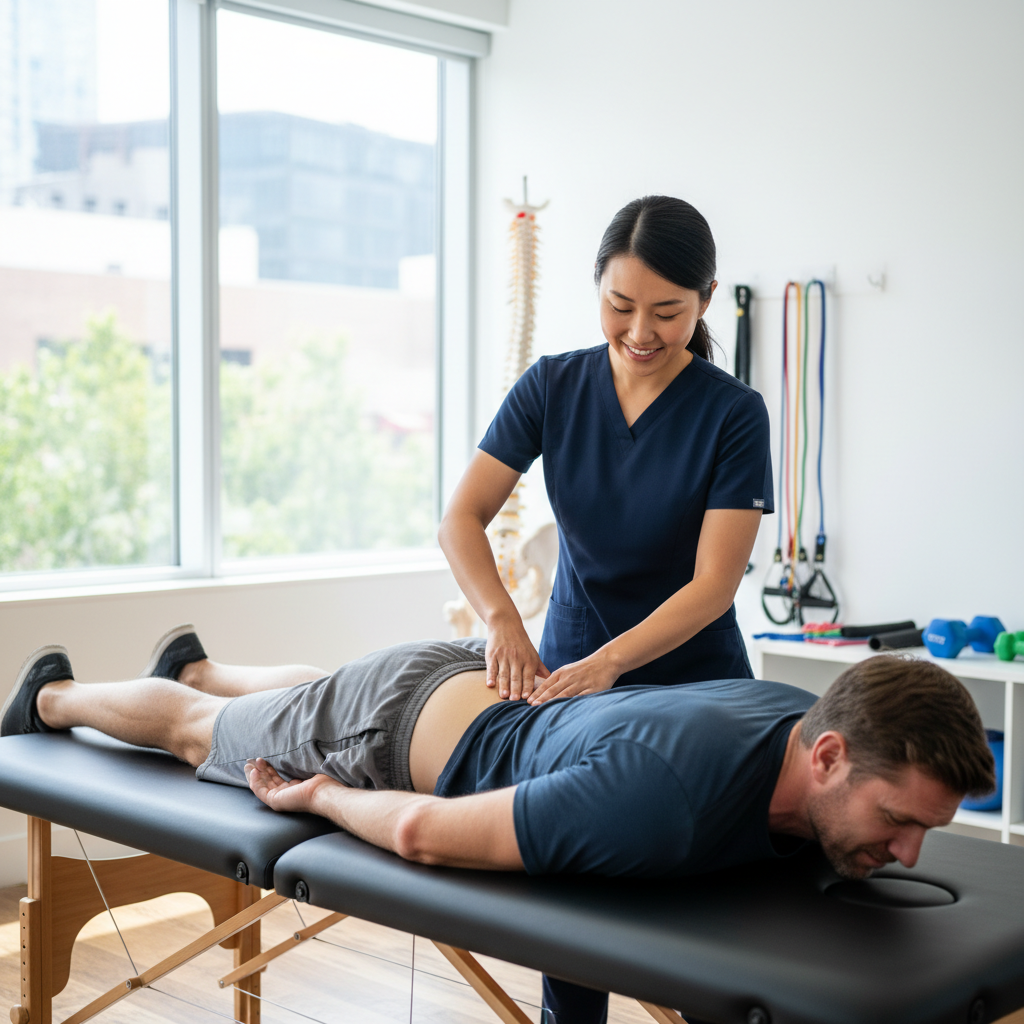
Physical therapy is the gold standard for treating SI joint dysfunction because it addresses the root cause: joint mechanics and muscle support. When you visit Physical Therapy Now, you will work 1-on-1 with a licensed physical therapist who will perform a detailed evaluation. We often begin with manual therapy, where your therapist uses hands-on techniques to gently mobilize a 'stuck' joint or realign the pelvis. This helps reduce immediate inflammation and restores your natural range of motion.
As your pain decreases, your sessions will shift toward stabilization. We focus heavily on strengthening the 'powerhouse' muscles—your deep core, glutes, and pelvic floor—to provide a natural brace for the SI joint. We may also use modalities like heat, ice, or electrical stimulation to manage pain between exercises. Your therapist will also analyze your posture and walking style to prevent the injury from returning. This step-by-step progression ensures that your body is strong enough to handle daily activities without re-irritating the joint.
Our goal is to get you back to your favorite activities without the fear of a flare-up. We provide the personalized attention needed to ensure your form is perfect and your recovery is on track. If your pain persists, is not improving after two to three weeks of rest, or is getting worse, call us or schedule an appointment today to start your recovery.
Recovery timeline
Most patients begin to feel significant relief within 2 to 4 weeks of consistent physical therapy. Initial recovery focuses on reducing inflammation and restoring movement. A full recovery, where the supporting muscles are strong enough to prevent future episodes, typically takes 6 to 12 weeks. The timeline depends on the severity of the joint dysfunction and how closely you follow your customized home exercise program provided by your therapist.
What you can do at home today
- Apply ice to the lower back and upper buttock for 15 minutes to reduce inflammation
- Avoid sitting for long periods; take a short walk every 30 minutes
- Sleeping with a pillow between your knees to keep your hips aligned
- Avoid 'hanging' on one hip while standing; keep weight evenly distributed
- Limit activities that involve deep twisting or heavy asymmetrical lifting
- Wear supportive, flat shoes to ensure a stable walking pattern
- Perform gentle pelvic tilts on a flat surface to maintain mobility
- Use a lumbar roll or support when sitting to maintain proper spinal curves
These tips support recovery but don't replace a professional evaluation. If you're unsure or symptoms worsen, please reach out.
When to call us right away
While SI joint pain is common, certain symptoms require immediate attention. Seek help if you experience sudden weakness in your legs, numbness in the groin area, or loss of bladder or bowel control. If your pain is so severe that you cannot walk or if you develop a fever along with back pain, please seek emergency care or call us immediately.