
Understanding this injury
Posterior Tibial Tendinitis is a common condition that occurs when the posterior tibial tendon becomes inflamed, overstretched, or torn. This specific tendon is one of the most important structures in your lower leg because it connects the calf muscle to the bones on the inside of your foot. Its primary job is to hold up your arch and provide support when you walk or run. Because this tendon is responsible for steadying your foot during movement, an injury can make even simple steps feel painful.
If this condition is left untreated, the tendon may no longer be able to support the arch properly. This can lead to the arch slowly collapsing, a condition often called 'acquired flat foot.' You might notice pain along the inside of your ankle or a change in the shape of your foot over time. The good news is that with early intervention and physical therapy, most patients can heal the tendon and prevent permanent changes to their foot structure.
Common symptoms
- Pain along the inner ankle and arch
- Swelling on the inner side of the ankle
- Flattening of the foot arch
- Difficulty rising onto toes
What causes it
- Overuse from high-impact sports like running, basketball, or soccer
- Sudden increase in physical activity levels or intensity
- A direct fall or trauma to the inside of the ankle
- Wearing worn-out shoes that do not provide adequate arch support
- Repetitive stress from walking on uneven or hard surfaces
- Degeneration of the tendon tissue due to long-term wear and tear
Who's most at risk
- Women over the age of 40 are statistically at a higher risk
- Individuals with naturally low arches or flat feet
- Being overweight, which places extra pressure on the foot arch
- History of previous ankle injuries or fractures
- Patients with systemic conditions like diabetes or high blood pressure
- Long-distance runners or athletes in jumping sports
How we treat it
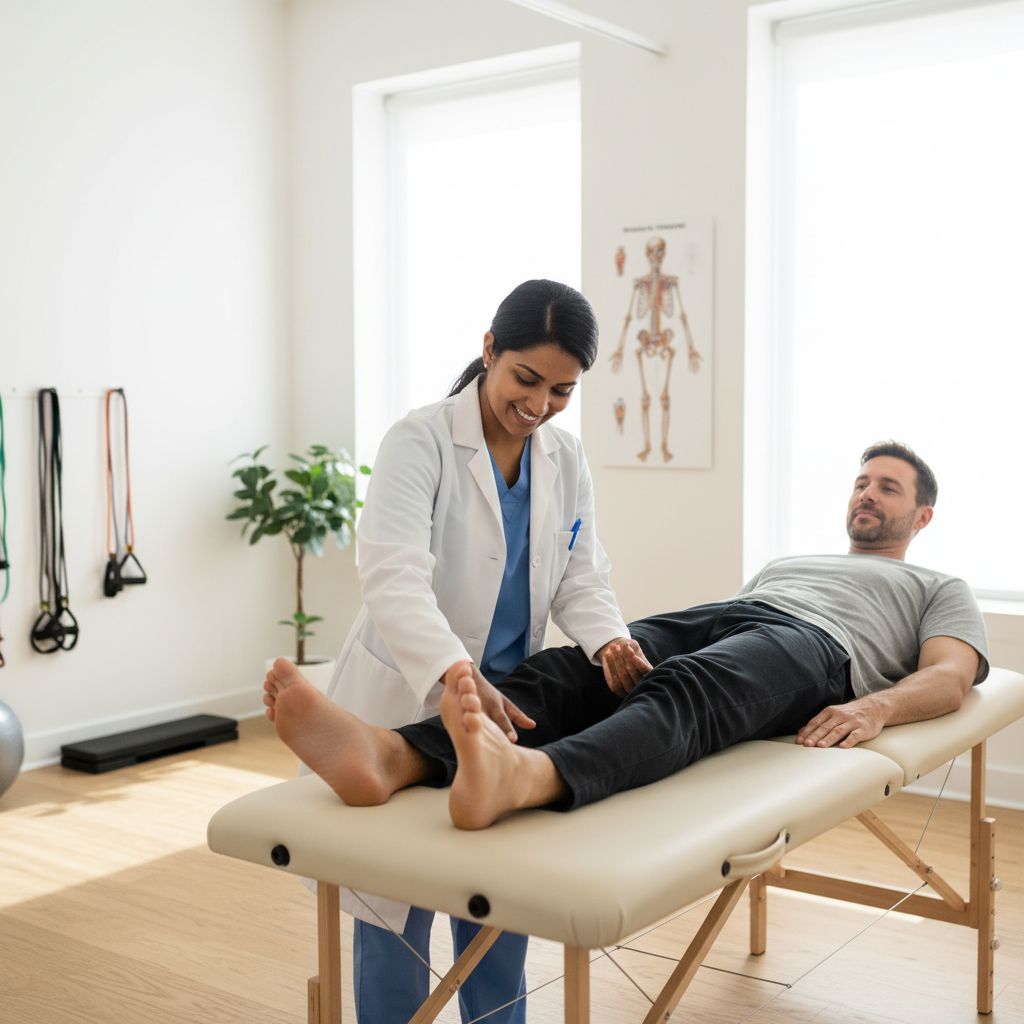
Physical therapy is the gold standard for treating Posterior Tibial Tendinitis without surgery. When you visit Physical Therapy Now, you will work 1-on-1 with a licensed physical therapist who will first assess your gait and foot alignment. Initial treatment focuses on reducing inflammation through modalities like ultrasound or electrical stimulation. Your therapist may also use manual therapy techniques, such as soft tissue mobilization and joint manipulation, to improve the flexibility of the ankle and break up any scar tissue that has formed around the tendon.
As the pain subsides, your treatment will progress to specific strengthening exercises. We focus heavily on the tibialis posterior muscle, but also look at the 'kinetic chain'—strengthening your hips and calves to take the workload off your foot. We may also provide custom orthotic recommendations or taping techniques to support your arch while the tendon heals. Balance training is another vital component, as it helps retrain the nerves in your foot to react quickly to changes in terrain.
In the final stages of recovery, your physical therapist will guide you through functional movements like squatting and jumping to ensure you can return to your favorite activities safely. Our goal is to fix the underlying cause of the strain so the injury does not return. If your foot pain persists, is not improving after two to three weeks of rest, or is getting worse, please call us to schedule an appointment immediately.
Recovery timeline
Recovery from Posterior Tibial Tendinitis typically occurs in phases. Mild cases may see significant improvement in 4 to 6 weeks with consistent physical therapy. If the condition has caused the arch to begin flattening, recovery may take 3 to 4 months of dedicated rehabilitation. The first phase focuses on pain relief, the second on building strength, and the final phase on returning to sports or high-impact daily activities.
What you can do at home today
- Rest the foot and avoid activities that cause pain for at least 48 hours
- Apply ice to the inside of the ankle for 15 minutes several times a day
- Wear supportive sneakers even inside the house to protect your arch
- Perform gentle calf stretches to reduce tension on the tendon
- Gently roll your foot over a tennis ball to massage the plantar fascia
- Use over-the-counter arch supports in your daily footwear
- Avoid walking barefoot on hard floors until the inflammation subsides
- Elevate your foot above your heart levels when sitting to reduce swelling
These tips support recovery but don't replace a professional evaluation. If you're unsure or symptoms worsen, please reach out.
When to call us right away
While most tendon pain improves with rest, you should seek professional help immediately if you notice a sudden 'pop' in your ankle, have severe swelling that prevents you from wearing shoes, or if your foot arch appears to have collapsed or changed shape compared to the other foot. If you cannot bear weight on the foot, contact us right away.