
Understanding this injury
Plantar fasciitis is one of the most common causes of heel pain that we see at Physical Therapy Now. It involves inflammation of the plantar fascia, which is a thick, rubber-band-like tissue that connects your heel bone to your toes and supports the arch of your foot. When this tissue is under too much stress, it can develop tiny tears and become swollen or irritated. Most people notice a sharp, stabbing pain in the bottom of their foot, especially when taking their first steps in the morning or after sitting for a long time.
While the pain can feel overwhelming, it is important to know that it is a very treatable condition. Without proper care, the pain can become chronic and change the way you walk, potentially leading to knee, hip, or back problems. Our goal is to help you understand why this pressure is building up and how to relieve it so you can return to your favorite activities without discomfort.
Common symptoms
- Stabbing pain in the heel with first steps in the morning
- Pain that decreases with movement but returns after rest
- Tenderness on the bottom of the foot
- Pain worsened by prolonged standing
What causes it
- Overuse from high-impact activities like running or jumping
- Wearing worn-out shoes or footwear without proper arch support
- Sudden increases in physical activity levels or intensity
- Tight calf muscles that pull on the heel bone
- Standing for long hours on hard surfaces like concrete
- Biomechanical issues such as flat feet or very high arches
Who's most at risk
- Individuals between the ages of 40 and 60
- People with occupations that require constant standing, such as teachers or nurses
- Those who are carrying extra body weight which adds pressure to the feet
- Athletes who specialize in long-distance running or dance
- Individuals with tight Achilles tendons or limited ankle flexibility
- People who frequently walk barefoot on hard floors at home
How we treat it
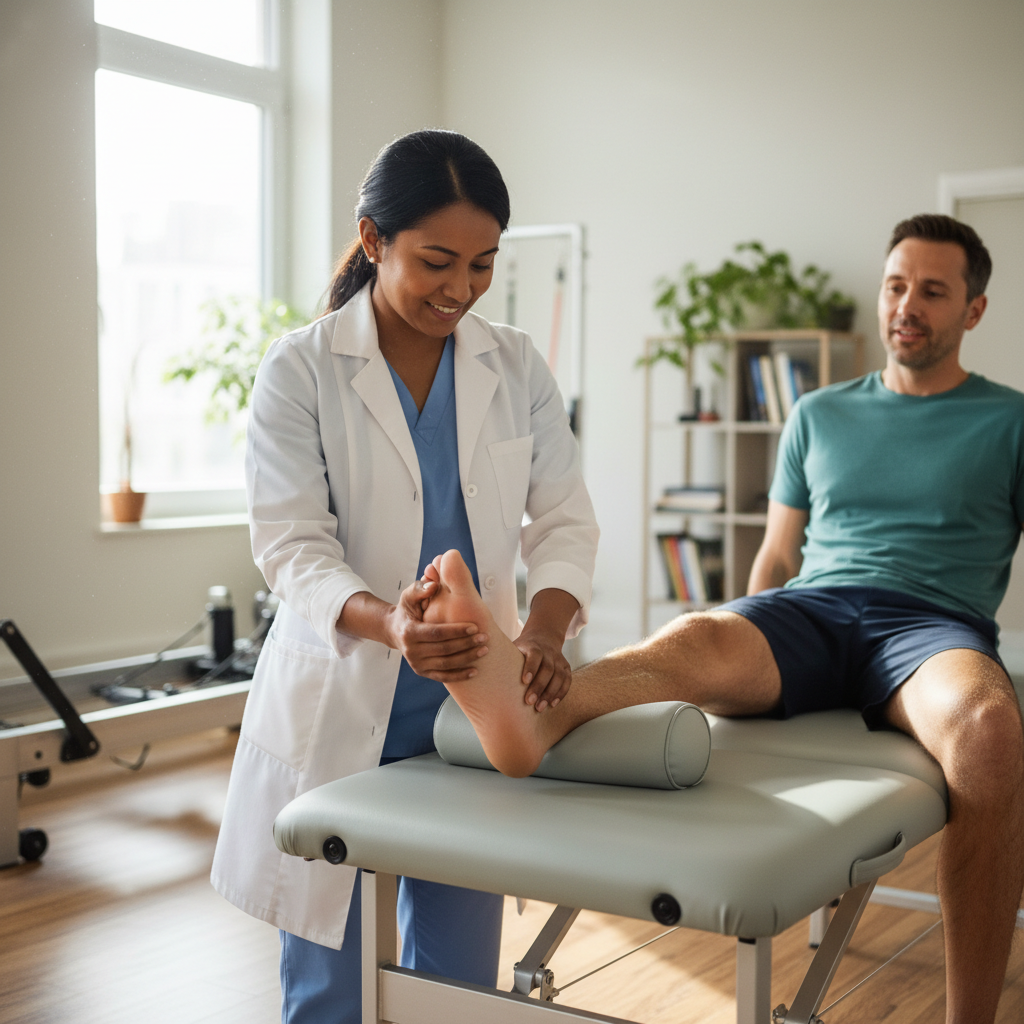
At Physical Therapy Now, we prioritize a conservative, non-invasive approach to healing. When you come in for your first visit, you will work 1-on-1 with a licensed physical therapist who will evaluate your gait, foot structure, and muscle flexibility. Treatment typically begins with manual therapy, where your therapist uses hands-on techniques to mobilize the soft tissue and improve joint movement in the ankle and mid-foot. We also use modalities like ultrasound or electrical stimulation to reduce acute inflammation and promote blood flow to the area.
As you progress, we focus on specific stretching and strengthening exercises. Stretching the calf muscles and the plantar fascia itself is vital for long-term relief. We also teach you 'intrinsic foot strengthening'—small exercises that build the tiny muscles supporting your arch. Your therapist will also provide a footwear assessment and may suggest custom orthotics or taping techniques to take the pressure off your foot while it heals. The final phase involves functional training to ensure your body mechanics are correct when you run, walk, or climb stairs.
Our team is dedicated to helping you find lasting relief without the need for invasive procedures. If your heel pain persists, isn't improving in 2-3 weeks, or is getting worse, please call Physical Therapy Now or schedule an appointment on our website today.
Recovery timeline
Recovery for plantar fasciitis is usually a gradual process. In the first 2 to 4 weeks, the focus is on reducing pain and inflammation. Over the next 4 to 8 weeks, most patients see significant improvements in mobility and strength as we address the root cause of the tension. While mild cases may resolve in 2 months, more chronic cases can take 6 months of consistent physical therapy to achieve full, pain-free function and prevent the injury from returning.
What you can do at home today
- Roll your foot over a cold water bottle for 15 minutes to reduce swelling
- Perform gentle calf stretches against a wall several times a day
- Avoid walking barefoot; wear supportive slippers or shoes even inside the house
- Stretch your toes and arches before getting out of bed in the morning
- Check your sneakers and replace them if the soles are worn down
- Modify your workout to include low-impact activities like swimming or cycling
- Massage the bottom of your foot with a tennis ball to release tension
- Maintain a healthy weight to reduce the daily load on your arches
These tips support recovery but don't replace a professional evaluation. If you're unsure or symptoms worsen, please reach out.
When to call us right away
While heel pain is common, you should seek immediate help if the pain is so severe that you cannot put any weight on your foot. Other red flags include visible bruising, numbness or tingling in the foot, or signs of infection like redness and warmth. If your pain is interfering with your daily life, contact us immediately for a professional evaluation.