A sports injury can interrupt your training, affect everyday activities, and leave you wondering when it is safe to get back in the game. Sports injury rehabilitation offers a structured way to address pain, restore movement, and rebuild the strength and confidence needed for your sport. At Physical Therapy NOW™ in Weston, FL, your care can be tailored to your injury, goals, and current level of activity.
Knowing what to expect can make the process feel more manageable. While every recovery is different, rehabilitation typically includes an initial evaluation, a personalized treatment plan, progressive exercises, and guidance for returning to sport safely.
Your First Visit
Your first appointment usually begins with a conversation about how the injury happened, what symptoms you have, and how they affect your daily routine or sport. Your physical therapist may ask about your training schedule, past injuries, footwear or equipment, and what you hope to return to doing.
Next, your therapist will assess relevant movement and function. Depending on your symptoms, this may include checking your range of motion, strength, balance, coordination, and the way you perform certain movements. The assessment helps identify limitations and informs a plan that fits your needs. Your therapist may also discuss whether you should consult another healthcare professional for additional evaluation.
Come prepared to describe what makes your symptoms better or worse. Wear comfortable clothing that lets you move, and bring any relevant medical information or referral details. It is helpful to share your sport, position, usual training load, and upcoming goals, but avoid pushing through an activity simply to demonstrate your symptoms.
Building A Personalized Plan
Rehabilitation is not one standard routine for every athlete. Your plan will depend on the type and severity of the injury, your health history, your response to activity, and the demands of your sport. A physical therapist can explain the goals of treatment and how progress will be monitored.
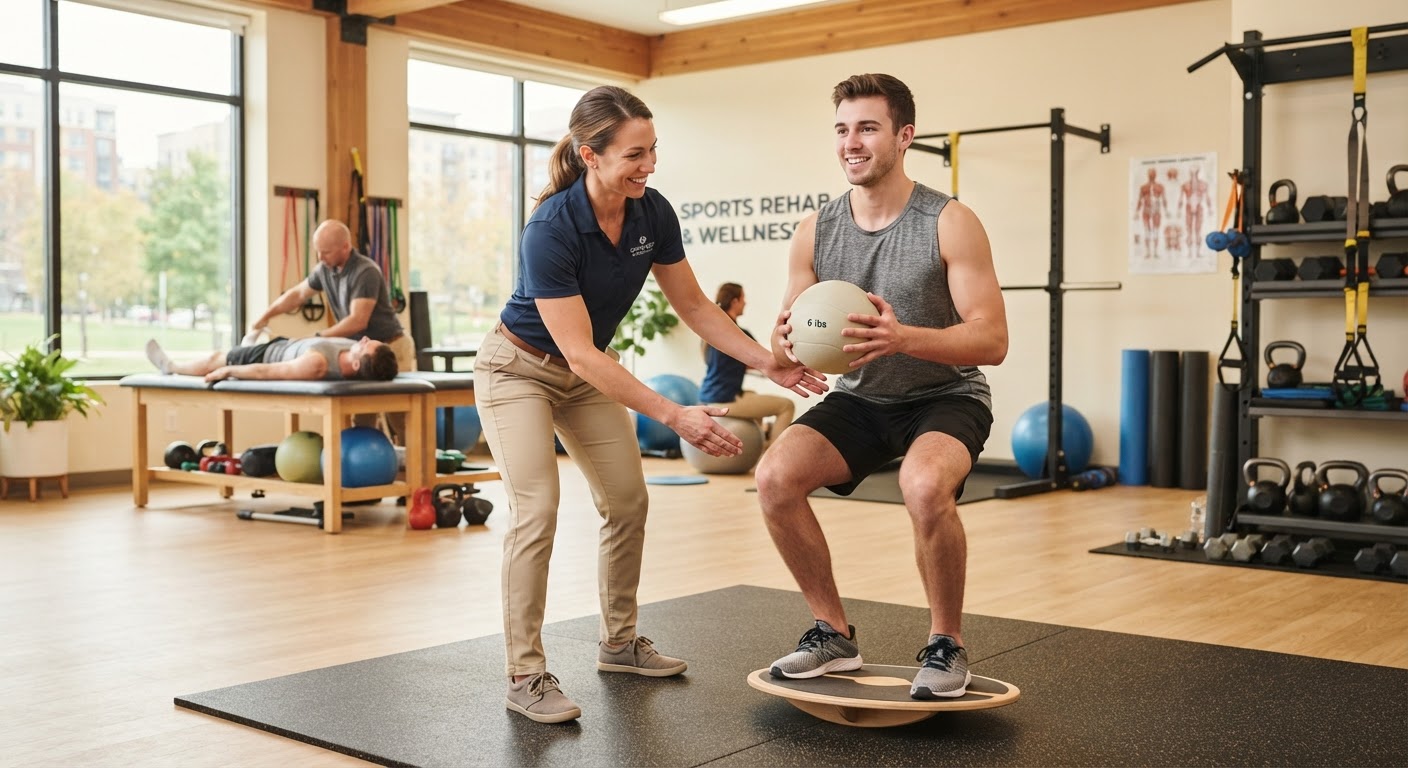
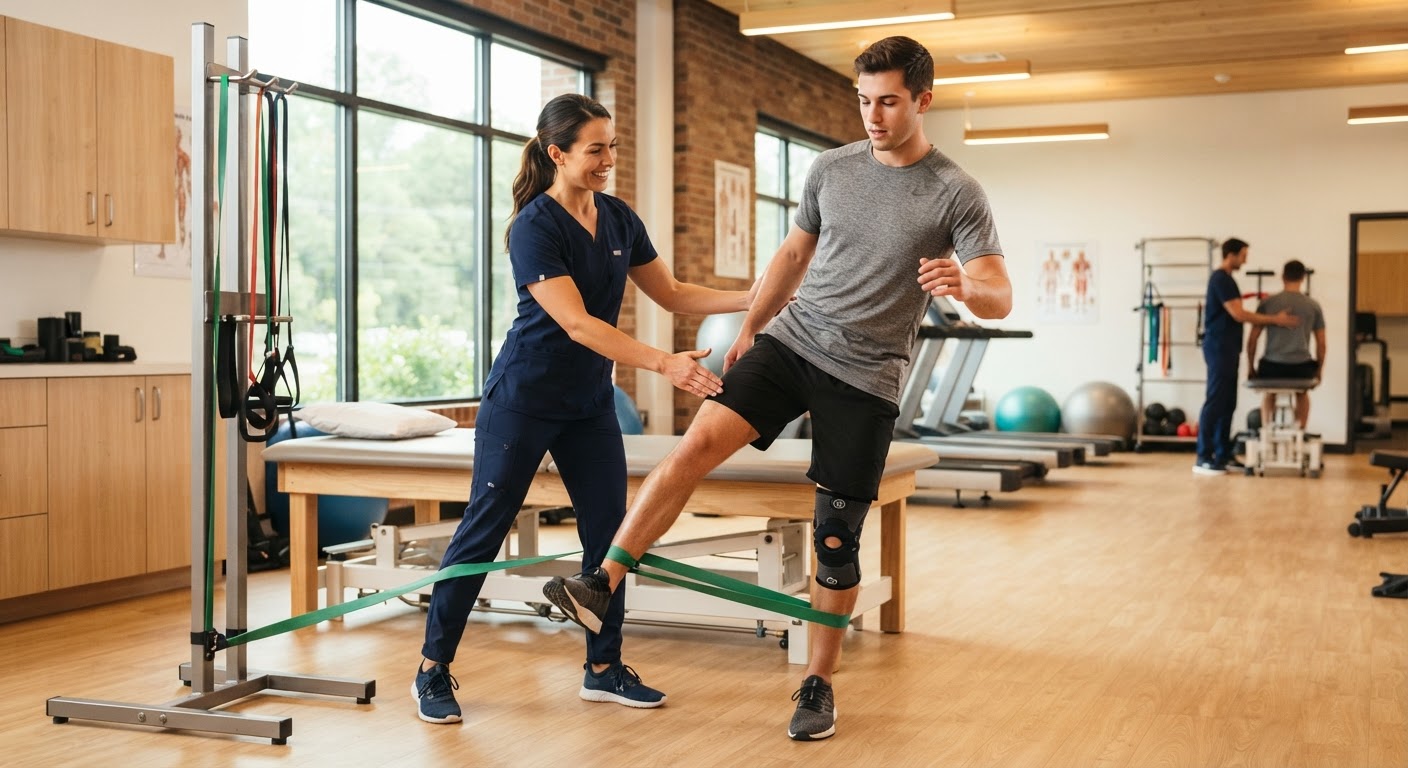
Treatment may include therapeutic exercises to improve strength, mobility, balance, or control. Your therapist may also use hands-on techniques or other appropriate interventions to support movement and pain relief. These approaches are generally paired with active participation: the exercises and habits you practice are an important part of your rehabilitation.
Your plan may change as you improve. If an exercise causes a notable increase in symptoms, tell your therapist rather than guessing whether to stop, continue, or modify it. Clear communication helps your care team adjust the activity to your current tolerance.
Progressing Through Rehabilitation
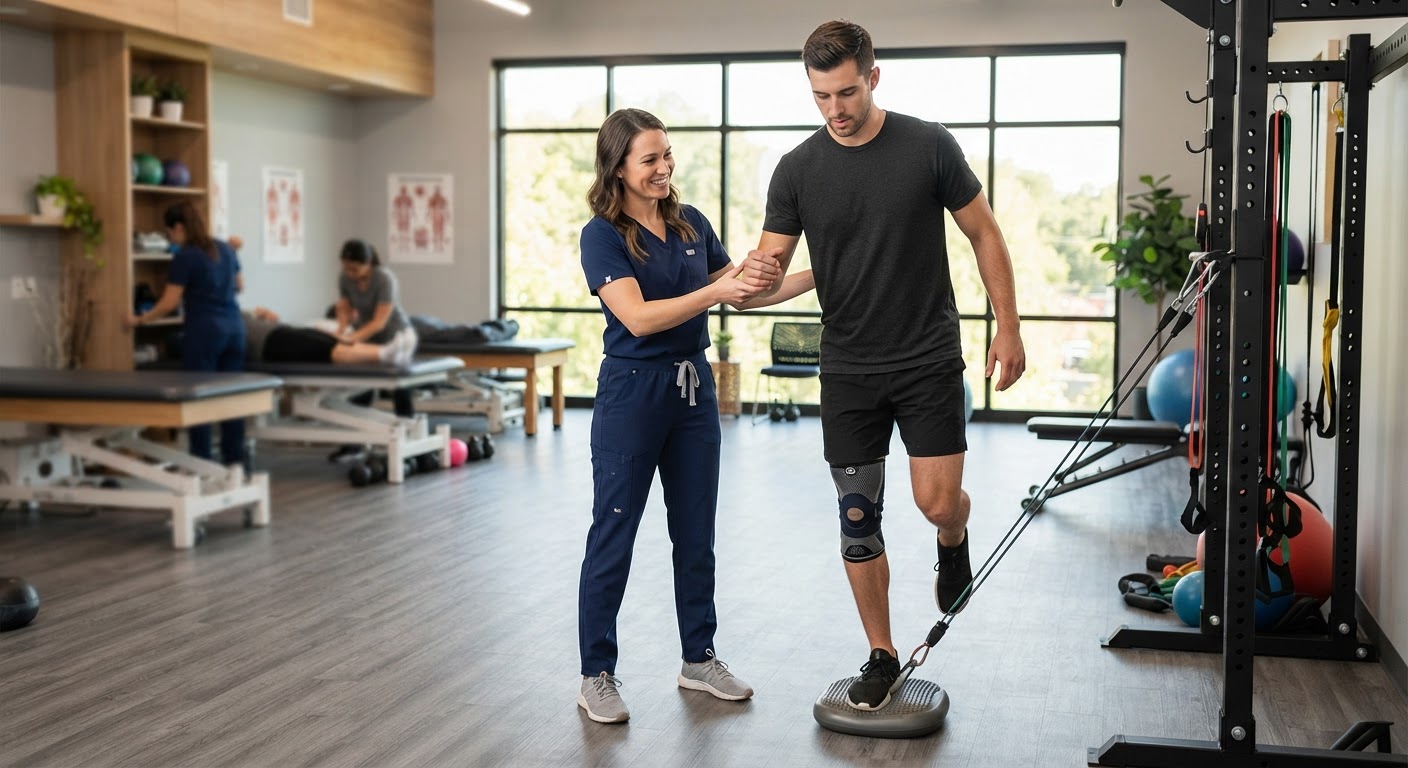
Early rehabilitation often focuses on managing symptoms and restoring comfortable movement. As your condition allows, exercises may become more challenging and specific to your activity. For example, an athlete may gradually work on single-leg balance, controlled landing, acceleration, or changes of direction. The appropriate progression depends on the injury and your therapist’s assessment.
A gradual approach matters. Pain levels can be one useful piece of information, but they do not tell the whole story. Your therapist may also consider swelling, movement quality, strength, endurance, and how you feel later that day or the next morning. If symptoms flare after a new activity, share when they began and how long they lasted. This information can help guide the next step.
Rehabilitation timelines vary. Some injuries improve relatively quickly, while others require a longer period of recovery and progressive training. Avoid comparing your progress with another athlete’s or relying on a fixed timeline from someone else. Your therapist can help you understand your milestones and discuss when it may be appropriate to advance.
Practical Tips Between Appointments
Follow your home exercise instructions as provided, and ask for clarification if you are unsure about technique, frequency, or how an exercise should feel. Consistency is often more useful than trying to do extra repetitions all at once. Do not add strenuous workouts or return to full practice without discussing how to progress with your therapist.
Keep a simple record of your activity and symptoms. Note the type and duration of exercise, any discomfort during or afterward, and how you feel the following day. This can reveal patterns and make conversations at appointments more specific.
Support your recovery with sensible routines. Make time for sleep, stay hydrated, and follow any guidance you have received about activity modification. Avoid using pain relief as a reason to ignore symptoms or continue a movement that your care team has advised you to limit. If you experience severe or rapidly worsening symptoms, significant swelling, numbness, or an inability to bear weight, contact a healthcare professional promptly. For a medical emergency, seek emergency care.
Preparing To Return To Sport
Returning to sport is usually a progression rather than a single all-clear moment. Depending on your injury and activity, your plan may move from basic conditioning to sport-specific drills, practice participation, and eventually full competition. Your therapist can help you assess whether you are ready for each step and identify areas that still need work.
Be open about how the injury feels during drills and after practice. Feeling better during everyday tasks does not always mean your body is ready for intense training. Follow the progression you and your therapist agree on, and speak up if pain, swelling, or reduced confidence returns. A thoughtful plan can help you resume activity with a clearer understanding of your current abilities and next steps.
Get Started With A Clear Plan
Sports injury rehabilitation can help you work toward pain relief, better movement, and a confident return to the activities you value. Physical Therapy NOW™ provides physical therapy focused on your individual needs at its Weston location. If an injury is keeping you from training or competing, visit or call the Weston location to discuss an evaluation and take the next step toward a personalized rehabilitation plan.
Ready to start feeling better?
Physical Therapy NOW™ has 40+ Florida locations with same-week appointments. Most insurance, auto accident (PIP), workers' compensation and Medicare accepted.