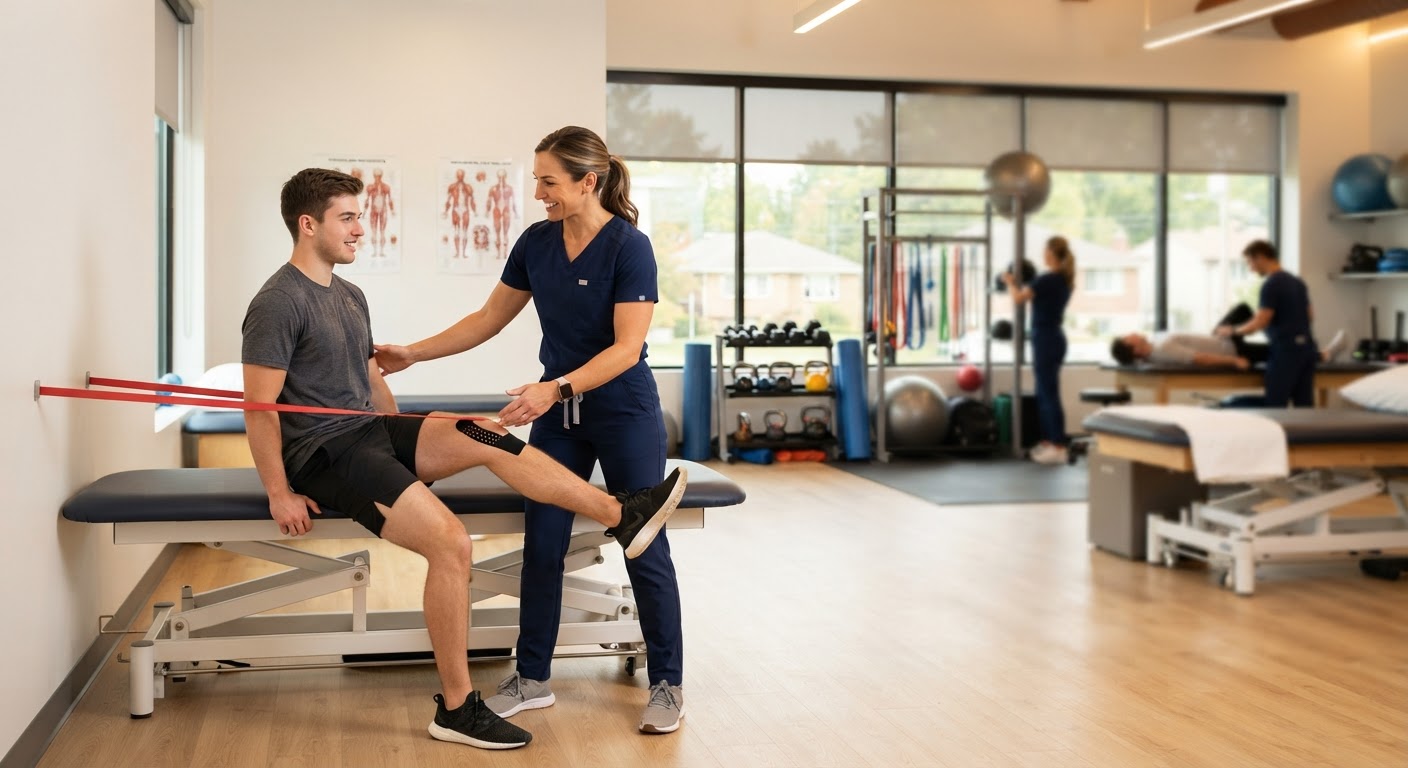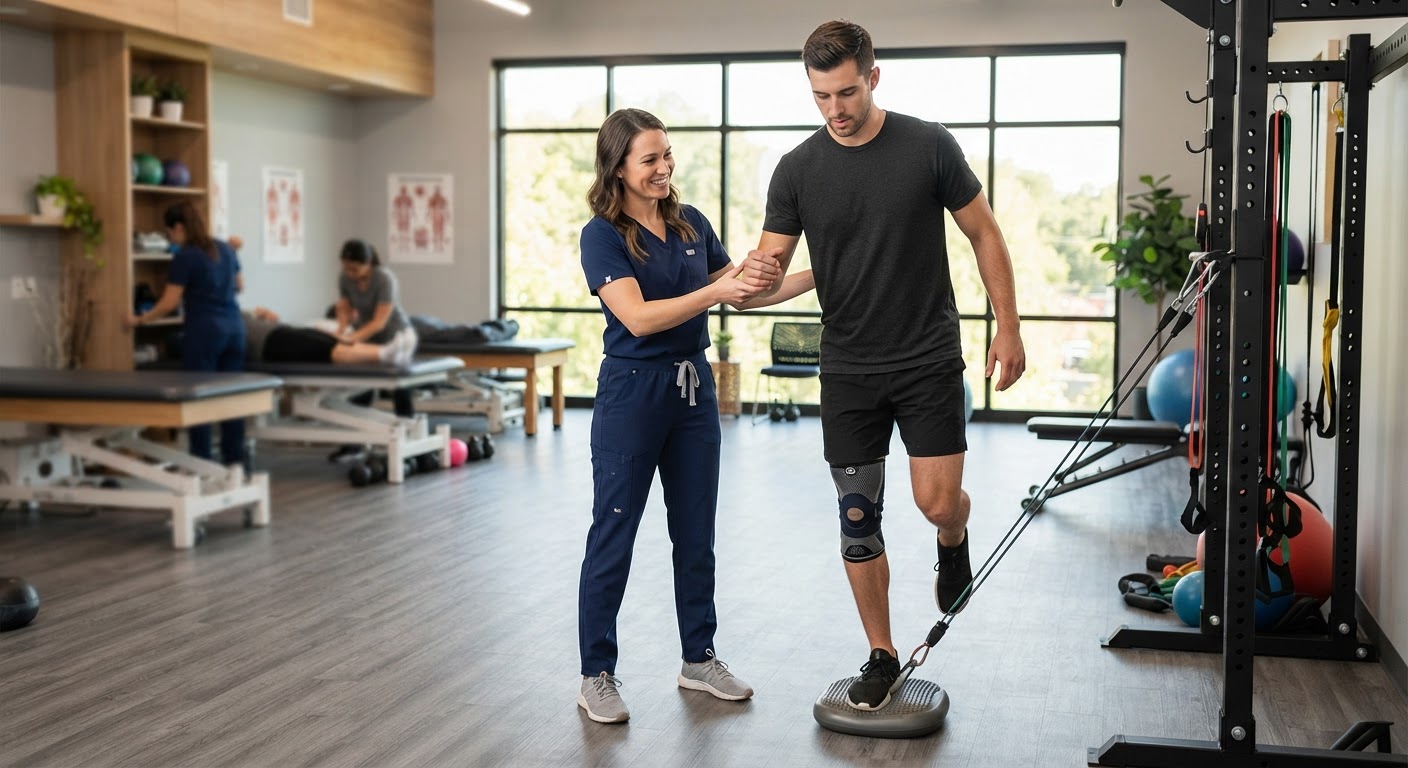
An injury can interrupt your training, affect everyday activities, and leave you wondering when it is safe to get back in the game. Sports injury rehabilitation offers a structured way to address pain, rebuild movement and strength, and work toward returning to the activities you enjoy. Knowing what to expect can make the process feel more manageable.
At Physical Therapy NOW™, our team works with people in Temple Terrace, FL, to create care plans around their symptoms, goals, sport, and daily demands. Your rehabilitation will be specific to you, but most programs include an evaluation, progressive exercises, practical guidance, and regular check-ins.
Your First Visit And Evaluation
Your physical therapist will begin by asking about how the injury happened, when symptoms started, and what makes them better or worse. Be ready to discuss your sport, training schedule, previous injuries, health history, and goals. For example, your goal might be to walk comfortably, return to recreational tennis, or resume competitive training.
The therapist may observe your posture and movement and assess areas such as joint mobility, strength, balance, flexibility, and coordination. The evaluation helps identify factors that may be contributing to your symptoms and activities that currently feel difficult. You can also share any concerns about your recovery or return to sport.
If you have severe pain, a major loss of function, or symptoms that are getting worse, seek appropriate medical care. Your physical therapist can discuss whether additional evaluation or coordination with another healthcare professional is needed.
Building A Rehabilitation Plan
After the evaluation, your therapist will explain the findings and work with you to set practical goals. Your plan may include therapeutic exercises, movement training, balance or coordination activities, and guidance for managing your activity level. The specific approach depends on the injury and your needs. A plan for a runner with knee pain, for instance, may differ from one for a swimmer recovering from a shoulder injury.
Rehabilitation usually progresses in stages rather than following a fixed timetable. Early care may focus on comfortable movement and managing symptoms. As your tolerance improves, exercise may become more challenging to help rebuild strength, control, and sport-specific capacity. Your therapist will adjust the plan based on your response and progress.
What A Typical Session May Include
A physical therapy session may begin with a brief check-in about your symptoms and activity since the last visit. Your therapist may then guide you through exercises or movement practice and provide feedback on technique. Depending on your plan, the session may also include hands-on care or other strategies to support comfortable movement.
You should feel able to ask questions and tell your therapist how an activity feels. Some muscle effort is expected during many exercises, but sharp, escalating, or unusual pain is a reason to pause and speak up. Do not assume you need to push through symptoms to make progress. Clear communication helps your therapist tailor the challenge to your needs.
Practical Tips Between Visits
The work you do between appointments can be an important part of rehabilitation. Follow your home exercise instructions and ask for clarification if you are unsure about the movement, number of repetitions, or how often to do it. Consistent, appropriate practice is generally more useful than doing more than your plan recommends.
Track how you feel during and after activities. Note changes in pain, swelling, stiffness, sleep, or confidence, and share relevant patterns with your therapist. Use the activity modifications you discussed, such as temporarily reducing intensity or choosing a lower-impact option. Avoid returning to a full training load simply because symptoms have eased for a day.
Recovery also takes place outside the clinic. Make time for rest, maintain everyday movement as tolerated, and follow any guidance from your healthcare team. If an exercise repeatedly causes a significant symptom increase, contact your therapist for advice rather than changing the plan on your own.
Returning To Sport Safely
Feeling better is an important milestone, but it does not always mean you are ready for unrestricted play. Return-to-sport planning considers how you move and how well you tolerate the demands of your activity. Depending on your sport and injury, this may involve gradually increasing duration, speed, resistance, direction changes, jumping, throwing, or practice intensity.
A gradual progression gives you and your therapist a chance to monitor your response before adding more demand. Your therapist can help you think through training modifications and signs that it may be appropriate to advance or hold steady. Follow any advice from your physician or other members of your healthcare team, especially after surgery or a significant injury.
Your recovery timeline will depend on factors such as the injury, your overall health, the demands of your sport, and how your body responds to rehabilitation. Comparing your progress with someone else’s can be discouraging and may not be useful. Focus instead on your agreed goals and the steps you can take consistently.
Support For Your Comeback In Temple Terrace
Sports injury rehabilitation is a collaborative process. You bring your questions, effort, and knowledge of your own goals; your physical therapist brings assessment and guidance to help you progress thoughtfully. At Physical Therapy NOW™, we provide individualized physical therapy for people working toward pain relief, improved function, and a confident return to activity.
If a sports injury is limiting your routine, contact Physical Therapy NOW™ at our Temple Terrace location to learn about scheduling an evaluation. Call or visit the clinic to discuss your goals and take a practical first step toward rehabilitation.
Ready to start feeling better?
Physical Therapy NOW™ has 40+ Florida locations with same-week appointments. Most insurance, auto accident (PIP), workers' compensation and Medicare accepted.