Sports Injury Rehabilitation: What to Expect
A sports injury can disrupt more than your training schedule. Pain, stiffness, weakness, or worry about reinjury may make everyday activities and favorite sports feel difficult. Sports injury rehabilitation offers a structured way to address these challenges and work toward a safe return to the activities that matter to you.
At Physical Therapy NOW™ in Fort Lauderdale, rehabilitation is tailored to your injury, goals, and current abilities. While every recovery is different, understanding the process can help you feel prepared and take an active role in your progress.
What Sports Injury Rehabilitation Does
Rehabilitation is more than treating pain at the site of an injury. A physical therapist looks at how the affected area moves and functions, as well as strength, flexibility, balance, coordination, and the demands of your sport. The goal is to address limitations that may be affecting your performance and daily life, while building capacity for activity over time.
Your plan may include guided exercise, movement training, hands-on techniques, and education about managing activity. The specific approach depends on your needs and the therapist’s findings. Physical therapy can support pain relief and improved function, but recovery timelines and results vary from person to person.
Your First Physical Therapy Visit
Your first appointment typically begins with a conversation about what happened, when symptoms started, and how they affect you. Your therapist may ask about your sport, position, training routine, previous injuries, health history, and goals. Share what movements increase discomfort and what you hope to return to doing.
Next, the therapist may assess your movement, strength, flexibility, balance, and the injured area. Depending on your symptoms, they may also look at how your hips, knees, ankles, shoulders, or other related areas work together. This evaluation helps guide an individualized rehabilitation plan. Wear comfortable clothing that allows you to move and, if practical, bring the shoes or equipment you use for your sport.
Your therapist should explain the findings in clear terms and discuss the next steps with you. Ask questions if something is unclear. Tell the therapist about changes in pain, concerns about particular exercises, or barriers that could affect your ability to follow the plan.
What Treatment May Include
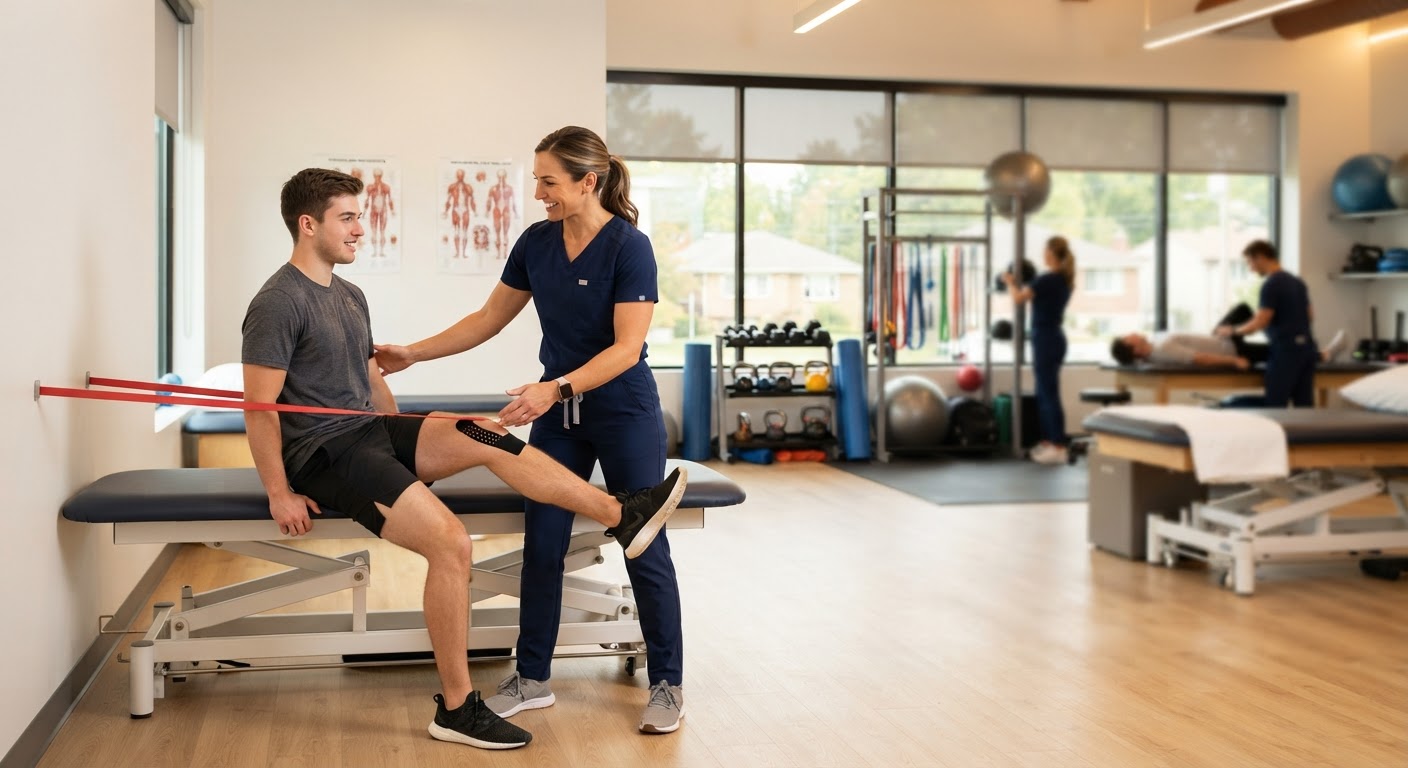
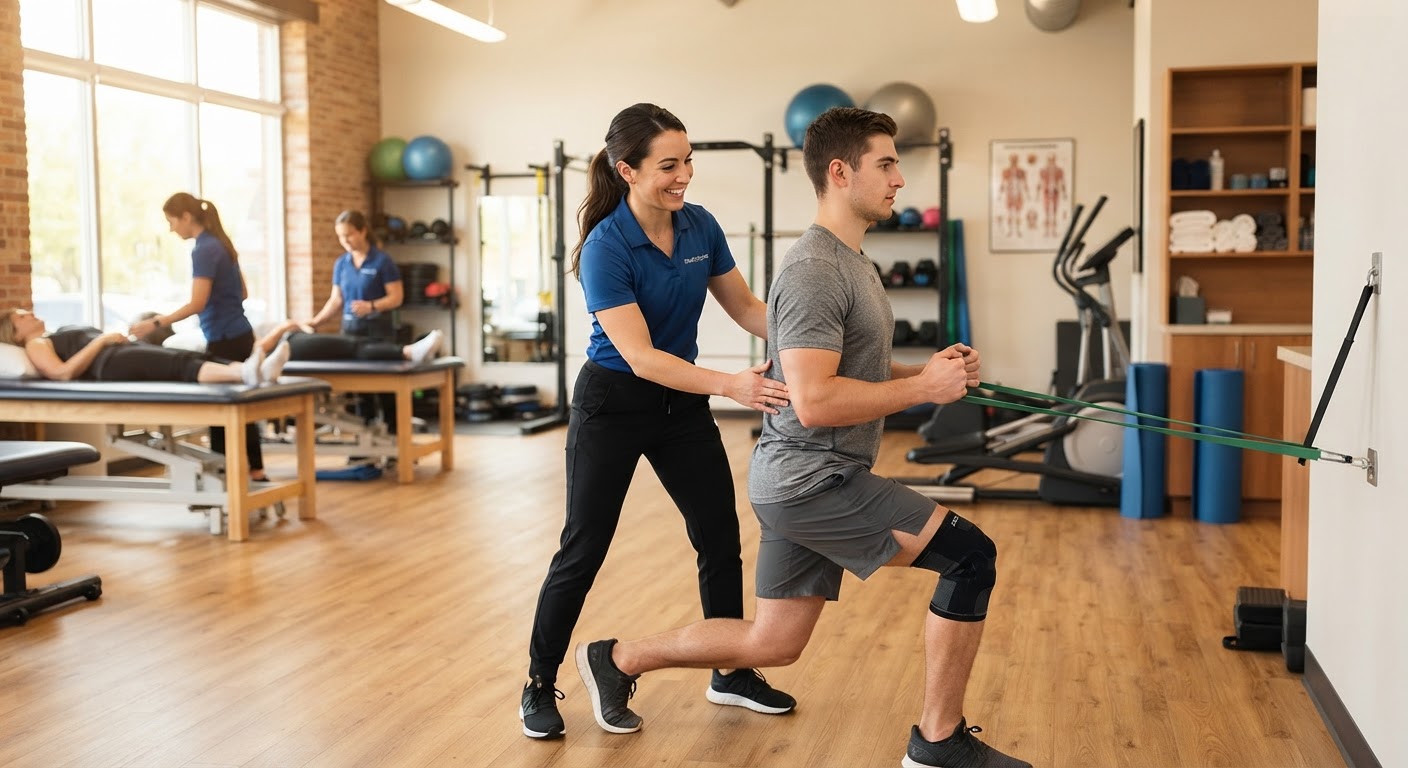
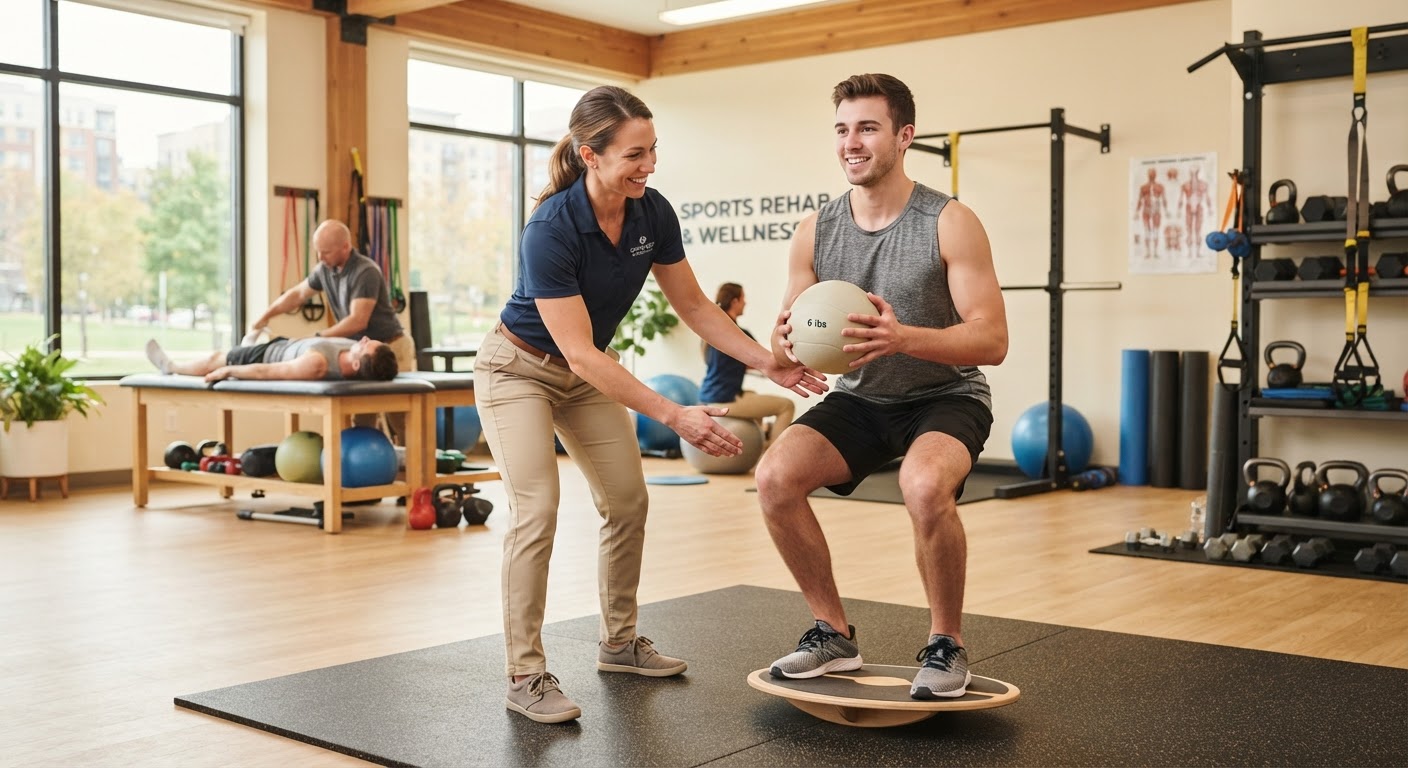
Rehabilitation usually progresses in stages, although the pace is not identical for everyone. Early sessions may focus on comfortable movement, managing symptoms, and restoring basic mobility. As your tolerance improves, exercises may build strength, control, balance, and coordination. Later training can introduce movements that more closely resemble your sport, such as changing direction, jumping, throwing, or running, when appropriate for your condition.
You may also receive a home exercise program. These exercises are an important part of the process because consistent practice between appointments can help reinforce the skills developed in the clinic. Your therapist can show you how to perform each movement and explain how often to do it. Do not add extra repetitions, weights, or drills without checking whether they fit your plan.
Progress is not always a straight line. Some soreness may occur with new activity, but sharp, worsening, or unusual pain deserves attention. Let your therapist know how you feel during and after exercises so the plan can be adjusted when needed.
Practical Tips Between Appointments
Follow the activity guidance provided by your healthcare professional. Continuing to train through significant pain or swelling may aggravate symptoms, while stopping all movement for longer than advised may not support your goals. Ask what activities are appropriate and what signs mean you should scale back.
Keep a simple record of symptoms, exercises, and activity. Note what you did, how it felt during the activity, and how you felt later that day or the next morning. This information can help you and your therapist identify patterns and make informed adjustments.
Make your home exercises manageable. Choose a regular time, use a reminder, and focus on good technique rather than rushing through a routine. If an exercise causes unexpected symptoms or you are unsure how to perform it, pause and contact your therapist for guidance.
Support recovery with habits that fit your situation: allow time for rest, stay hydrated, and aim for balanced meals. If you are returning to a demanding training schedule, discuss how to progress volume and intensity rather than jumping immediately to your previous level.
Returning to Your Sport
Being able to perform daily tasks comfortably is an encouraging step, but it may not be the only consideration before returning to sport. Your therapist may assess strength, movement quality, balance, endurance, and your ability to handle sport-specific drills. The plan should reflect the demands of your activity and your response to each stage of training.
A gradual return can begin with modified practice or lower-intensity drills, followed by more challenging activity as appropriate. Your therapist can help you understand how to progress and when to pause or adjust. Follow any recommendations from your physician or other members of your care team, especially after surgery or a significant injury.
When to Seek Professional Guidance
Consider an evaluation if pain or limited movement is interfering with sport, exercise, work, or daily activities, or if symptoms keep returning as you increase training. Seek prompt medical attention for severe pain, major swelling, an obvious deformity, inability to bear weight, numbness, or other concerning symptoms. A physical therapist can help determine whether physical therapy is appropriate or whether you should first be assessed by another healthcare professional.
Start Your Rehabilitation Plan
You do not have to figure out the next step alone. Physical Therapy NOW™ can help you understand your movement challenges, establish practical goals, and follow a rehabilitation plan designed around your needs. If you are looking for sports injury physical therapy in Fort Lauderdale, visit or call the Physical Therapy NOW™ Fort Lauderdale location to ask about scheduling an evaluation. Take the first step toward pain relief, better function, and a thoughtful return to the activities you enjoy.
Ready to start feeling better?
Physical Therapy NOW™ has 40+ Florida locations with same-week appointments. Most insurance, auto accident (PIP), workers' compensation and Medicare accepted.