Sports Injury Rehabilitation: What to Expect
A sports injury can interrupt your routine, affect your performance, and leave you unsure about when it is safe to get back in the game. Sports injury rehabilitation provides a structured way to address pain, restore movement, and rebuild strength and confidence. While every recovery is different, knowing what to expect from physical therapy can help you take the next step with a clearer plan.
At Physical Therapy NOW™ in Palmetto Bay, FL, your rehabilitation program is shaped around your injury, goals, and daily activities. Here is an overview of how the process commonly works and practical ways to support your progress.
Your First Visit And Evaluation
Your first appointment typically begins with a conversation about how the injury happened, what symptoms you notice, and how it affects your sport and everyday life. Your physical therapist may ask about your training, previous injuries, general health, and goals, such as returning to running, swimming, or a particular position on a team.
Next, your therapist will assess areas relevant to your condition. This may include movement, flexibility, strength, balance, coordination, and how you perform certain functional tasks. The assessment helps identify factors that may be limiting activity and provides a starting point for tracking changes over time. If your symptoms suggest that you need medical evaluation beyond physical therapy, your therapist can discuss appropriate next steps.
Be ready to describe what makes symptoms better or worse and bring any relevant medical information. Wear comfortable clothing that lets you move. Most importantly, share your concerns and goals openly. Your plan should make sense to you, not just fit a generic timeline.
Building A Personalized Rehabilitation Plan
After the evaluation, your physical therapist will explain the findings and work with you on a plan. The focus may include easing pain, improving range of motion, restoring strength, and building the control needed for sport-specific movement. Treatment can change as you improve, so your therapist may adjust exercises or activity recommendations based on your response.
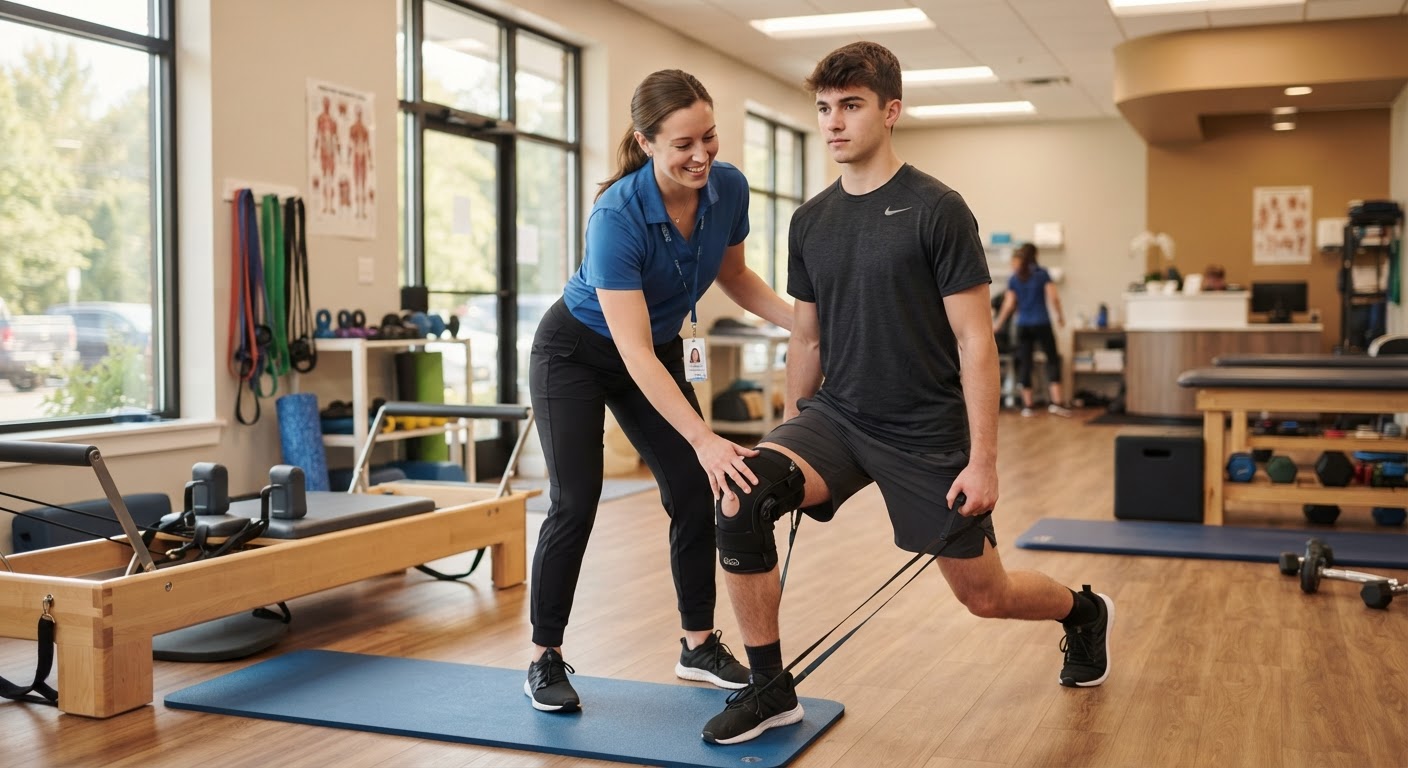
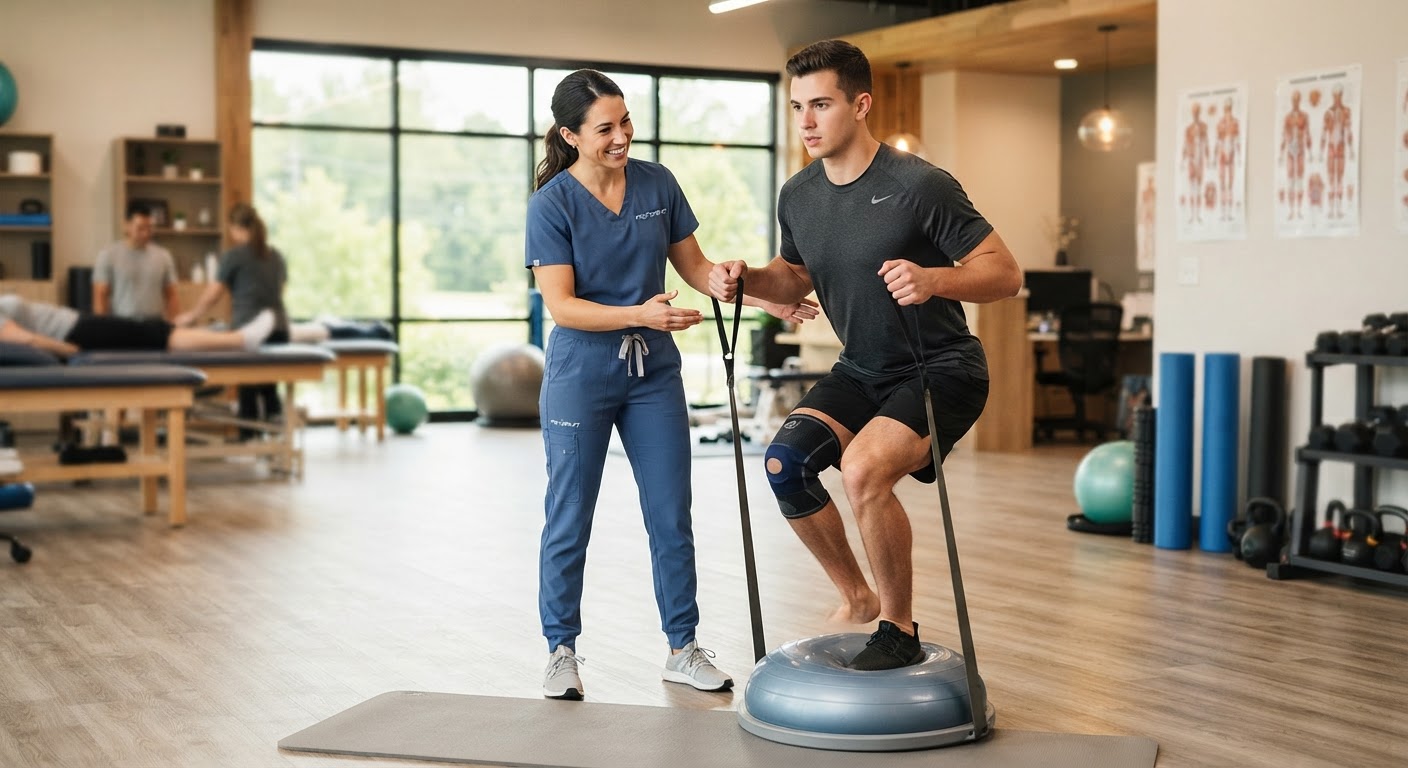
Your program may include guided exercises, hands-on techniques, balance or coordination work, and advice on managing activity between visits. The right approach depends on your injury and individual needs. Rehabilitation is not simply a list of exercises; it is a progression designed to prepare your body for the demands of your sport.
Pain Relief And Safe Activity Changes
Pain relief is often an early priority, but progress does not always mean that every sensation disappears immediately. Your therapist can help you understand which movements are appropriate, how to modify activities, and when to pause or adjust an exercise. Follow the guidance you receive rather than pushing through sharp, worsening, or unusual pain.
Depending on your condition, a temporary change in training may be useful. That does not always mean stopping all movement. Your therapist can help you identify suitable ways to stay active while avoiding activities that aggravate the injury. For example, you may be able to work on a different part of your conditioning while limiting a painful sport-specific motion. Ask before substituting exercises if you are unsure whether they are appropriate.
Progressing Strength And Sport-Specific Skills
As symptoms and movement improve, rehabilitation often shifts toward preparing for the physical demands of your sport. Your plan may gradually add strength, endurance, agility, balance, jumping, throwing, or other relevant movements. The goal is to build capacity in a controlled way, not to rush to the hardest activity as soon as you feel better.
Your therapist may use milestones such as improved movement quality, strength, balance, or tolerance for practice activities to guide progression. These benchmarks can help you make decisions based on function rather than a calendar alone. Be honest about how you feel during and after activity, including symptoms that show up later. That feedback helps your therapist adjust the plan.
Returning To Sport With Confidence
Returning to sport is usually a gradual process. Depending on the injury, you may move from basic exercises to individual drills, modified practice, fuller practice, and eventually competition. The sequence and timing vary. Your physical therapist can discuss readiness with you and, when appropriate, coordinate with your healthcare team or coach.
Avoid comparing your recovery with someone else’s. Two athletes with similar injuries may have different demands, health histories, and responses to rehabilitation. Follow your individualized recommendations, and ask what signs should prompt you to reduce activity or schedule a reassessment. If pain suddenly becomes severe, you cannot bear weight, or you experience concerning symptoms such as new numbness or major swelling, seek prompt medical advice.
How To Support Recovery Between Visits
Consistency matters. Try to complete your prescribed home exercises as directed, using the form and frequency your therapist recommended. More is not always better, so do not add extra repetitions or new exercises without checking first. Keep a simple record of activity and symptoms if it helps you notice patterns to share at your next appointment.
Give your body time to recover between demanding sessions, and follow any guidance you receive about sleep, training modifications, or gradual increases in activity. If an exercise is confusing or causes a concerning response, contact your therapist rather than guessing. Small adjustments can help keep your program appropriate as your needs change.
Start Your Recovery With A Clear Plan
Sports injury rehabilitation can help you work toward less pain, better movement, and a safe return to the activities that matter to you. With an individualized plan and steady communication, you can understand each stage of recovery and make informed decisions along the way.
Physical Therapy NOW™ serves athletes and active individuals at its Palmetto Bay location. If an injury is keeping you from the field, court, track, or your regular workouts, visit or call the Palmetto Bay clinic to ask about scheduling an evaluation. A physical therapist can help you understand your options and take a practical first step toward recovery.
Ready to start feeling better?
Physical Therapy NOW™ has 40+ Florida locations with same-week appointments. Most insurance, auto accident (PIP), workers' compensation and Medicare accepted.