A sports injury can interrupt your training, routine, and confidence. Whether you are dealing with a sprain, muscle strain, joint pain, or an overuse injury, rehabilitation can help you address symptoms and work toward returning to the activities you enjoy. Knowing what to expect can make the process feel more manageable and help you take an active role in your recovery.
At Physical Therapy NOW™ in Palm Harbor, FL, care begins with understanding your specific injury, goals, and daily demands. Your plan is built around your needs, rather than a one-size-fits-all schedule. Here is a general look at how sports injury rehabilitation may progress.
Your First Physical Therapy Visit
Your first appointment typically includes a conversation about how the injury happened, what movements make it feel better or worse, and how it affects your sport and everyday life. Your physical therapist may ask about your training schedule, previous injuries, health history, and goals. Be ready to describe what you hope to return to, whether that is walking comfortably, practicing with your team, or competing.
An evaluation may include observing how you move and checking areas such as strength, flexibility, balance, coordination, and range of motion. Your therapist will explain the findings and discuss a care plan with you. This is a good time to ask questions, mention concerns, and share any time pressures, such as an upcoming season. The plan can be adjusted as your symptoms and abilities change.
The Stages Of Rehabilitation
Rehabilitation often moves through overlapping stages rather than a fixed sequence. Early care may focus on managing pain and swelling while protecting the injured area. Your therapist may recommend ways to modify activity and introduce gentle movements that are appropriate for your condition. Follow the guidance provided for your injury; pushing through sharp or worsening pain can make it harder to judge how your body is responding.
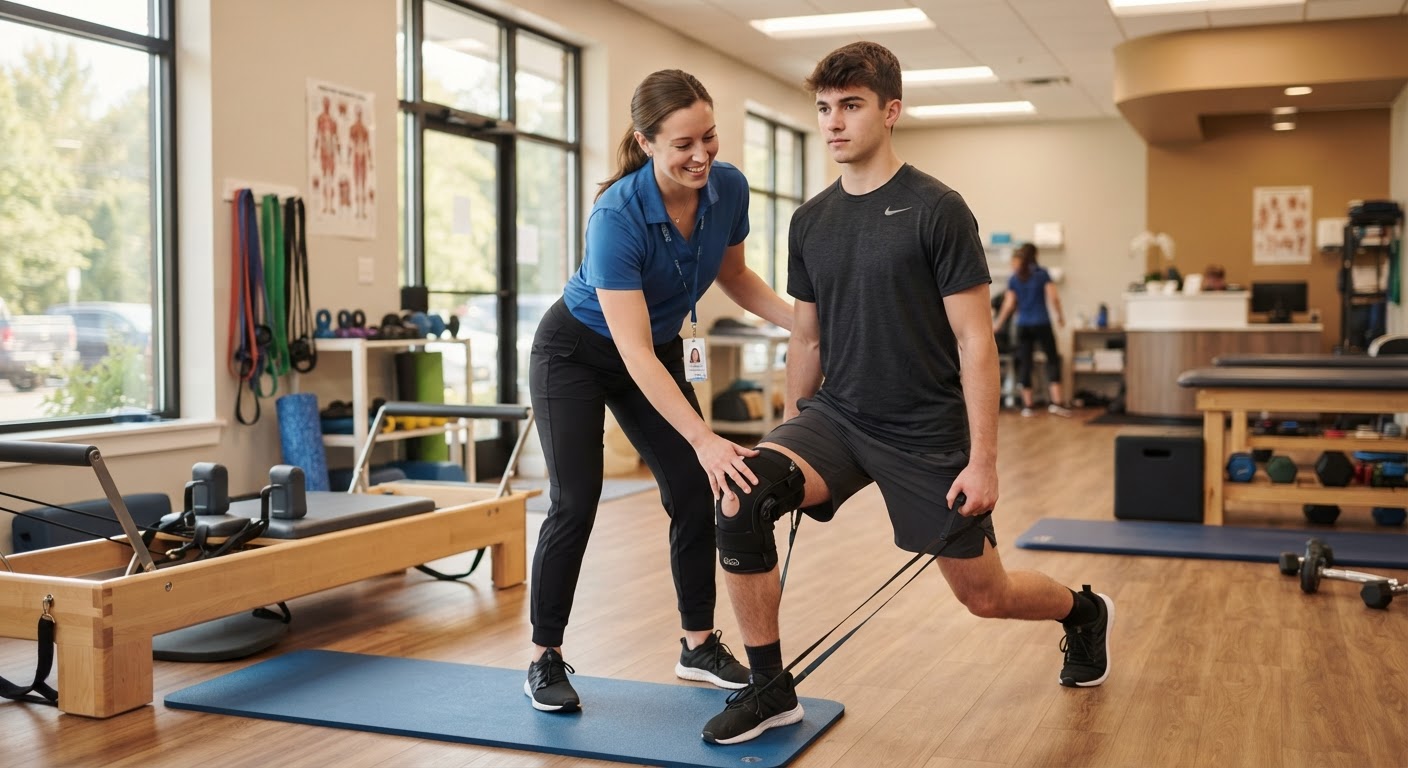
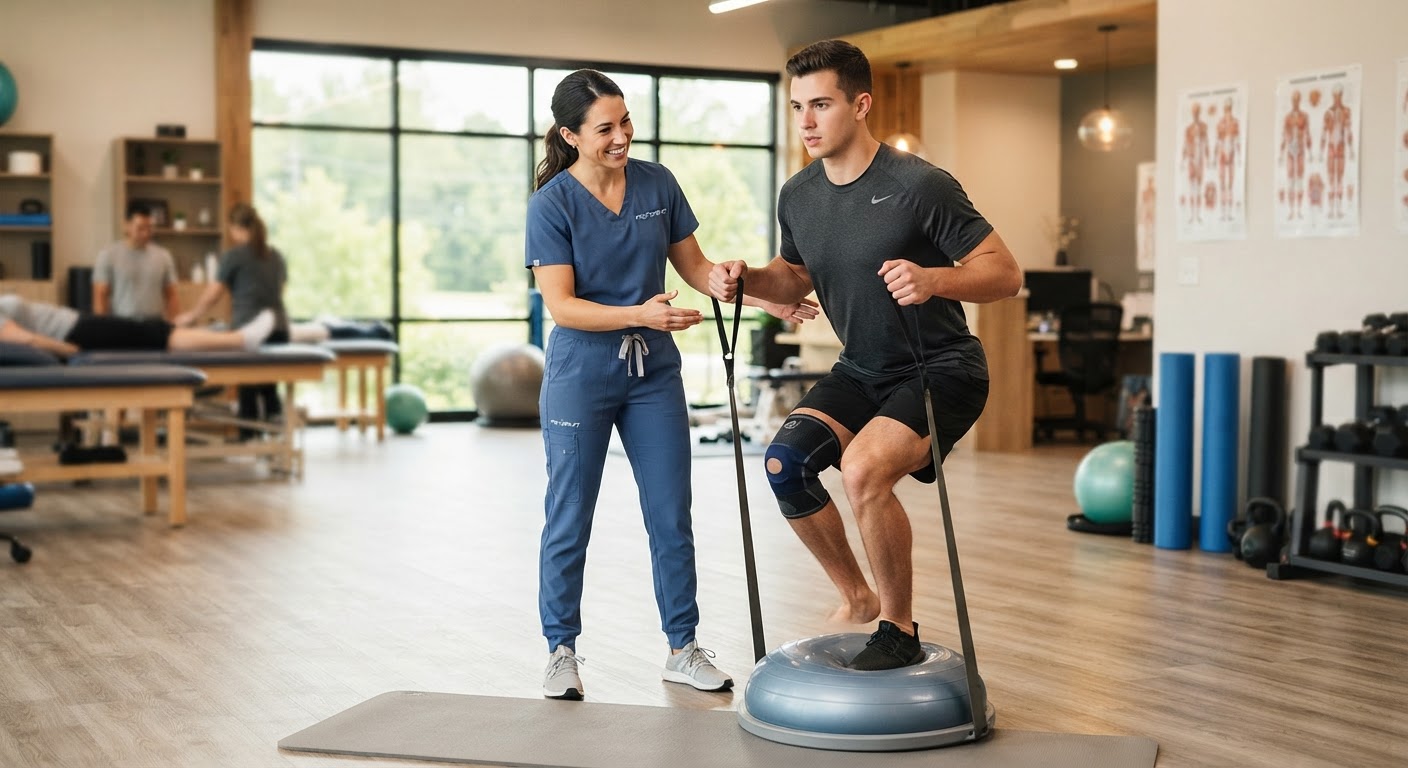
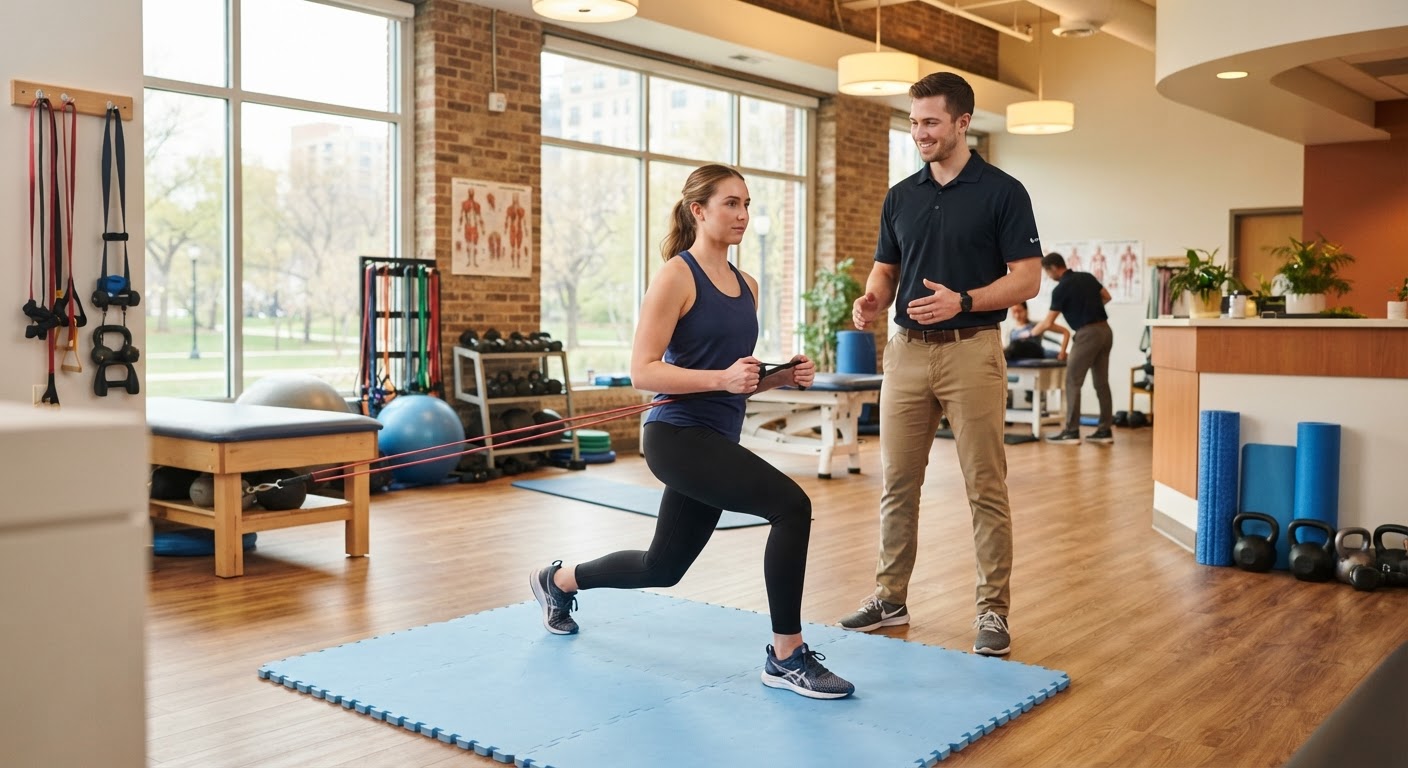
As you improve, sessions may focus more on restoring mobility, strength, and control. Exercises are selected and progressed to match your current ability. For example, a program might begin with controlled movements and gradually add resistance, balance challenges, or sport-related drills. The goal is to build capacity step by step, not simply to make the exercises harder as quickly as possible.
Later stages often emphasize the movements and demands of your sport. Depending on your needs, this may include running, jumping, changing direction, throwing, or other sport-specific tasks. Your therapist can help you practice these activities in a structured way and identify areas that may need more attention before you return to full participation.
Treatments And Exercises You May Encounter
Your rehabilitation plan may combine supervised exercise, movement practice, education, and other hands-on or equipment-based approaches when appropriate. Exercise is often central because it helps you rebuild strength and improve the coordination needed for everyday and athletic movements. Your therapist will explain each activity and how it relates to your goals.
You may also learn how to adjust training volume, warm up effectively, or modify certain movements while recovering. These strategies can help you stay as active as is appropriate without repeatedly irritating the injury. Treatment choices depend on your evaluation, symptoms, and progress, so another athlete’s plan may not be right for you.
What To Do Between Appointments
Consistency matters, but more is not always better. If your therapist gives you a home exercise program, follow the recommended frequency and technique. Ask for a demonstration if you are unsure how to do an exercise. Keep track of how you feel during activity and afterward, including whether symptoms settle, stay the same, or become worse.
A few practical habits can support your plan. Make time for the exercises you have been assigned, and avoid adding extra workouts without discussing them with your therapist. Follow recommendations about rest and activity modification. Bring comfortable clothing and supportive footwear to appointments when movement testing is planned. If a new symptom appears or pain changes significantly, let your care team know rather than trying to work around it on your own.
How Long Does Rehabilitation Take?
There is no single timeline for sports injury rehabilitation. Recovery depends on factors such as the type and severity of the injury, your overall health, how long symptoms have been present, and the physical demands of your sport. Progress may not be perfectly steady; some days can feel easier than others. Your therapist can review your progress and help adjust the plan based on your response.
Pain relief is an important goal, but feeling better does not always mean you are ready for every sport demand. Strength, control, confidence, and tolerance for sport-specific movements also matter. Discuss how your return will be assessed and what signs suggest you are ready to advance. A gradual progression can help you avoid making a sudden jump from limited activity to full training.
Returning To Sport With Confidence
A return-to-sport plan is usually a progression, not a single all-clear moment. You may move from daily activities to individual drills, then to more demanding practice and competition, depending on your condition and your therapist’s recommendations. Communicate openly about symptoms during each step. If discomfort increases or does not settle as expected, your plan may need to be modified.
It can be tempting to compare your recovery with a teammate’s, but injuries and individual needs differ. Focus on your own progress and the goals you set with your physical therapist. Continuing appropriate strength and conditioning after returning to sport may also help you maintain the abilities developed during rehabilitation.
Take The Next Step Toward Recovery
Sports injury rehabilitation gives you a structured way to work on pain relief, movement, strength, and a safe return to the activities that matter to you. Physical Therapy NOW™ provides personalized physical therapy and rehabilitation support at its Palm Harbor location. If an injury is limiting your training or daily routine, contact the Palm Harbor, FL clinic to schedule a visit, discuss your goals, and learn what next steps may be right for you. Call or visit Physical Therapy NOW™ today to get started.
Ready to start feeling better?
Physical Therapy NOW™ has 40+ Florida locations with same-week appointments. Most insurance, auto accident (PIP), workers' compensation and Medicare accepted.