Sports Injury Rehabilitation: What to Expect
A sports injury can interrupt the activities you enjoy, whether you compete regularly or play for fun. The right rehabilitation plan can help you rebuild strength, improve movement, and return to activity with greater confidence. Physical therapy is not only about easing discomfort; it also helps address the movement and strength factors that may affect recovery.
At Physical Therapy NOW™ in Lake Worth, FL, your care is shaped around your injury, goals, and daily routine. Knowing what to expect can make it easier to take an active role in rehabilitation and understand why recovery often happens in stages.
Your First Visit And Evaluation
Rehabilitation usually begins with a conversation and a physical assessment. Your physical therapist may ask when the injury occurred, what activities make symptoms better or worse, and what you hope to return to. Share details about your sport, training schedule, footwear or equipment, and any previous injuries. These details can help your therapist understand your needs.
The evaluation may include observing how you walk or move, checking joint mobility and strength, and assessing balance or sport-related motions. Your therapist will explain the findings and discuss a plan with you. The specific assessment depends on your symptoms and the type of injury. If your symptoms suggest that you need another type of medical evaluation, your therapist can advise you about appropriate next steps.
Bring comfortable clothes that allow you to move, along with a list of medications or relevant medical information if helpful. It is also useful to bring questions, such as which activities are safe for now and what signs should prompt you to pause an exercise.
Building A Personalized Plan
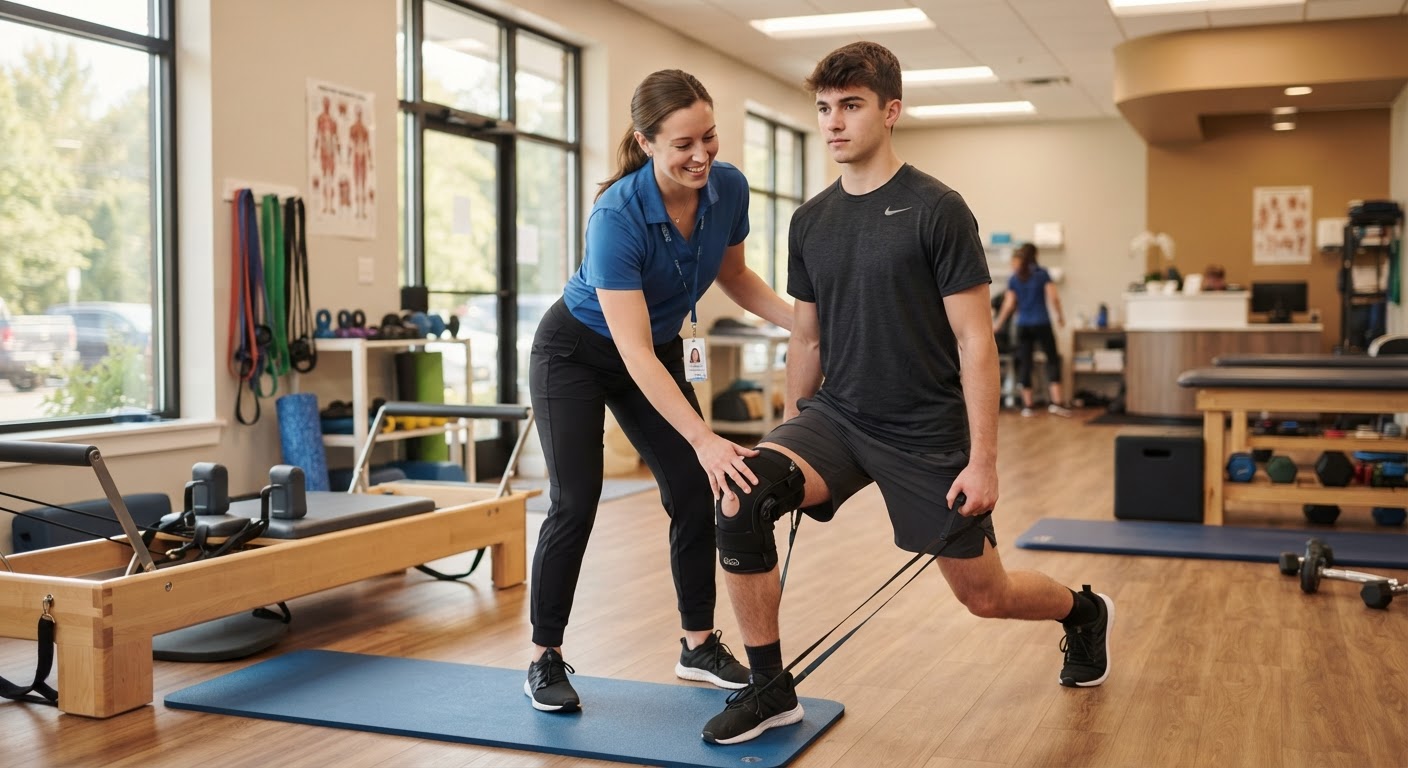
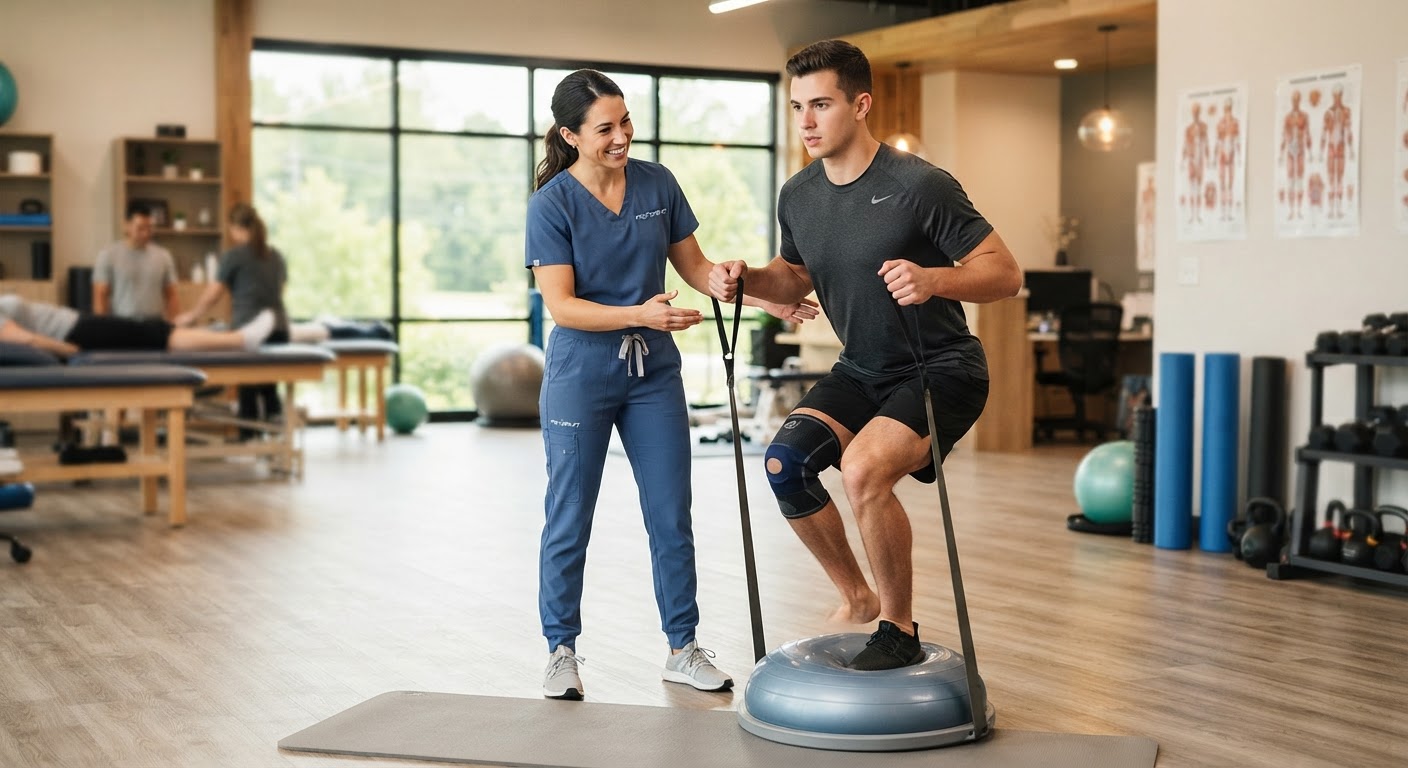
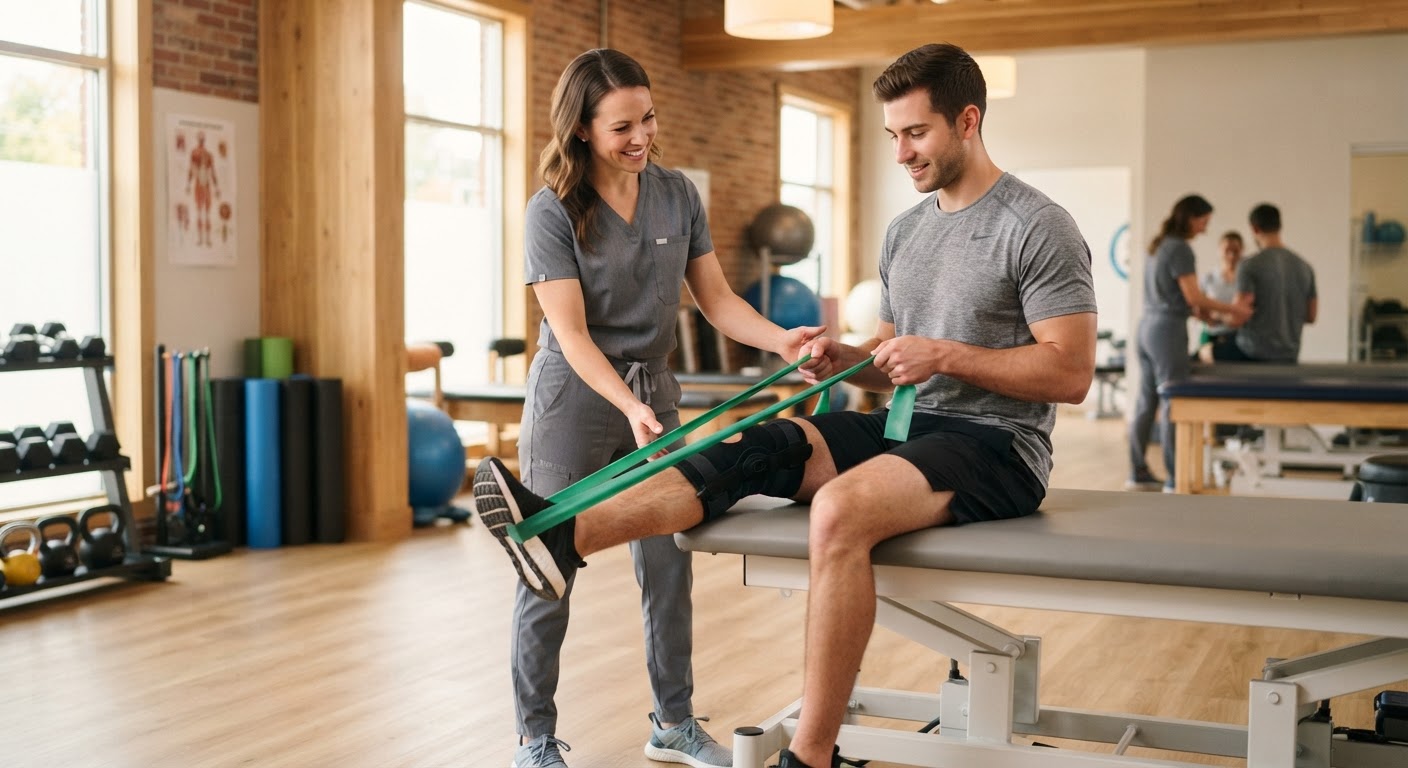
No two injuries or recovery timelines are exactly alike. Your rehabilitation plan may include guided exercises, mobility work, balance training, hands-on techniques when appropriate, and education about managing activity. Your therapist will adjust the plan based on your progress and how your body responds.
Early in recovery, the focus may be on comfortable movement and restoring basic function. As symptoms and movement allow, exercises can progress to build strength, coordination, and control. Later stages may include activities that reflect the demands of your sport, such as changing direction, jumping, throwing, or running. Progression should be based on your condition and your therapist’s guidance, rather than a fixed timetable or pressure to compete.
Pain Relief And Safe Activity
Pain relief is an important goal, but it is only one part of a successful return to sport. Your therapist can help you understand how to modify activities, manage training demands, and use exercises that support recovery. Some discomfort may occur during rehabilitation, but sharp, worsening, or unusual symptoms should be discussed with your therapist.
Follow the activity guidance you receive, and avoid testing an injury repeatedly to see whether it has healed. Depending on the injury, your plan may recommend temporarily reducing certain movements while staying active in ways that are comfortable and approved for you. If symptoms change significantly, contact your healthcare provider or therapy team for guidance.
Practical Tips Between Appointments
Consistency matters. The following habits can help you make the most of your rehabilitation:
Complete your home exercises as prescribed. Ask your therapist to demonstrate any movement that feels unclear, and let them know if an exercise increases symptoms.
Keep a simple activity and symptom log. Note what you did, how your body felt during the activity, and how you felt afterward. This information can help your therapist make useful adjustments.
Warm up before exercise and return to activity gradually. Increase one training demand at a time when possible, such as duration or intensity, rather than making several major changes at once.
Prioritize recovery basics. Adequate rest, regular meals, hydration, and a manageable training schedule can support your overall ability to participate in rehabilitation.
Communicate honestly. Tell your therapist about setbacks, schedule challenges, or concerns about returning to play. A plan is most useful when it fits your real life and can be adjusted as needed.
Preparing To Return To Sport
Feeling better during everyday activities is encouraging, but returning to sport may require additional preparation. Your therapist can help you work toward the strength, mobility, balance, and control needed for your activity. Depending on your sport and injury, you may practice sport-specific movements and gradually increase their speed, duration, or complexity.
Return-to-sport decisions should consider more than the calendar. Your symptoms, functional progress, confidence, and the demands of your sport all matter. Follow the recommendations of your physical therapist and other healthcare providers, and do not rush into full training or competition because a single practice felt comfortable. A gradual progression gives you a chance to notice how your body responds at each step.
Support For Your Recovery In Lake Worth
Sports injury rehabilitation is a process, and progress may not be perfectly linear. Asking questions, following your plan, and reporting changes can help you stay engaged and make informed decisions along the way. Physical Therapy NOW™ provides personalized physical therapy to help people work toward pain relief, improved function, and a safer return to the activities they value.
If a sports injury is limiting your movement or keeping you from the activities you enjoy, contact or visit the Physical Therapy NOW™ Lake Worth location to learn about your rehabilitation options. Call the clinic to schedule a visit and take the next step toward a plan built around your goals.
Ready to start feeling better?
Physical Therapy NOW™ has 40+ Florida locations with same-week appointments. Most insurance, auto accident (PIP), workers' compensation and Medicare accepted.