Repetitive Strain Injuries At Work: Treatment And Prevention
Repetitive strain injuries can make everyday work tasks painful and difficult. They often develop gradually, after repeated motions or prolonged positions place more demand on the body than it can comfortably manage. Early attention can help clarify the cause, guide treatment, and reduce the chance that symptoms interfere with work and daily life.
For workers and referring physician offices, understanding the relationship between symptoms, job tasks, and recovery needs is an important first step. Physical Therapy NOW™ helps people address movement problems with individualized care that considers both functional goals and work demands.
What Is A Repetitive Strain Injury?
A repetitive strain injury, sometimes called a repetitive motion injury or cumulative trauma condition, describes pain or tissue irritation associated with repeated activity, sustained positioning, or forceful use. It is not one specific diagnosis. Depending on the area and source of symptoms, a clinician may identify a tendon problem, muscle strain, joint irritation, or nerve compression. Examples include tendon irritation around the wrist or elbow, shoulder pain associated with repeated reaching, and symptoms related to prolonged keyboard or tool use.
Symptoms may build over time, but they can also become noticeable after a change in workload, pace, equipment, or task. Repetitive activity is not always the only factor. Poorly fitting tools, limited recovery time, awkward postures, vibration, and a sudden increase in work demands can contribute. A careful evaluation helps distinguish a work-related pattern from other possible causes.
Common Causes And Symptoms
Jobs involving frequent gripping, lifting, pushing, pulling, assembly, computer use, or overhead reaching may place repeated stress on particular tissues. Risk can increase when a task is done quickly, with substantial force, in an uncomfortable position, or for long periods without a chance to vary movement. Repeating the same task at home or during recreation may also affect symptoms.
Common symptoms include aching, tenderness, stiffness, or discomfort during a particular task. Some people notice reduced grip strength, fatigue, swelling, or pain that improves with rest and returns during work. Nerve irritation can cause tingling, numbness, burning, or weakness. Symptoms may occur in the hands, wrists, forearms, elbows, shoulders, neck, or other areas depending on the activity and the structures involved.
Seek prompt medical evaluation for significant or worsening weakness, persistent numbness, severe pain, a sudden loss of function, or symptoms after a fall or other injury. A hot, markedly swollen or red area, fever, or symptoms that are rapidly progressing also warrant timely medical attention. Chest pain, trouble breathing, or sudden neurological symptoms require emergency care rather than routine rehabilitation.
How Repetitive Strain Injuries Are Evaluated
Diagnosis starts with a conversation about when symptoms began, what makes them better or worse, relevant health history, and the tasks performed at work and outside work. A physical examination may assess movement, strength, tenderness, sensation, coordination, and how symptoms respond to specific positions or activities. The clinician may also ask about changes in workload, tools, breaks, and work setup.
Imaging or other tests are not needed for every repetitive strain injury. A physician may recommend them when the history or examination suggests a different condition, when symptoms are severe or persistent, or when additional information could change the treatment plan. The diagnosis should describe the suspected tissue or functional problem while considering other possible sources of pain.
How Physical Therapy Supports Recovery
Physical therapy is tailored to the person’s symptoms, examination findings, job duties, and goals. Care may progress through several overlapping phases rather than follow a fixed schedule.
In the early phase, the therapist works to reduce irritation and maintain comfortable movement. Treatment may include temporary adjustments to painful tasks, gentle range of motion, education on pacing, and strategies for managing symptoms. The aim is generally to keep the person safely active while avoiding repeated aggravation. Complete rest is not appropriate for every condition, so activity changes should be guided by the clinical picture.
As symptoms allow, therapy may focus on restoring mobility and building strength and endurance. Exercises can target the affected area and the nearby joints or muscles that support the work task. A therapist may use graded loading, coordination practice, or task-specific movements to help the body tolerate activity again. Manual therapy may be considered when appropriate, but it is usually part of a broader plan that includes active exercise and self-management.
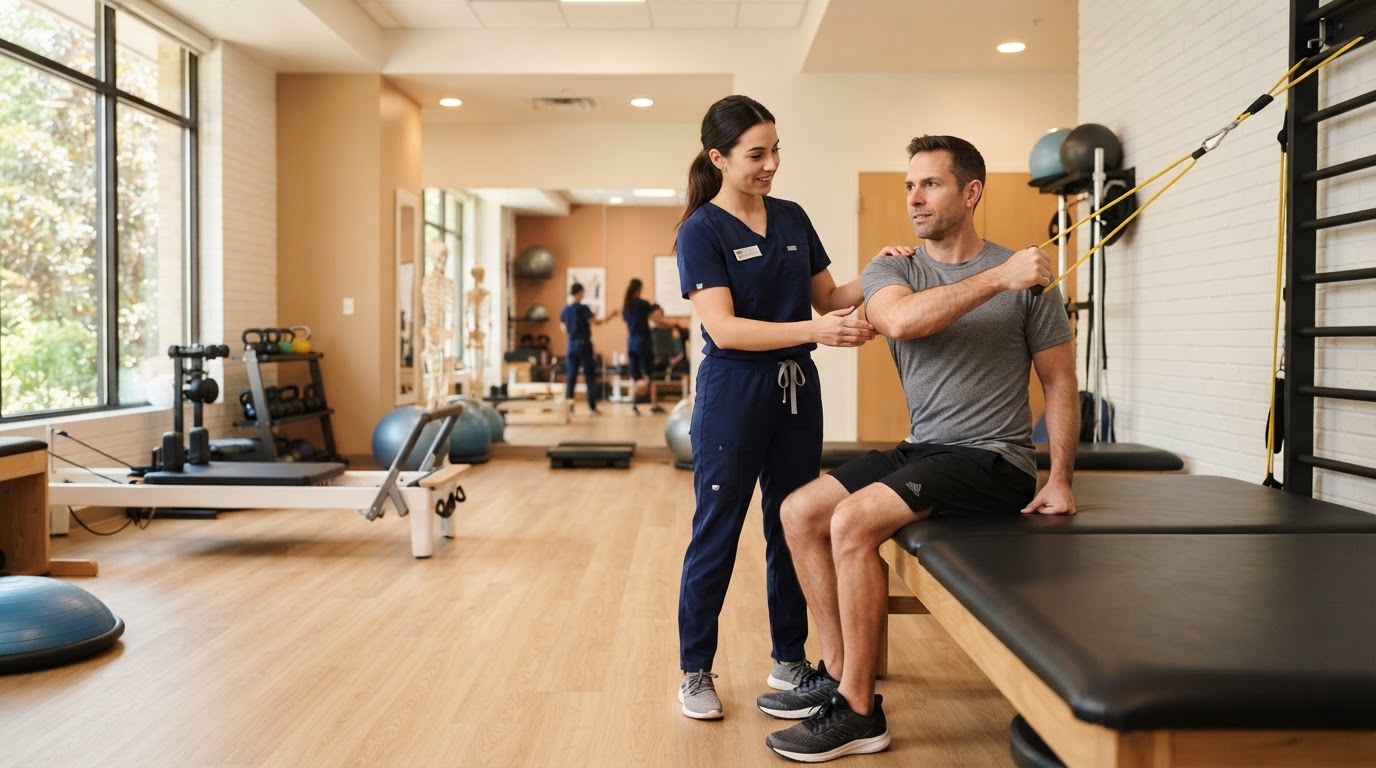
In the work-readiness phase, treatment increasingly reflects real job demands. The therapist may help practice lifting, reaching, gripping, or other relevant activities and gradually increase the challenge. Workstation or tool recommendations may include keeping frequently used items within comfortable reach, adjusting the height or position of a work surface, using a neutral wrist position, or alternating tasks when possible. Recommendations should fit the actual job and be coordinated with the employer and treating clinician as appropriate.
Recovery time varies with the condition, symptom duration, severity, overall health, and whether contributing work demands can be modified. Some mild cases improve over several weeks with appropriate changes and rehabilitation. More persistent or complex problems may take several months and may require additional medical assessment. Progress is best judged by improving function and tolerance, not by a guaranteed calendar date. A therapist can help set measurable goals and update the plan when progress stalls or symptoms change.
Practical Steps At Work And At Home
Notice which tasks reliably bring on symptoms and, when possible, vary the activity or take brief movement breaks before discomfort becomes pronounced. Use tools that fit your hand and task, avoid gripping harder than necessary, and keep loads close to your body when lifting. Set up frequently used items to reduce repeated reaching or twisting. Follow workplace safety procedures and discuss reasonable task modifications with the appropriate supervisor or occupational health contact.
Outside work, avoid repeatedly testing a painful movement to see whether it still hurts. Gentle, comfortable movement may help prevent stiffness, while activities that cause a lasting flare may need temporary adjustment. Use medication only as directed by a healthcare professional or according to the product label, and ask a clinician or pharmacist about risks and interactions. If symptoms persist, worsen, or affect sleep or daily function, arrange an evaluation rather than relying on self-care alone.
When To Refer / When To Seek Care
Patients should seek an assessment when work-related pain keeps returning, is limiting job duties, or is accompanied by tingling, numbness, or weakness. Prompt evaluation is especially important when symptoms are worsening or function is declining.
Physicians and other referring clinicians may consider referral to physical therapy when the patient is medically appropriate for rehabilitation and has movement, strength, endurance, or task-tolerance limitations. Sharing relevant examination findings, precautions, suspected diagnosis, and essential job demands can help the therapist tailor care. New or progressive neurological findings, signs of infection, significant trauma, or symptoms inconsistent with a routine musculoskeletal condition call for medical reassessment before or alongside therapy.
For workers compensation cases, clear communication among the patient, treating clinician, therapist, and relevant workplace contacts can support coordinated care. Documentation of functional limits, response to treatment, and progress toward work demands can help guide appropriate next steps. Physical Therapy NOW™ provides rehabilitation focused on helping patients improve function and work toward safe, sustainable activity.
With a timely evaluation, practical changes to work demands, and a plan that progresses at an appropriate pace, many people can regain confidence in the activities that matter to them. Pay attention to symptoms, ask for help when function is affected, and work with your care team to make recovery goals realistic and specific.
Ready to feel better? Physical Therapy NOW™ has 40+ Florida locations, most with same-week appointments and no referral required in most cases.
Schedule now at https://physicaltherapynow.com/schedule · Call 800.481.4582
Ready to start feeling better?
Physical Therapy NOW™ has 40+ Florida locations with same-week appointments. Most insurance, auto accident (PIP), workers' compensation and Medicare accepted.