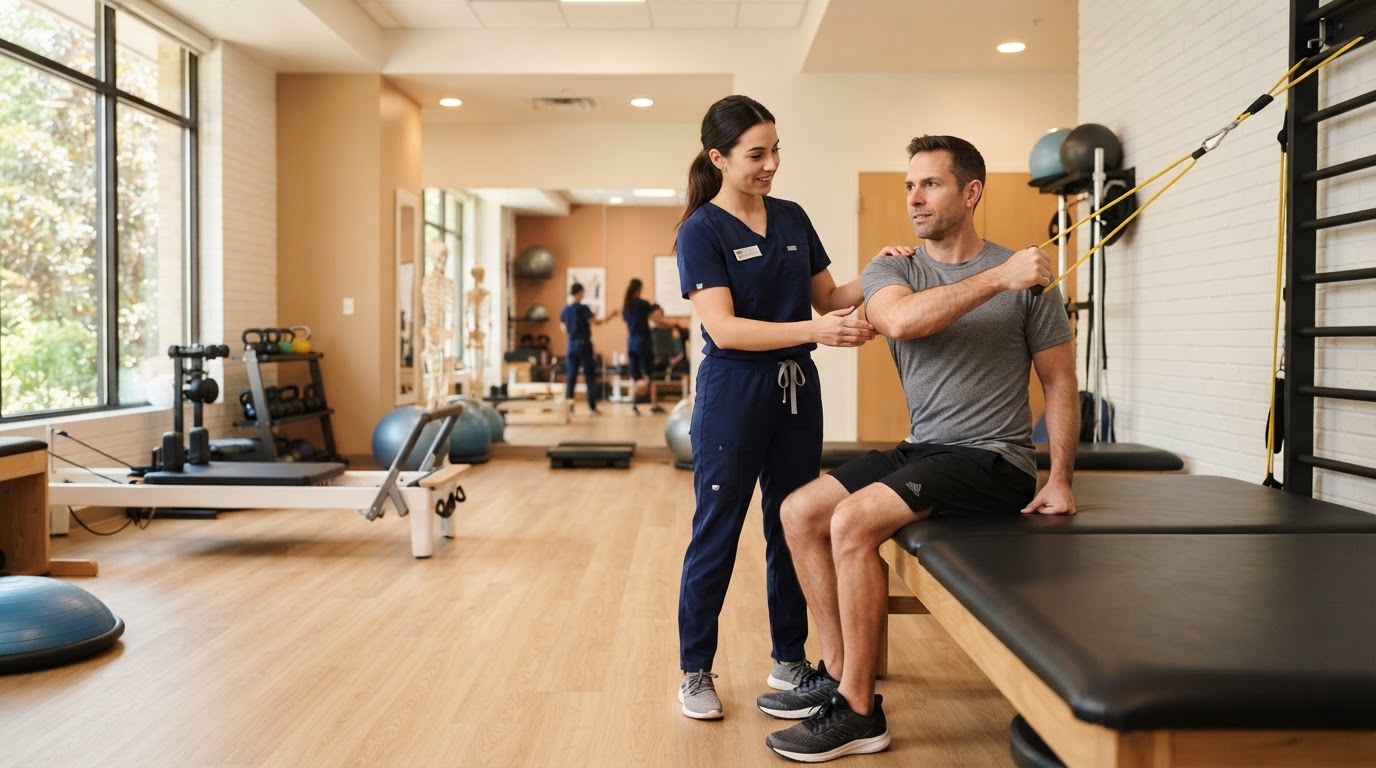
A work-related injury can affect more than your ability to do your job. Pain, limited movement, and uncertainty about what comes next can also disrupt everyday activities. Physical therapy offers a structured way to rebuild strength and function while helping you work toward a safe, sustainable return to work. At Physical Therapy NOW™ in Oakland Park, FL, care is tailored to your injury, your job demands, and your recovery goals.
How Physical Therapy Supports Recovery
Workers’ compensation rehabilitation is designed to address the effects of an injury and help you regain abilities needed for daily life and work. A physical therapist starts by learning how the injury happened, reviewing your symptoms, and assessing movement, strength, balance, and functional tasks. Your therapist may also ask about the physical demands of your job, such as lifting, standing, reaching, or repetitive movements.
Based on this information, your therapist develops a plan that progresses with your needs. Treatment may include guided exercises, mobility work, balance training, and education on body mechanics. The goal is not simply to reduce symptoms for a day, but to improve the strength, coordination, and confidence you need to move safely.
Treatment That Matches Your Injury And Job
No two work injuries are exactly alike. A back injury may require a different approach than a shoulder strain, knee injury, or repetitive-use condition. Your rehabilitation plan should reflect your specific symptoms and the tasks you need to manage at work and at home.
For example, therapy may help you practice lifting with controlled movement, build endurance for standing, or gradually improve your ability to reach overhead. Exercises are adjusted as your tolerance changes. If an activity increases your symptoms, tell your therapist so the plan can be modified rather than pushing through pain without guidance.
Physical therapy can also help identify movement habits or physical limitations that may be contributing to difficulty with certain tasks. Learning safer ways to bend, carry, or change positions can make daily activities more manageable and support a more confident return to work.
Managing Pain While Staying Active
Pain relief is an important part of recovery, but it is only one part of the process. Your physical therapist can help you understand how to stay appropriately active while your body heals. Depending on your condition, treatment may include gentle movement, progressive strengthening, hands-on techniques, or strategies for managing symptoms during daily tasks.
Some soreness can occur when you begin or progress exercises, but sharp, worsening, or unusual symptoms deserve attention. Share changes in pain, numbness, swelling, or function with your therapist and the appropriate members of your care team. Do not change medications or ignore medical instructions based on exercise advice alone.
Practical Tips Between Therapy Visits
Consistency between appointments can support progress. Follow the home exercise plan provided by your therapist, and ask for clarification if you are unsure about a movement or how often to do it. Exercises should be performed with the technique and dosage recommended for you, not copied from someone else’s routine.
Keep track of how your symptoms respond to work tasks, exercise, and rest. A brief note about what you did, when symptoms appeared, and what helped can make it easier to discuss patterns at your next visit. Take movement breaks if your work allows, change positions regularly, and use recommended equipment or modifications consistently.
Give your therapist an accurate picture of your work duties. If a task is difficult, explain what makes it challenging rather than simply avoiding the conversation. Your therapist may help you practice that task in a controlled way or discuss appropriate modifications with your care team. Follow your employer’s and treating provider’s guidance about work restrictions and return-to-work timing.
Communication Helps Coordinate Care
Workers’ compensation recovery may involve communication among you, your employer, your treating providers, and the claims process. Keep appointments, bring relevant instructions to therapy, and let your therapist know about changes in work duties or medical recommendations. Ask questions when you are uncertain about your plan or the next step in rehabilitation.
A physical therapist can provide information about your functional progress and the activities you are practicing. Decisions about work status and restrictions should be made by the appropriate treating provider and coordinated through the established workers’ compensation process. Clear communication helps keep your rehabilitation focused and avoids confusion about expectations.
Building Toward A Confident Return To Work
Returning to work is often a gradual process. Progress may involve improving movement, building endurance, and practicing job-related tasks before resuming all duties. Your therapist can help you work toward these goals at an appropriate pace and adjust your program as your capacity changes.
At Physical Therapy NOW™, the focus is on individualized rehabilitation, practical education, and steady progress toward your goals. The Oakland Park location serves workers looking for support with injury recovery and a plan that connects therapy to real-life demands.
Start Your Recovery Plan
If a work injury is limiting your movement, comfort, or ability to do your job, physical therapy may be an important part of your recovery. Contact Physical Therapy NOW™ to learn about getting started, or visit or call the Oakland Park location to discuss your next steps. A thoughtful rehabilitation plan can help you build function, manage pain, and move toward work with greater confidence.
Ready to start feeling better?
Physical Therapy NOW™ has 40+ Florida locations with same-week appointments. Most insurance, auto accident (PIP), workers' compensation and Medicare accepted.