How Physical Therapy Helps Workers’ Compensation Recovery
A work-related injury can affect more than your ability to do your job. Pain, limited movement, and uncertainty about when you can return to your usual routine can make recovery feel overwhelming. Physical therapy offers a structured way to rebuild strength and mobility, manage symptoms, and work toward a safe return to work.
For many employees, rehabilitation is an important part of workers’ compensation recovery. A physical therapist can assess how an injury affects everyday tasks and job duties, then develop a plan tailored to your needs. At Physical Therapy NOW™ in Bentonville, AR, care focuses on helping people move forward with practical, individualized support.
What Physical Therapy Can Do After a Work Injury
Work injuries can involve muscles, joints, tendons, or other parts of the body. Common examples include back and neck pain, shoulder injuries, sprains, strains, and repetitive-use discomfort. The right care depends on the injury, your health, and the demands of your job.
Physical therapy may help you:
Restore flexibility and range of motion Build strength and endurance for work tasks Improve balance, coordination, and movement control Learn ways to manage pain and stiffness Practice job-related movements with guidance Reduce the risk of aggravating an injury during recovery
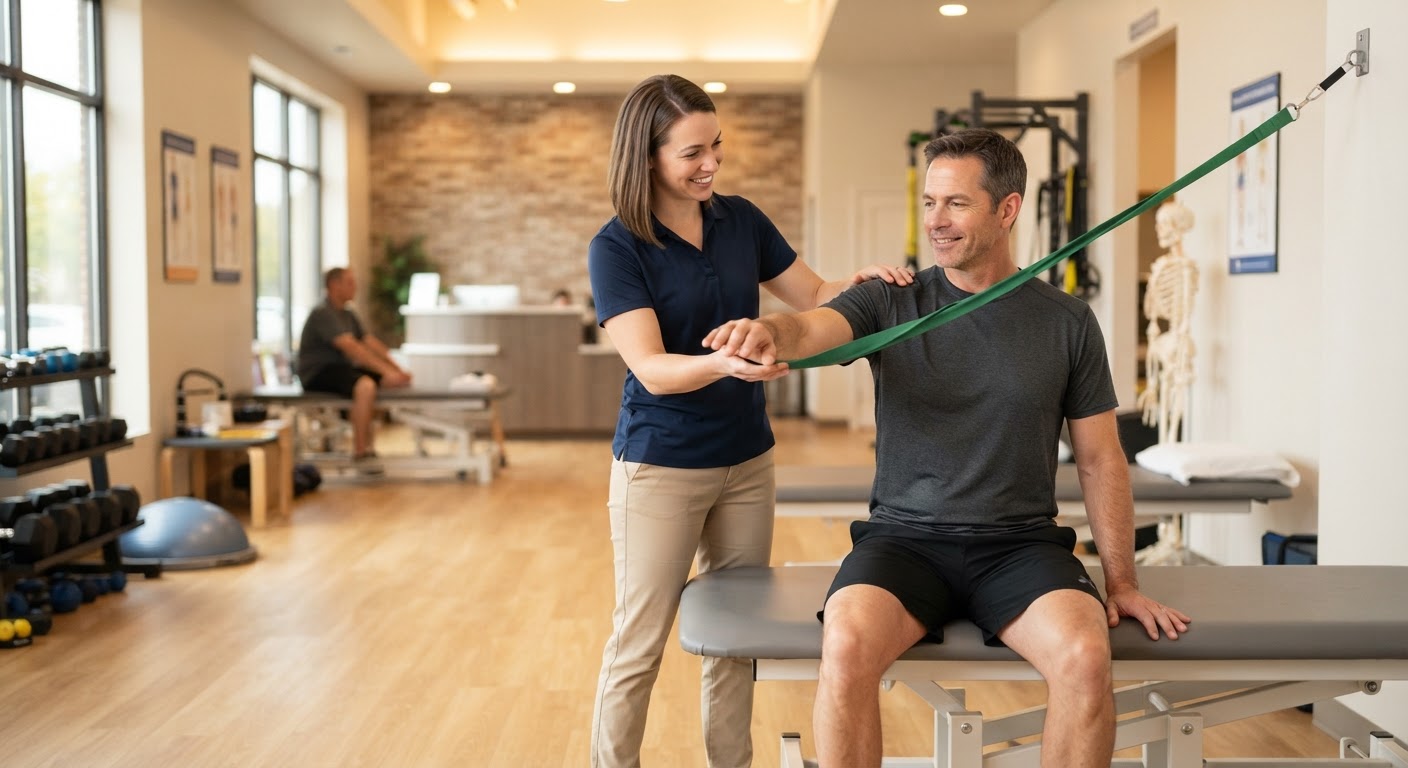
Your physical therapist will evaluate your movement and discuss your symptoms, goals, and work responsibilities. Treatment may include therapeutic exercise, mobility training, hands-on techniques, or education about posture and body mechanics. Your plan should be adjusted as your abilities and needs change.
A Personalized Path Toward Pain Relief
Pain relief is often an early priority, but recovery usually involves more than reducing discomfort. A treatment plan may address the reasons certain movements feel difficult and help you gradually tolerate the activities your job requires. Your therapist can show you how to pace activity, modify movements when appropriate, and use exercises that support progress.
Be open with your therapist about what you are experiencing. Describe when pain starts, what makes it better or worse, and which tasks are challenging. This information helps guide treatment. If an exercise causes sharp, unusual, or worsening symptoms, stop and discuss it with your therapist rather than pushing through without guidance.
Recovery is rarely a straight line. Some days may feel easier than others, and progress can depend on the type of injury and your overall health. Consistent attendance, following your home program as directed, and communicating about changes can help your care team make informed adjustments.
Building Strength For Your Job
Returning to work safely means preparing for the real demands of your role. A job may involve lifting, carrying, standing, walking, reaching, driving, or repeating the same movements for long periods. Physical therapy can help you build capacity for these activities in a gradual, supervised way.
Share a clear picture of your workday with your therapist. If possible, explain the weights you lift, how often you bend or reach, how long you stand, and whether you use specific tools or equipment. These details can help the therapist connect your rehabilitation exercises to your everyday responsibilities.
As your recovery advances, your therapist may progress exercises or practice functional movements that resemble work tasks. The goal is not to rush a return, but to improve your ability to perform necessary activities with better strength, control, and confidence. Your employer, medical provider, and workers’ compensation representative may also have a role in determining work status or accommodations. Follow the instructions provided by your care team and confirm any required approval or documentation with the appropriate parties.
Practical Tips To Support Recovery
Keep appointments and ask questions. Understanding the purpose of each part of your plan can make it easier to follow through.
Complete your home exercises as prescribed. Use the recommended frequency and technique, and contact your therapist if you are unsure how to perform an exercise.
Avoid sudden increases in activity. Follow your clinician’s guidance when adding tasks, lifting more, or returning to activities that have been difficult.
Use safe movement habits. Take your time when lifting, keep loads close when appropriate, and avoid twisting while carrying an object. Ask your therapist for advice specific to your injury and job.
Track meaningful changes. Note improvements in movement, sleep, comfort, or your ability to complete daily tasks. Also report new symptoms or setbacks.
Follow the workers’ compensation process. Requirements can vary by claim and plan, so check with your employer or claim representative about authorizations, referrals, and paperwork.
Choosing Support In Bentonville
A physical therapy clinic can help you understand your next steps and work toward goals that matter in daily life and on the job. Physical Therapy NOW™ provides rehabilitation support for people recovering from work-related injuries. At the Bentonville location, the team can discuss your concerns, assess your movement, and help determine whether physical therapy may fit your recovery needs.
If you have questions about starting care, bring information about your injury, current symptoms, and job duties. It can also help to ask how treatment will be coordinated with your referring provider or workers’ compensation process. Clear communication helps everyone involved understand your goals and progress.
Take The Next Step
You do not have to figure out recovery alone. With an individualized plan, steady effort, and guidance from a physical therapist, you can work toward pain relief, better movement, and a safer return to the activities your job requires. Visit or call the Physical Therapy NOW™ Bentonville location to ask about physical therapy for workers’ compensation recovery and discuss your next steps.
Ready to start feeling better?
Physical Therapy NOW™ has 40+ Florida locations with same-week appointments. Most insurance, auto accident (PIP), workers' compensation and Medicare accepted.