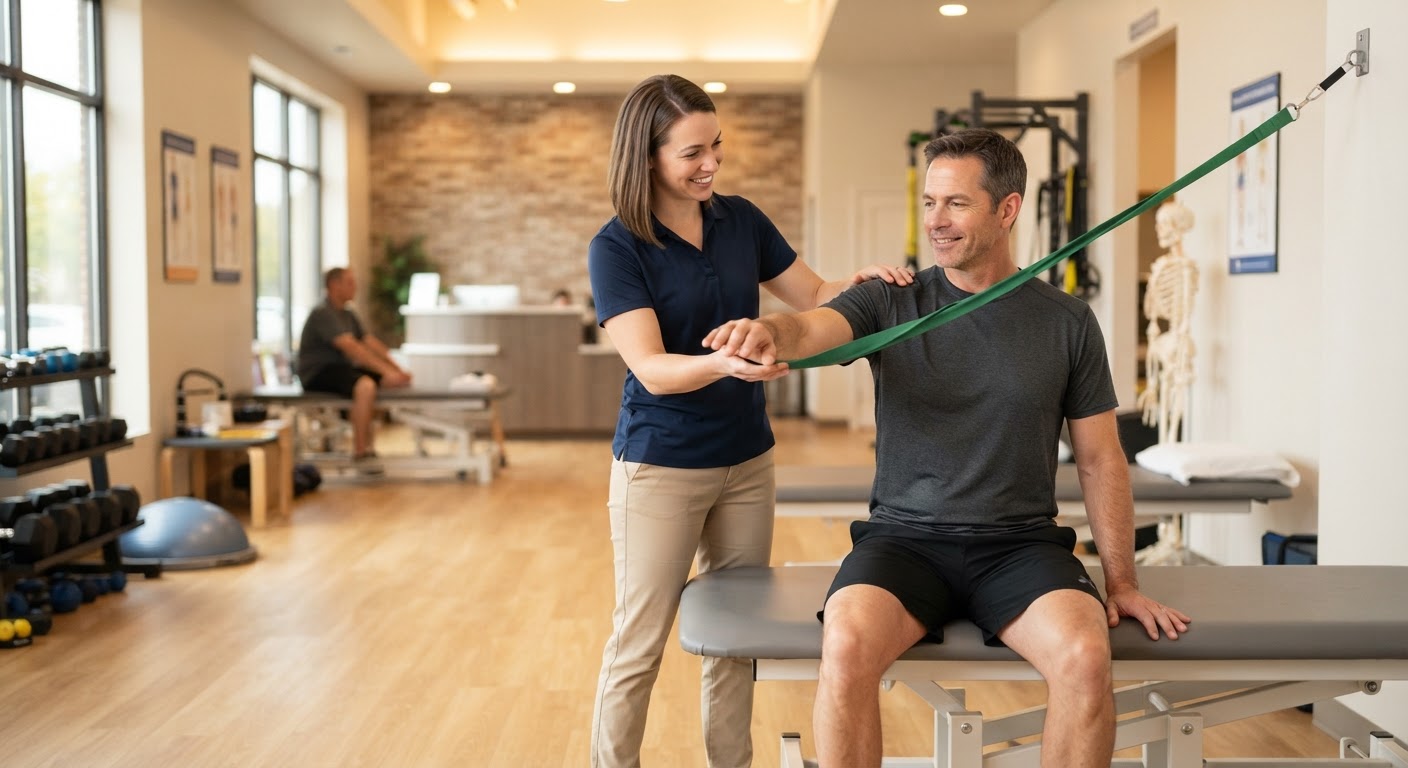
A work injury can affect more than your ability to do your job. Pain, stiffness, and reduced mobility may also make everyday activities challenging. Physical therapy can be an important part of workers’ compensation recovery by helping you improve movement, build strength, and work toward a safe return to your usual activities. At Physical Therapy NOW™ in Miami, FL, the Country Walk location, care is tailored to your injury, symptoms, and work demands.
How Physical Therapy Supports Recovery
Physical therapy focuses on improving how your body moves and functions after an injury. Your therapist will first learn about your symptoms, medical history, job tasks, and recovery goals. An evaluation may include checking your mobility, strength, balance, posture, and tolerance for specific movements.
Based on that information, your therapist can create an individualized rehabilitation plan. Treatment may include guided exercises, mobility work, balance training, and other appropriate techniques. The plan is adjusted as your abilities change, with the goal of helping you return to daily and work-related activities as safely as possible.
Progress can look different for each person. Some people need support with a recent strain or sprain, while others may be rebuilding strength and endurance after a more complex injury. Your physical therapist can help you understand what to work on and how to progress without taking on more than your body is ready for.
Pain Relief And Better Movement
Pain can make it difficult to move normally. You might avoid bending, lifting, reaching, or walking because those actions feel uncomfortable. Over time, avoiding movement can also lead to stiffness or reduced strength. Physical therapy can help you gradually restore comfortable movement and learn strategies for managing symptoms.
Your therapist may teach you how to move with better control, adjust body position during a task, and pace activities throughout the day. Exercises are selected for your needs and may be modified if a movement increases discomfort. The aim is not to push through worsening pain, but to find a manageable starting point and build from there.
Pain relief is not always immediate, and improvement may happen gradually. Share honest feedback about what feels better, what remains difficult, and how you respond after a session. That information helps your therapist adapt your rehabilitation plan and guide your progress.
Preparing For A Safe Return To Work
Returning to work involves more than feeling better at rest. Your job may require repeated lifting, standing, walking, reaching, or working in a particular position. Rehabilitation can address the physical abilities needed for those tasks. Depending on your situation, your therapist may help you practice job-related movements in a controlled way and build strength or endurance over time.
Tell your therapist which tasks are part of a typical workday, including any movements that trigger symptoms. If your duties have changed or you have temporary work restrictions, share that information as well. Your care team can use it to keep treatment focused on relevant goals. Follow guidance from your treating providers and the appropriate workers’ compensation contacts regarding your care and work status.
Practical Tips Between Appointments
Consistency can support progress. Follow the home exercise plan provided by your therapist, and ask for clarification if you are unsure how to do an exercise. Avoid adding extra repetitions or new activities without checking whether they are appropriate for your injury.
Pay attention to how your body responds during and after activity. Mild, short-lived discomfort may be different from sharp, increasing, or lingering pain. Let your therapist know if symptoms worsen, new symptoms appear, or an exercise feels unsafe. They can help you decide whether to adjust the movement or pause it.
Use good pacing throughout the day. Break demanding tasks into smaller steps when possible, alternate activities, and take rest breaks before fatigue significantly changes your movement. Use equipment and lifting techniques recommended for your workplace, and follow any medical restrictions you have received. At home, keep moving within your comfort and guidance rather than staying inactive for long periods unless your provider has advised otherwise.
Communication Makes Care More Effective
Recovery often involves coordination among you, your therapist, your medical provider, and other parties involved in your workers’ compensation care. Keep appointments when possible and bring questions about your exercises, symptoms, or daily activities. If you cannot attend a session, contact the clinic to ask about rescheduling and how to manage your plan in the meantime.
At Physical Therapy NOW™, the team can help you understand your therapy goals and make your visits relevant to the activities you need to regain. The Country Walk location serves people in Miami, FL, seeking support for injury recovery and improved function.
Take The Next Step Toward Recovery
A work injury can be frustrating, but a thoughtful rehabilitation plan can give you practical steps to move forward. Physical therapy may help improve mobility, build strength, support pain relief, and prepare you for the demands of work and daily life. Results and timelines vary, so work with your healthcare providers to determine what is appropriate for you.
If you are recovering from a workplace injury, visit or call the Country Walk location of Physical Therapy NOW™ in Miami, FL, to ask about physical therapy services and scheduling. The team can help you take a clear, supportive next step toward recovery.
Ready to start feeling better?
Physical Therapy NOW™ has 40+ Florida locations with same-week appointments. Most insurance, auto accident (PIP), workers' compensation and Medicare accepted.