Workplace injuries can develop gradually or happen in a moment. Repeated lifting, long hours at a desk, awkward reaching, and sudden slips can all lead to pain that interferes with work and daily life. The good news is that many risks can be addressed with thoughtful workplace habits and support from a physical therapist.
At Physical Therapy NOW™ in Sanford, FL, our team helps people understand how they move, identify factors that may contribute to discomfort, and build practical strategies for staying active at work. Whether your job involves a computer, a warehouse floor, or a mix of tasks, prevention starts with noticing what your body needs.
Why Workplace Injuries Happen
Work-related discomfort often builds through repeated strain. Sitting in one position for hours, frequently twisting while carrying materials, or working with your arms raised can place stress on muscles and joints. A rushed movement, a poorly placed load, or a cluttered walkway can also contribute to an acute injury.
The same task may affect people differently depending on their strength, mobility, work setup, schedule, and previous injuries. That is why injury prevention is not about finding one perfect posture or avoiding movement. It is about varying positions, using sound movement strategies, and making the work environment fit the task as well as possible.
Notice Early Warning Signs
Pay attention to recurring soreness, stiffness, tingling, reduced range of motion, or fatigue that increases during a shift. Symptoms that keep returning may be a sign that your body is having difficulty with a particular task or routine. Do not wait for discomfort to become severe before considering a change.
Keep track of when symptoms appear. Note the task you were doing, how long you had been working, and whether a change in position or a short break helped. This information can help you and your healthcare provider identify patterns. If pain is intense, follows a fall or other injury, or comes with concerning symptoms such as significant weakness or numbness, seek appropriate medical care promptly.
Set Up Your Workstation
For desk work, arrange your chair, screen, keyboard, and mouse so you can work without repeatedly reaching or twisting. Keep frequently used items close. Adjust your chair so your feet are supported and your back feels comfortably supported, and position your screen to reduce the need to bend your neck for long periods. A physical therapist can offer individualized suggestions based on your body and work tasks.
A good setup still does not make it beneficial to stay in one position all day. Change positions regularly, stand when practical, and take brief movement breaks. If your work is physically demanding, consider whether tools, carts, or changes to the layout could reduce unnecessary carrying, reaching, or bending. Follow workplace safety procedures and ask a supervisor about equipment or task adjustments when needed.
Use Safer Movement Strategies
When lifting, get close to the object and check its weight and stability before moving it. Use a secure grip, keep the load close to your body, and move your feet to turn instead of twisting your trunk under load. If an item is too heavy or awkward, use available equipment or ask for help rather than forcing the lift.
For repetitive tasks, look for ways to alternate activities or vary your position when possible. Keep frequently used materials within a comfortable reach and avoid working for long periods with your arms held away from your body. These small adjustments can make demanding tasks more manageable, but they should complement your employer's training and safety guidance.
Build Movement Into Your Day
Short, regular movement breaks can help you reset after a sustained task. Stand, walk briefly, gently move your shoulders, or change your position. Choose movements that feel comfortable; breaks do not need to become intense workouts. If an activity increases pain, stop and consider a gentler option.
General conditioning can also support work demands. Walking and appropriately chosen strength and mobility exercises may help you prepare for lifting, standing, or repetitive activity. Start gradually, and seek guidance if you are unsure which exercises are suitable, especially if you have an existing injury or health condition.
How Physical Therapy Can Help
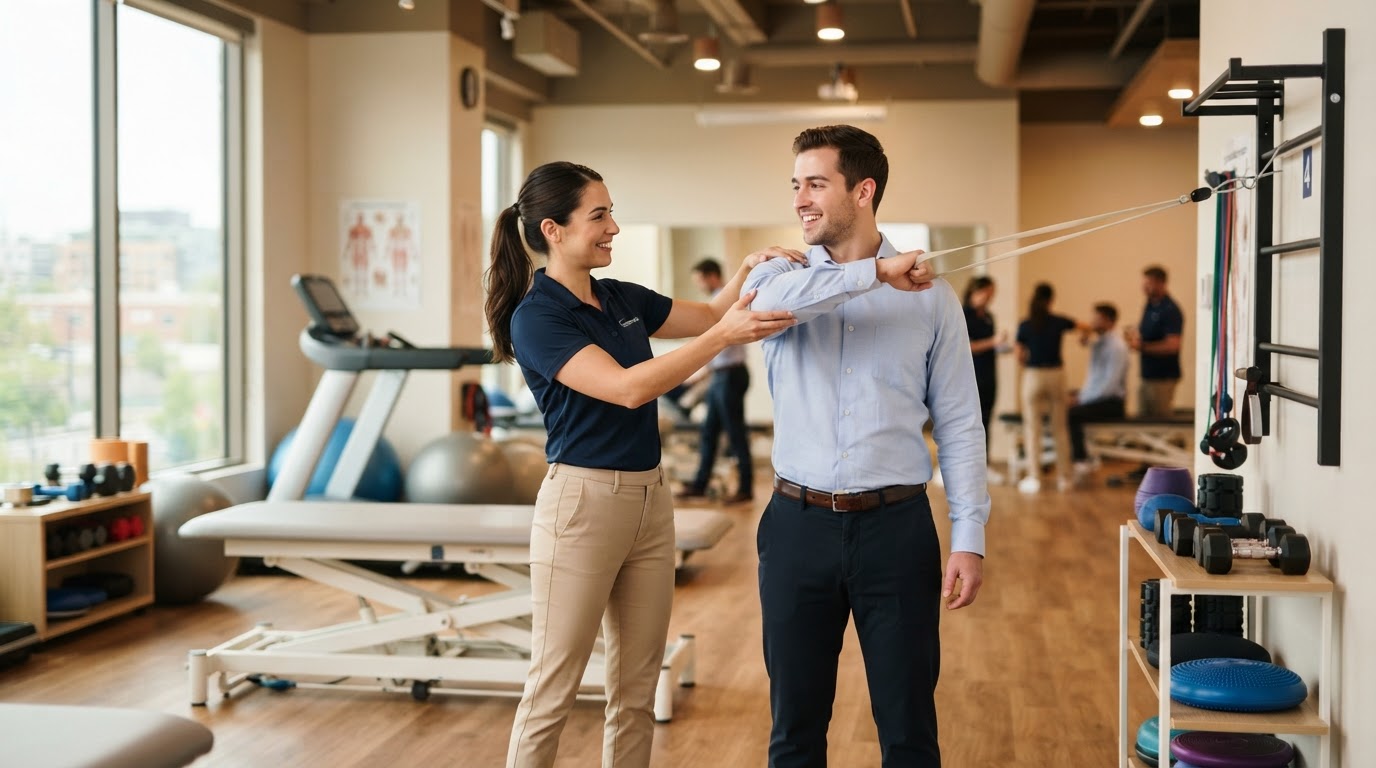
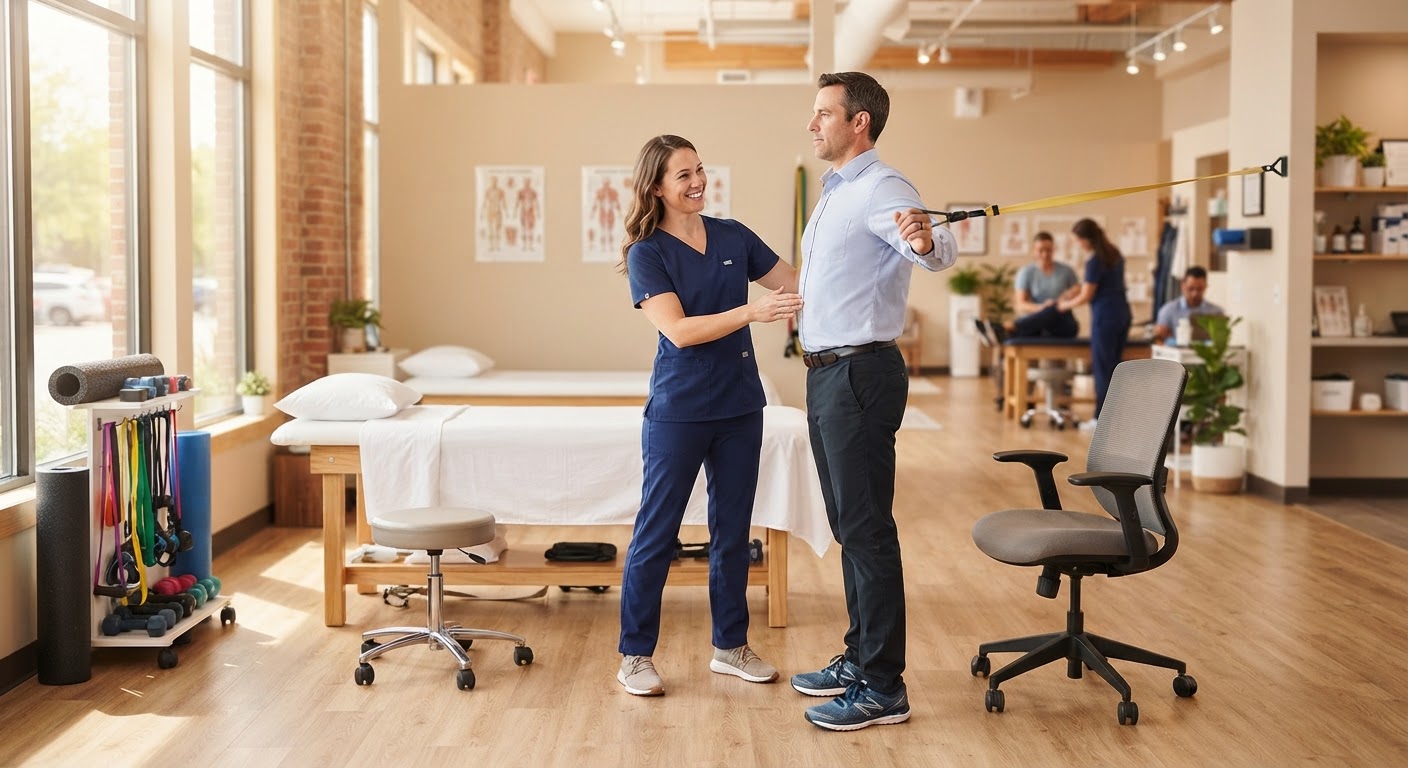
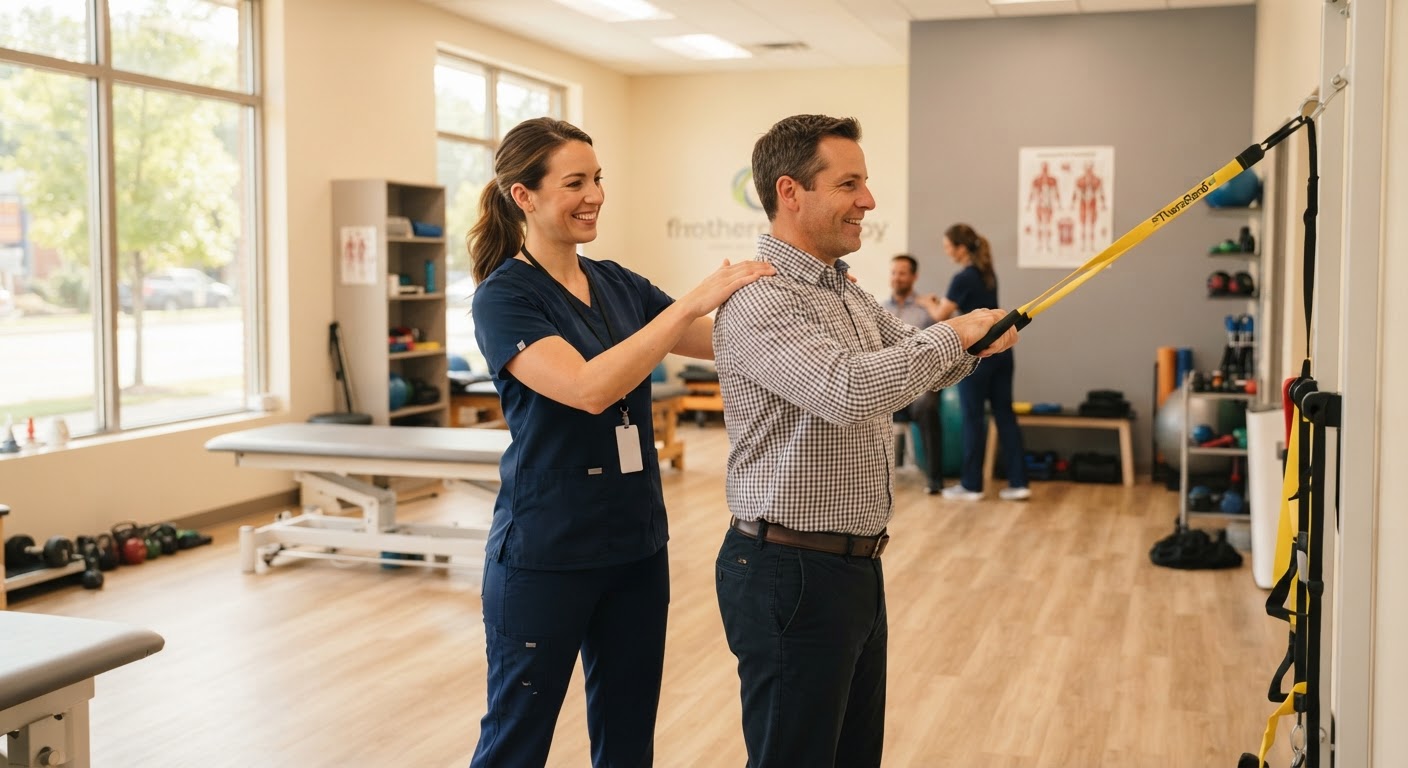
Physical therapy can be useful both for addressing symptoms and for planning a safe return to work tasks. A physical therapist may assess movement, strength, flexibility, balance, and the demands of your job. Based on that evaluation, your rehabilitation plan may include exercises, movement practice, education, and strategies for modifying tasks or pacing activity.
Care is individualized. A therapist can help you understand which movements are appropriate, how to progress them, and when to adjust your routine. For people already dealing with discomfort, physical therapy may support functional improvement and pain relief while helping them work toward their goals. Your plan should take your symptoms, job duties, and overall health into account.
Make Prevention a Routine
Choose one manageable change to start with, such as moving a frequently used item closer, taking a brief movement break, or asking about a safer way to handle a recurring task. Revisit your setup and habits as work duties change. If your workplace has an ergonomics or safety resource, involve that team as well.
When symptoms persist, interfere with your work, or keep returning despite adjustments, consider speaking with a healthcare professional. Early guidance can help clarify what may be contributing to the problem and what steps are appropriate for you.
Get Support in Sanford
You do not have to figure out workplace discomfort on your own. Physical Therapy NOW™ can help you explore practical movement strategies, rehabilitation options, and ways to work toward pain relief. Contact or visit the Sanford location in Sanford, FL, to discuss your needs and take a proactive step toward safer, more comfortable workdays.
Ready to start feeling better?
Physical Therapy NOW™ has 40+ Florida locations with same-week appointments. Most insurance, auto accident (PIP), workers' compensation and Medicare accepted.