How to Prevent Workplace Injuries With Physical Therapy
Workplace injuries can affect people in every kind of job, from desk-based roles to physically demanding work. Repeated movements, prolonged sitting, lifting, and awkward postures may contribute to discomfort or injury over time. The good news is that prevention can start with small, consistent changes. Physical therapy can help you understand how your body moves, build strength and mobility, and choose practical strategies for your workday.
At Physical Therapy NOW™ in Weston, FL, employees can seek guidance for improving movement, managing discomfort, and making work activities more comfortable. Whether you spend hours at a computer or regularly lift and carry items, a prevention plan can be tailored to your tasks and needs.
Recognize Common Workplace Risk Factors
Many workplace problems develop gradually. Sitting in one position for long periods, reaching repeatedly, bending or twisting while lifting, and working with equipment that does not fit your body can place extra demands on muscles and joints. Rushing through tasks or skipping breaks may also make it harder to notice fatigue and changes in your posture.
Pay attention to patterns. Does discomfort appear near the end of a shift, during a particular task, or after using a specific workstation? Note what you were doing and what seems to help. This information can help you identify habits or tasks to discuss with a supervisor or physical therapist. New, severe, or persistent symptoms deserve attention rather than being ignored.
Set Up Your Workstation For Better Movement
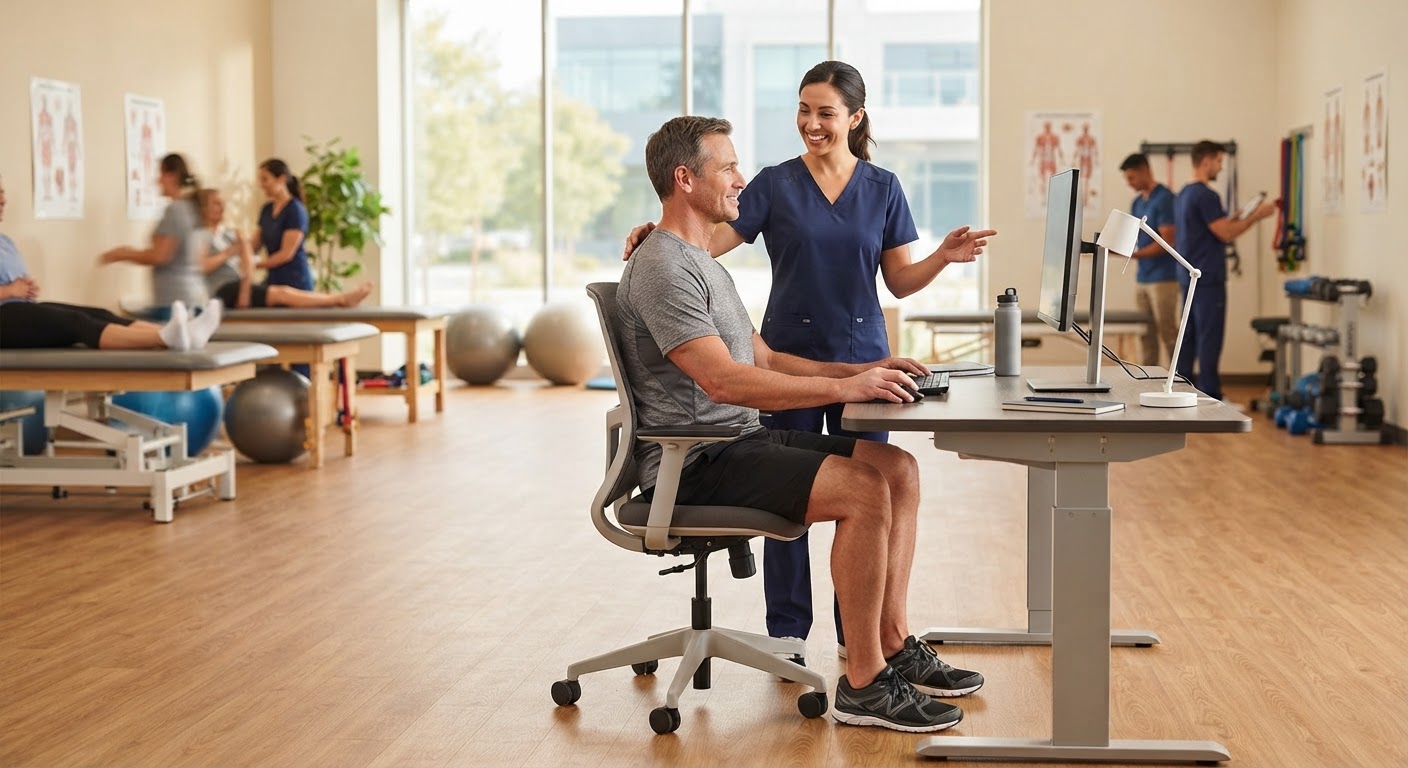
A comfortable workstation supports a variety of positions instead of forcing you to hold one posture all day. If you work at a desk, place your screen in front of you and adjust it so you can view it without repeatedly bending your neck. Keep frequently used items within easy reach. When seated, aim to keep your feet supported and your shoulders relaxed. Adjust your chair and desk where possible, and consider asking your employer about an ergonomic assessment.
Good ergonomics does not mean finding one perfect position and staying there. Even a well-arranged workstation can become uncomfortable if you remain still for too long. Change positions regularly, stand for a phone call, or take a brief walking break. If your role involves standing, vary your stance when practical and use supportive footwear appropriate for the work environment.
Use Safer Lifting And Carrying Habits
Before lifting, check the load and the path you plan to take. If an item is too heavy or awkward, ask for help or use available equipment rather than trying to manage it alone. Keep the load close to your body, move your feet to turn instead of twisting through your trunk, and lift in a controlled way. Follow your workplace’s safety procedures, since some tasks require specific equipment or team-lifting practices.
Repeated lifting can be demanding even when each individual item seems manageable. Organize supplies so that heavier objects are stored at a practical height when possible, and avoid reaching far while holding a load. A physical therapist can observe how you perform work-related movements and suggest ways to improve your body mechanics and prepare for job demands.
Build Movement Into The Workday
Short movement breaks can help interrupt long periods of repetitive activity or static posture. Try standing, walking briefly, or gently moving your shoulders, hips, and ankles between tasks. If you perform repetitive work, ask whether tasks can be rotated or alternated to vary the movements involved. Choose breaks that are realistic for your schedule and consistent with workplace policies.
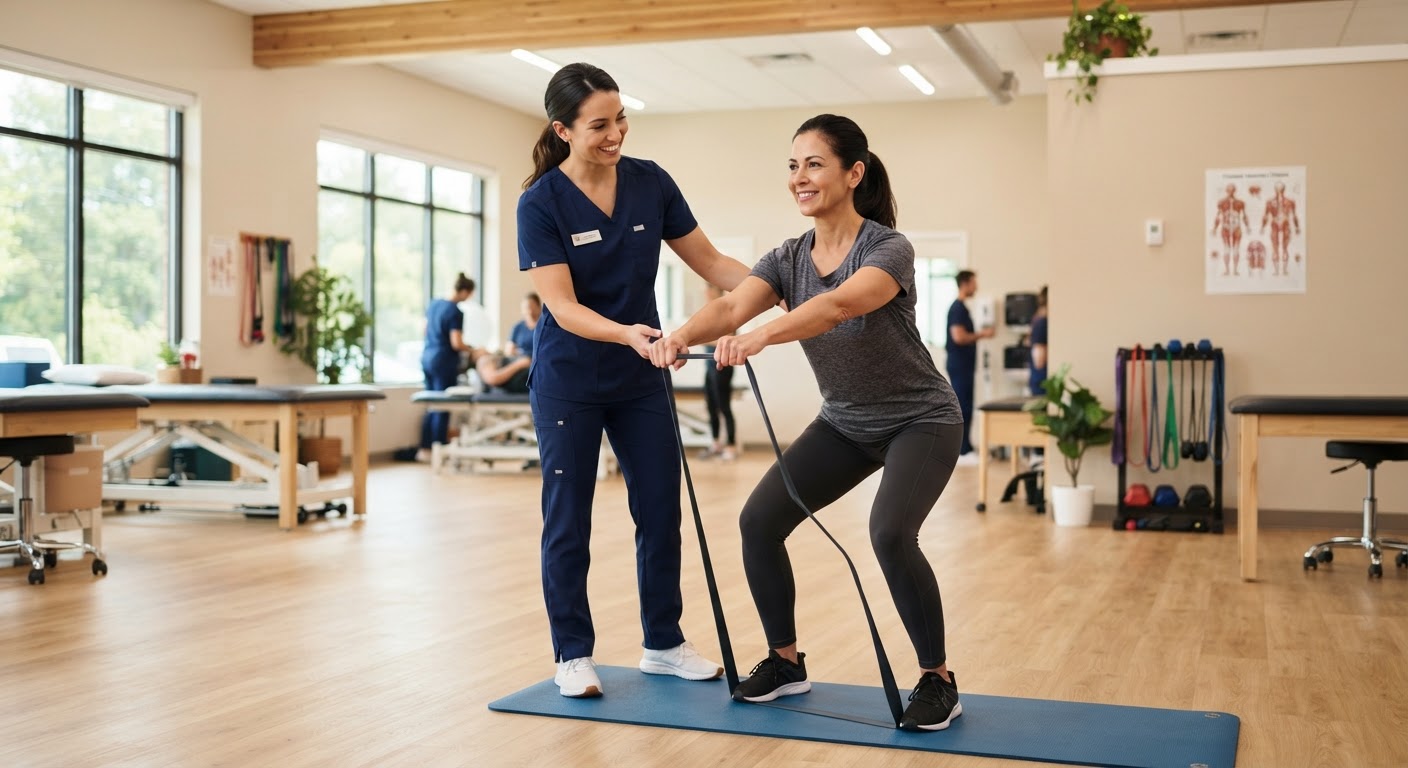
A physical therapist can recommend mobility and strengthening exercises based on your health, job tasks, and current abilities. The goal is not to push through pain or follow a one-size-fits-all routine. Start gradually, use comfortable ranges of motion, and stop an exercise that causes sharp or worsening symptoms. Ask a qualified clinician for guidance if you are unsure which movements are appropriate for you.
How Physical Therapy Supports Prevention
Physical therapy is not only for recovery after an injury. An evaluation may look at movement patterns, strength, flexibility, balance, and the activities involved in your job. Based on your goals, a therapist can help you develop a personalized program and practice safer ways to perform work tasks. Your plan may include exercises, activity modifications, education, and strategies for gradually building tolerance.
If discomfort is already affecting your work, physical therapy may also support rehabilitation and pain relief. A clinician can help assess your situation and discuss appropriate next steps. Treatment recommendations vary from person to person, and a therapist can help determine whether physical therapy is a good fit or whether you should seek another type of medical evaluation.
Make Prevention A Team Effort
Employees can reduce some risks by using safe work practices, speaking up about hazards, and reporting symptoms early. Employers can support prevention by maintaining equipment, providing appropriate training, and considering workstation or task adjustments. If a particular movement or setup repeatedly causes discomfort, describe the task clearly and ask what changes may be possible.
Consistency matters more than making every adjustment at once. Choose one practical change, such as repositioning a frequently used item or taking a short movement break, and notice how it affects your comfort. Build from there. If symptoms persist, worsen, or interfere with daily activities, consult a healthcare professional instead of relying solely on self-management.
Take The Next Step Toward A Safer Workday
Preventing workplace injuries starts with noticing how you move and making thoughtful changes to your environment and routine. Physical therapy can offer individualized guidance to help you move with greater confidence, support rehabilitation, and work toward pain relief when discomfort is present.
For personalized support, contact Physical Therapy NOW™ at the Weston location in Weston, FL. Call or visit the clinic to ask about an evaluation and discuss practical ways to make your workday more comfortable and movement-friendly.
Ready to start feeling better?
Physical Therapy NOW™ has 40+ Florida locations with same-week appointments. Most insurance, auto accident (PIP), workers' compensation and Medicare accepted.