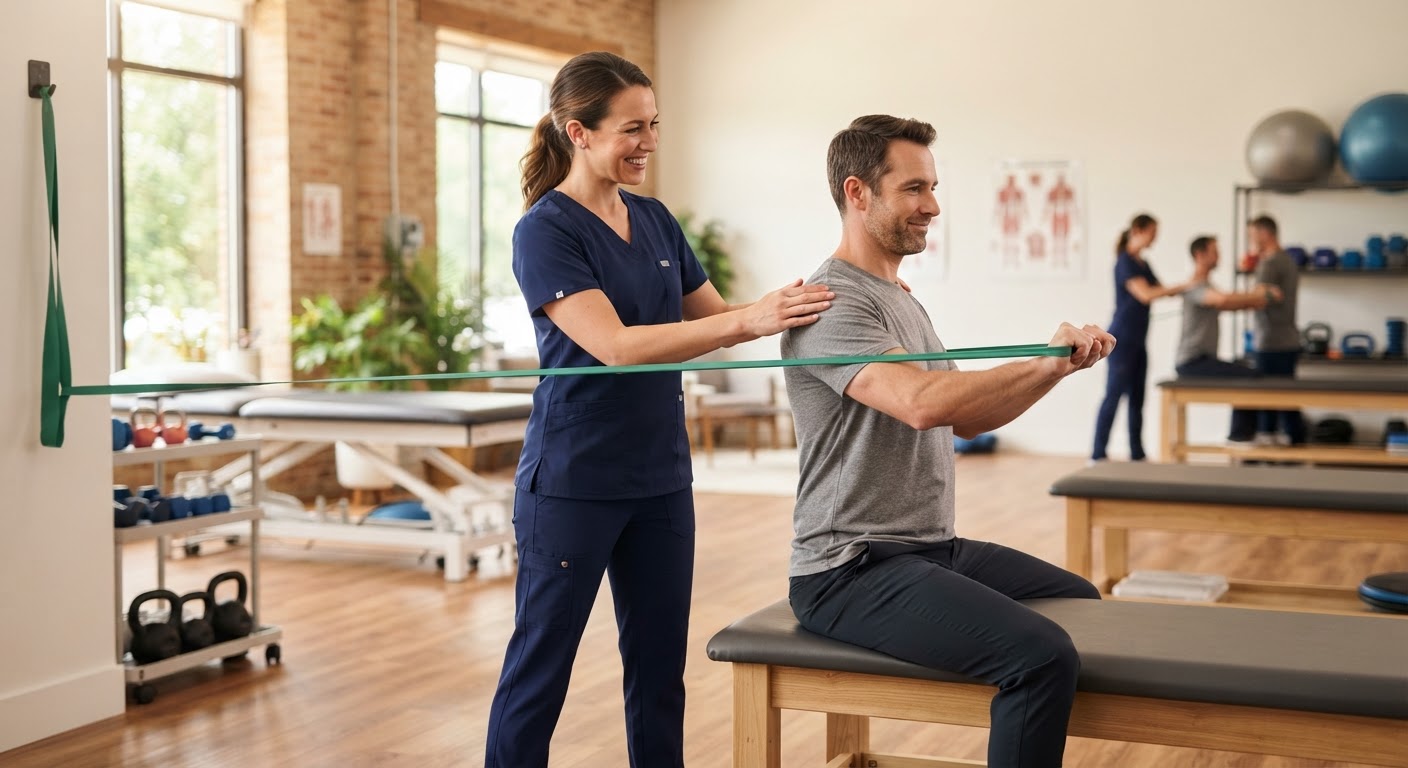
Workplace injuries can affect more than your time on the job. Stiffness, aching, and repetitive strain may make it harder to work, exercise, and enjoy everyday activities. The good news is that many common work-related problems can be reduced with consistent habits, a well-adjusted workstation, and timely support. Physical therapy can help you understand your body’s needs and build a prevention plan that fits your work and routine.
Whether your job involves sitting at a computer, standing for long periods, lifting, or performing repeated tasks, small changes can make a meaningful difference. Here are practical ways to protect your body and know when to seek help.
Why Workplace Injury Prevention Matters
Workplace injuries can develop suddenly, such as after a slip or an awkward lift, or gradually through repeated movements and sustained positions. Common trouble spots include the neck, shoulders, back, wrists, and knees. Long periods of sitting or standing, frequent overhead reaching, and lifting loads without enough support can all place added stress on the body.
Prevention is not about avoiding movement or expecting perfect posture all day. It is about varying your position, using sound movement strategies, and responding early when something feels off. Addressing discomfort before it becomes a persistent limitation may help you stay active and reduce the chance that a minor issue disrupts your work.
Recognize Early Warning Signs
Pay attention to symptoms that repeatedly appear during or after work. These may include soreness, stiffness, tingling, reduced range of motion, or discomfort that returns with a particular task. Notice when symptoms occur, what movements bring them on, and whether breaks or changes in position help.
Do not ignore pain that is worsening, recurring, or interfering with daily activities. A physical therapist can assess movement, strength, flexibility, and work-related demands to help identify contributing factors. Seek prompt medical attention for severe symptoms, a sudden injury, significant weakness or numbness, or other concerning changes.
Set Up Your Workstation
For desk-based work, arrange your space so you can work without repeatedly reaching or twisting. Place frequently used items within easy reach. Position your monitor directly in front of you, with the screen near eye level, and adjust your chair so your feet are supported and your shoulders can relax. Keep your keyboard and mouse close enough to use with your elbows comfortably near your sides.
There is no single posture that works for everyone, and staying in one position for too long can be uncomfortable even when your setup is reasonable. Change positions throughout the day. If you use a laptop for extended periods, a separate keyboard and mouse can make it easier to position the screen and your arms comfortably. Adjust your setup gradually and pay attention to how your body responds.
Move More Throughout The Day
Regular movement breaks can help counter long periods of sitting or standing. Set a reminder to stand, walk briefly, or change your position every so often. During a break, gently move your shoulders, ankles, and upper back through a comfortable range. A short walk to refill water or speak with a colleague can also add useful variety to your day.
If your job requires standing, shift your weight, take brief walking breaks when possible, and use supportive footwear suited to your work environment. If you sit for much of the day, alternate between sitting and standing if you have access to an adjustable desk. The goal is not to follow a rigid schedule, but to avoid holding the same position for hours.
Use Safe Lifting And Carrying Techniques
Before lifting, check the load and clear your path. Move close to the object, set your feet in a stable position, and bend through your hips and knees as needed. Keep the load close to your body and avoid twisting while carrying it. To change direction, move your feet rather than rotating your trunk under load.
Ask for help or use available equipment when an item is too heavy, awkward, or difficult to grip. If lifting is a regular part of your job, ask your supervisor about task-specific safety procedures. A physical therapist can also help you practice lifting and carrying strategies that match your abilities and workplace tasks.
Build Strength And Mobility
General physical activity can support the strength and mobility needed for work. A balanced routine may include walking or other aerobic activity, along with exercises for the muscles you rely on during work and daily life. Choose activities that suit your current fitness level, and build up gradually rather than making sudden increases in intensity or duration.
A physical therapist can recommend exercises based on your movement, symptoms, and job demands. This is especially helpful if you have a previous injury, a physically demanding role, or uncertainty about which movements are appropriate. Stop an exercise that causes sharp or increasing pain and ask a qualified professional for guidance.
How Physical Therapy Helps
Physical therapy is not only for recovery after an injury. It can also help you understand how your work tasks affect your body and what changes may reduce unnecessary strain. Your therapist may assess posture and movement, discuss your work routine, and provide individualized exercises, body mechanics coaching, or recommendations for modifying tasks and workstation habits.
If pain or stiffness is already affecting your work, rehabilitation can help you work toward improved movement and function. Your plan may include progressive exercise, education, and strategies for returning to activities safely. Treatment is tailored to your needs, and your therapist can coordinate recommendations with your goals and work demands. Pain relief may be one goal, alongside building confidence and reducing the likelihood of recurring problems.
Make Prevention Part Of Your Routine
Choose one or two changes to start with, such as adjusting your monitor, taking movement breaks, or asking for help with awkward loads. Keep track of what improves your comfort and what still triggers symptoms. Consistency matters more than making every change at once, and practical habits are easier to maintain when they fit into your workday.
For personalized guidance, Physical Therapy NOW™ can help you take a proactive approach to workplace injury prevention. The Physical Therapy NOW™ Bird Road location in Miami, Florida can assess your needs and recommend strategies tailored to your job and goals.
Get Support At Physical Therapy NOW™
You do not have to wait until discomfort keeps you from working comfortably. If you work or live near Bird Road in Miami, FL, visit or call the Physical Therapy NOW™ Bird Road location to ask about physical therapy and rehabilitation. A conversation with a physical therapist can help you find practical next steps for pain relief, safer movement, and a more comfortable workday.
Ready to start feeling better?
Physical Therapy NOW™ has 40+ Florida locations with same-week appointments. Most insurance, auto accident (PIP), workers' compensation and Medicare accepted.