How to Prevent Workplace Injuries With Physical Therapy
Workplace injuries can affect more than your time on the job. Pain, stiffness, and reduced mobility may make everyday tasks more difficult, whether you work at a desk, in a warehouse, or in a role that keeps you moving. The good news is that many common work-related aches and injuries can be addressed with practical prevention strategies. Physical therapy can help you identify risk factors, build strength, and develop safer movement habits before discomfort becomes a bigger obstacle.
At Physical Therapy NOW™ in Oakland Park, our team helps people understand how their daily work routines affect their bodies and how rehabilitation can support healthier movement. Prevention is not about avoiding every physical demand. It is about preparing your body, using it thoughtfully, and responding early when something does not feel right.
Understand Common Workplace Injury Risks
Workplace injuries can develop suddenly, such as when lifting a heavy box, or gradually through repeated movements and sustained positions. Common concerns include back pain, neck stiffness, shoulder irritation, wrist and hand discomfort, and muscle strains. Jobs involving prolonged sitting, frequent reaching, repetitive tasks, heavy lifting, or long periods of standing may place extra demands on the body.
Small habits can add up. A chair that encourages slouching, a monitor positioned too low, or repeated lifting with a rounded back may contribute to discomfort over time. The goal is not to blame your posture or assume every ache signals an injury. Instead, notice patterns: when symptoms occur, which tasks make them worse, and what changes help. That information can guide useful adjustments and, when appropriate, a conversation with a physical therapist.
Set Up Your Work Area for Better Movement
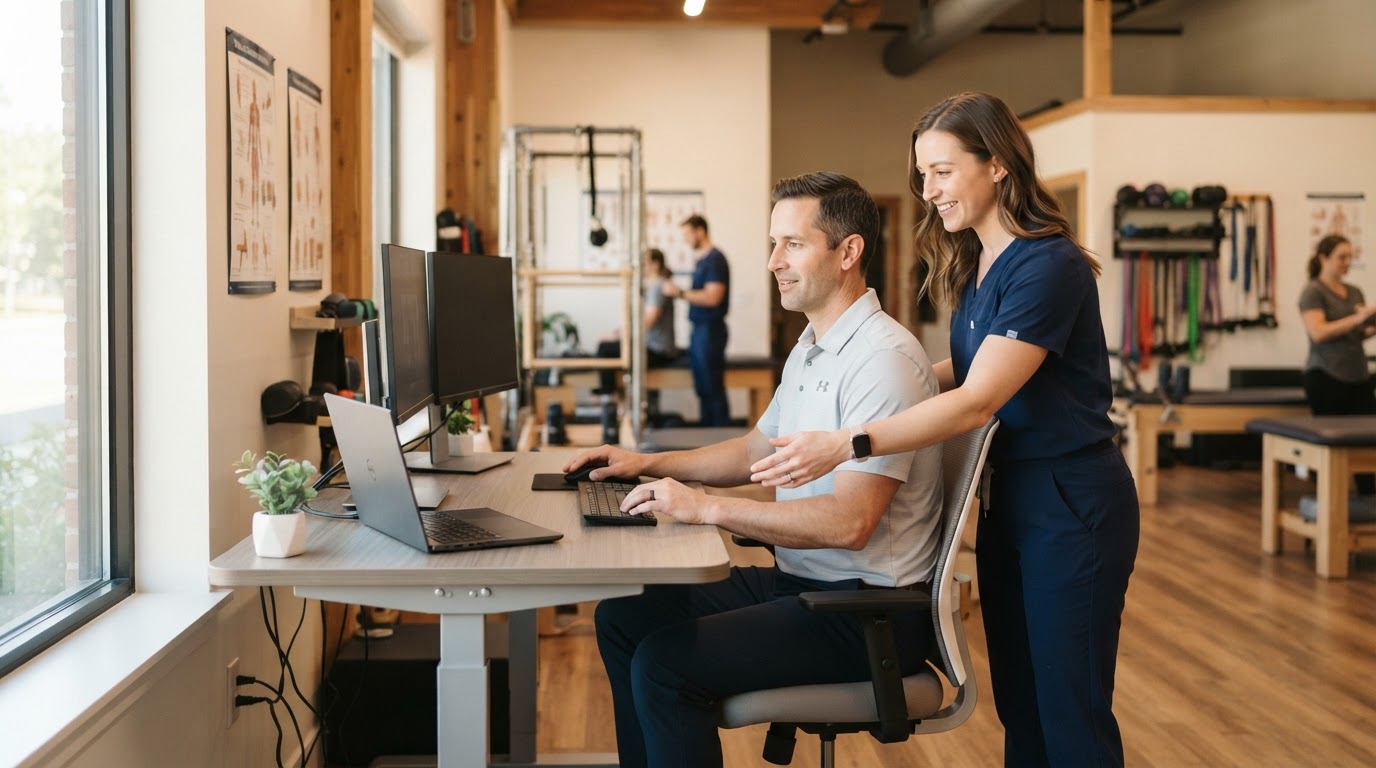
An ergonomic workspace should help you change positions comfortably rather than hold one posture all day. If you work at a computer, position the screen near eye level and close enough to read without leaning forward. Keep your keyboard and mouse within easy reach, with your shoulders relaxed and elbows near your sides. Adjust your chair so your feet are supported and your hips and knees feel comfortable.
If you stand for much of your shift, vary your stance when possible. Use a footrest or low step to change how your legs are positioned, and choose supportive footwear suited to your work environment. For tasks that require reaching, bring materials closer or reorganize supplies so frequently used items are easy to access. Even a well-arranged workstation cannot replace movement, so plan opportunities to change positions throughout the day.
Use Safer Techniques for Lifting and Repetitive Tasks
Before lifting, check the size and stability of the object and clear your path. Get close to the load, set your feet in a balanced position, and bend at your hips and knees as comfortable. Keep the object near your body as you stand, and avoid twisting while carrying it. If something feels too heavy or awkward, ask for help or use available equipment. Safe lifting depends on the task and your abilities, so do not push through pain to complete a lift.
For repetitive work, look for ways to alternate tasks or vary your grip and position. Keep frequently used tools within reach and avoid working with your wrists held in an extreme position for long periods. Short, regular pauses can give your muscles a chance to recover. A few moments to relax your hands, roll your shoulders gently, or walk can be more useful than waiting until you feel exhausted.
Build Movement Breaks Into Your Day
The body is designed to move, and changing positions can help reduce the strain of staying still for too long. Set a reminder to stand, walk, or stretch at regular intervals that fit your work schedule. If you sit for much of the day, take a brief walk or gently move your back and shoulders. If your job is physically demanding, use breaks to recover rather than adding more strenuous activity.
Keep movements comfortable and controlled. A stretch should not cause sharp pain, numbness, or tingling. Simple options include shoulder rolls, gentle neck movement within a comfortable range, standing up from your chair, or walking for a few minutes. Consistency matters more than intensity. Choose movements you can repeat safely and adapt them to your workplace and physical needs.
How Physical Therapy Can Help Prevent Injuries
Physical therapy can support prevention by looking at how you move, what your job requires, and where you may benefit from added strength or mobility. A physical therapist may assess your posture during work tasks, review lifting or reaching mechanics, and help identify movements that trigger symptoms. Your plan may include individualized exercises, movement education, strategies for pacing activity, and guidance on modifying tasks when possible.
Rehabilitation is also valuable when pain or an injury has already started. A physical therapist can help you work toward improved strength, flexibility, coordination, and confidence with job-related activities. The right approach depends on your symptoms, health history, and work demands. Physical therapy is not a substitute for urgent medical care. Seek prompt medical attention for severe or sudden symptoms, significant weakness, or other concerning changes.
Respond Early to Workplace Discomfort
Do not ignore pain that keeps returning, worsens, or interferes with work or daily activities. Note when it began, which tasks affect it, and whether you have symptoms such as tingling or weakness. Where possible, discuss temporary adjustments with your supervisor, such as changing tasks, improving access to equipment, or taking brief movement breaks. Early attention may help prevent a manageable concern from disrupting more of your routine.
At Physical Therapy NOW™, the Oakland Park team can help you explore practical ways to move more comfortably and reduce preventable strain. A physical therapist can provide guidance tailored to your needs rather than relying on a one-size-fits-all exercise routine.
Take a Proactive Step Toward Safer Work
Preventing workplace injuries starts with manageable choices: arrange your workspace, vary your position, use thoughtful lifting techniques, and take breaks that allow your body to move. If discomfort is affecting your work, individualized physical therapy may help you address contributing factors and pursue meaningful pain relief.
Contact or visit the Oakland Park location of Physical Therapy NOW™ in Oakland Park, FL to discuss your concerns and learn how physical therapy may fit your goals. Call the clinic to schedule a visit and take a practical next step toward safer, more comfortable work.
Ready to start feeling better?
Physical Therapy NOW™ has 40+ Florida locations with same-week appointments. Most insurance, auto accident (PIP), workers' compensation and Medicare accepted.