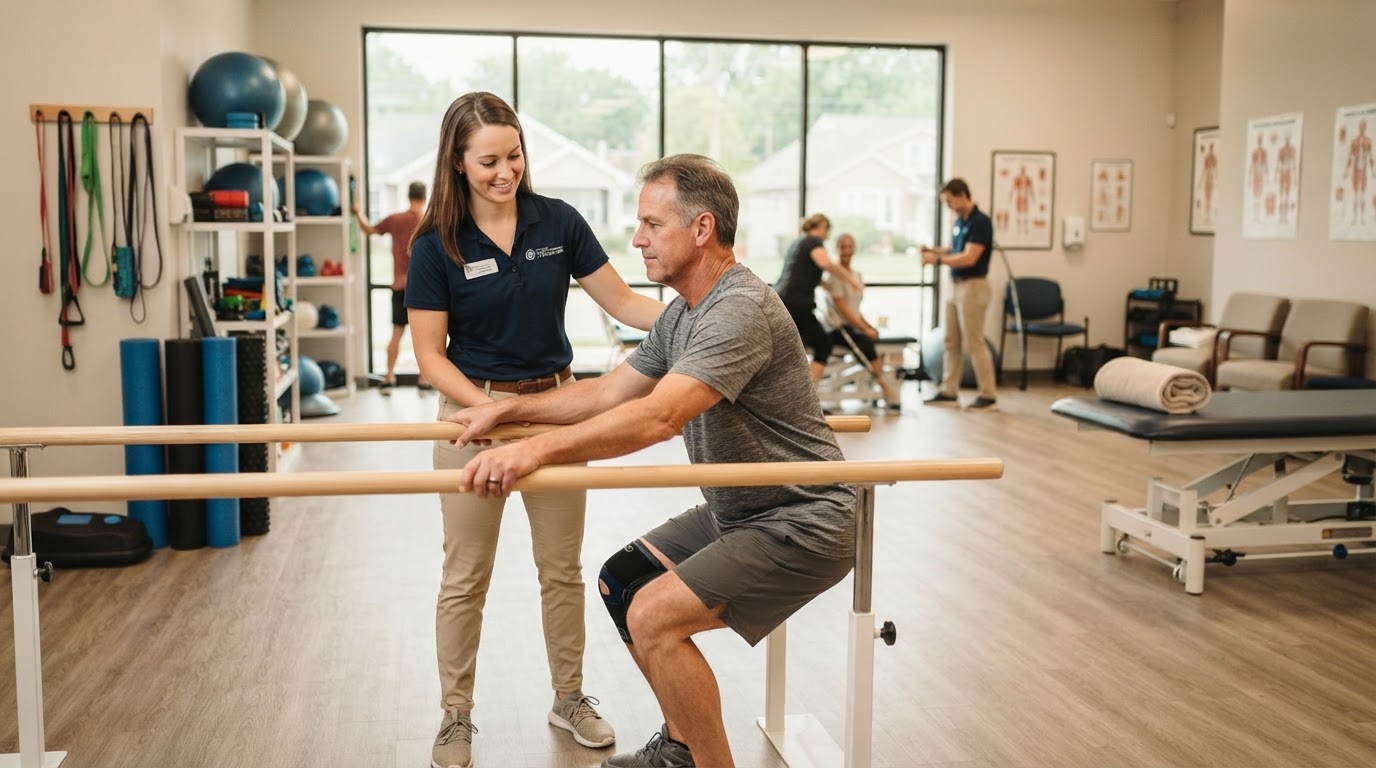
A slip and fall can happen in an instant, but soreness, stiffness, and difficulty moving may last much longer. Even a fall that seems minor can affect your muscles, joints, balance, or confidence. Physical therapy can help you understand your movement challenges and work toward a safe, steady return to everyday activities.
At Physical Therapy NOW™ in Bentonville, Arkansas, care starts with learning how the injury affects you. Your treatment plan can be tailored to your symptoms, goals, and daily routine rather than relying on a one-size-fits-all approach.
Common Injuries After A Fall
Falls may lead to bruises, muscle strains, sprains, joint irritation, or pain in the back, neck, shoulder, wrist, hip, or knee. Some people notice swelling or stiffness right away, while others develop discomfort over the following hours or days. A fall can also aggravate an existing condition or make routine tasks, such as climbing stairs or getting dressed, feel difficult.
Pay attention to how your body responds after a fall. Seek prompt medical attention for severe pain, a suspected fracture, significant swelling, an inability to bear weight, a head injury, confusion, or symptoms that are rapidly worsening. A medical professional can determine whether further evaluation is needed. Physical therapy may be appropriate once urgent concerns have been addressed and you have guidance on safe activity.
How Physical Therapy Supports Recovery
Rehabilitation after a fall is about more than easing soreness. A physical therapist can assess your mobility, strength, balance, walking pattern, and ability to perform daily tasks. The evaluation helps identify specific limitations and informs a plan that matches your needs and recovery stage.
Depending on your assessment, physical therapy may include gentle mobility exercises, progressive strengthening, balance activities, walking practice, and guidance on moving safely. Your therapist can adjust the challenge as your abilities change. The goal is to help you regain useful movement and build confidence without pushing through symptoms that need attention.
Treatment may also address habits or environmental factors that could increase the chance of another fall. For example, a therapist may discuss how you manage stairs, turn, reach, or move between sitting and standing. If balance or walking is a concern, practicing these activities with professional guidance can help you learn safer strategies.
Practical Steps In The First Few Days
If you have mild symptoms and no urgent warning signs, take a measured approach. Avoid activities that sharply increase pain, but do not assume that complete bed rest is always the best choice. Gentle movement may be appropriate for some people; what is safe depends on the injury and your health history. Ask a healthcare professional for advice if you are unsure.
Use these simple steps as a starting point:
Notice which movements make symptoms better or worse, and share that information with your healthcare provider.
Choose stable, supportive footwear and clear walkways of clutter, loose rugs, and cords.
Use handrails when available, move carefully on wet or uneven surfaces, and make sure rooms and stairways are well lit.
Keep frequently used items within easy reach to reduce unnecessary bending or climbing.
Follow any medical instructions you have received, and avoid returning too quickly to strenuous activity.
These tips can support safer movement, but they do not replace an individual assessment. If pain persists, mobility remains limited, or you feel unsteady, a physical therapist can help determine appropriate next steps.
What To Expect From Rehabilitation
Your first visit generally includes a conversation about how the fall happened, your symptoms, health history, and goals. The physical therapist may ask you to perform comfortable movements or functional tasks to understand what is difficult. Let your therapist know about new symptoms, areas of tenderness, fear of falling, or activities you need to return to at home or work.
Your plan may change as you progress. Early sessions might focus on comfortable movement and basic strength, while later work may involve more challenging balance or task-specific practice. You should be able to discuss how an exercise feels and ask for modifications. Communicating openly helps your therapist adapt your rehabilitation to your response.
Recovery timelines vary. The type and severity of the injury, your overall health, and the demands of your daily routine can all affect progress. Rather than measuring recovery only by pain, consider other signs of improvement, such as walking more comfortably, managing stairs with greater confidence, or returning to household tasks.
Working Toward Pain Relief And Confidence
Pain relief is an important goal, but lasting progress can also involve restoring strength, balance, and comfortable movement. A well-planned rehabilitation program can help you address those areas while building practical strategies for daily life. Your therapist can also explain which activities to continue, which to modify, and when to seek further medical guidance.
If you have experienced a slip and fall, you do not have to figure out every step of recovery on your own. Physical Therapy NOW™ offers personalized physical therapy for people working to move more comfortably after an injury. Visit or call the Bentonville location to discuss your concerns and arrange an evaluation. The team can help you explore a plan for rehabilitation, pain relief, and a safer return to the activities that matter to you.
Ready to start feeling better?
Physical Therapy NOW™ has 40+ Florida locations with same-week appointments. Most insurance, auto accident (PIP), workers' compensation and Medicare accepted.