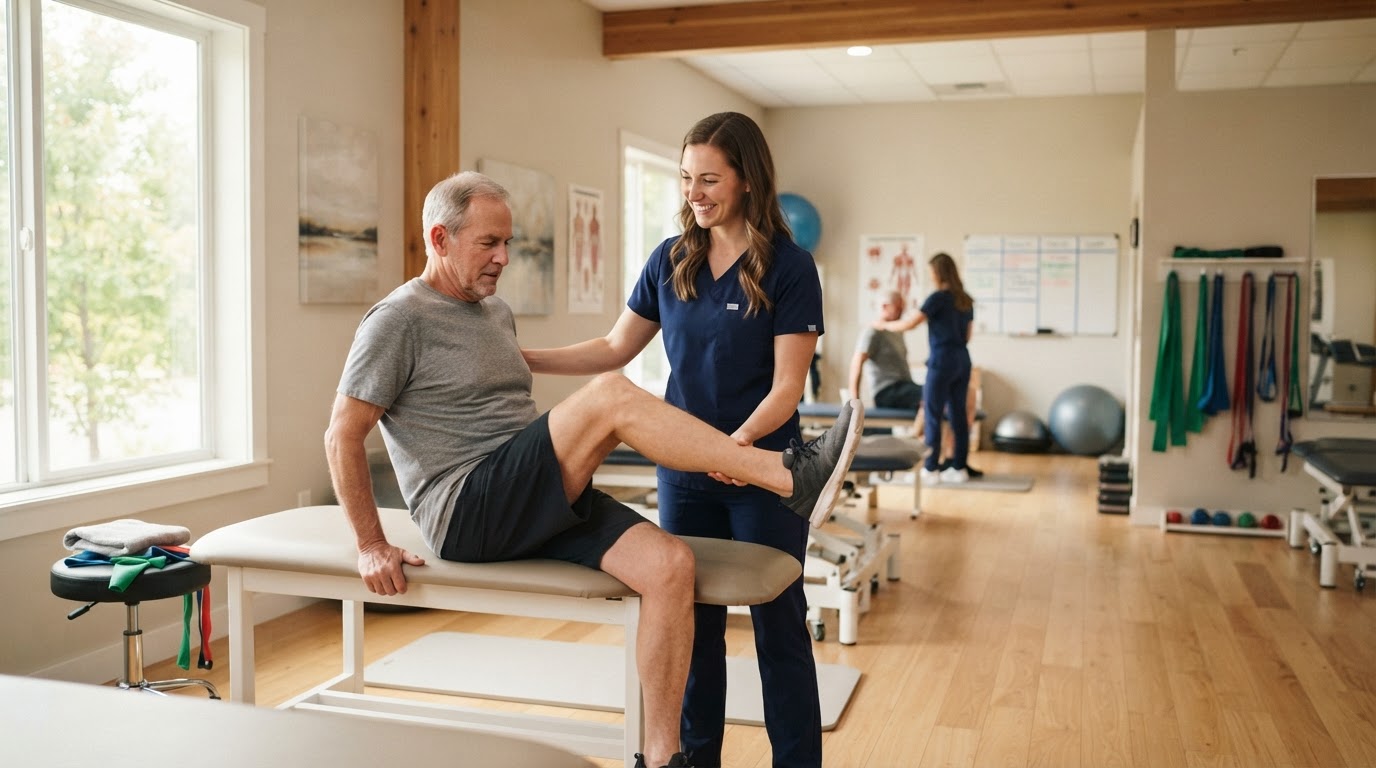
Pain can make everyday activities feel difficult, from getting out of a chair to reaching overhead or taking a walk. Physical therapy offers a personalized, movement-focused approach to pain management. Rather than looking only at where it hurts, a physical therapist considers how your body moves, what activities matter to you, and what may be contributing to your symptoms.
At Physical Therapy NOW™, patients can work with a care team to understand their movement challenges and develop a plan aimed at improving function. Whether pain began recently or has been affecting you for a long time, rehabilitation can help you build strength, mobility, and confidence at a pace suited to your needs.
How Physical Therapy Supports Pain Relief
Pain can have many influences, including an injury, repetitive movements, reduced strength, joint stiffness, or changes in activity. It is also possible for pain to persist after tissues have had time to heal. A physical therapist can assess your symptoms and movement patterns, discuss your goals, and identify ways to make daily tasks more manageable.
Your plan may include therapeutic exercises, mobility work, balance training, hands-on techniques, and education. The specific approach depends on your assessment and how you respond over time. Exercise is often an important part of care because gradually improving strength and movement can help you participate more comfortably in the activities that matter to you.
Physical therapy is not a one-size-fits-all solution, and progress can look different for each person. Your therapist can adjust the plan as your abilities and symptoms change. The goal is not simply to get through a session, but to help you develop skills you can use beyond the clinic.
A Personalized Approach To Rehabilitation
Your first steps may include a conversation about when the pain started, which movements aggravate it, and how it affects work, sleep, exercise, or household tasks. Your physical therapist may also evaluate strength, flexibility, balance, posture, and functional movement. This information helps guide an individualized rehabilitation plan.
For example, someone with back discomfort may benefit from learning how to move comfortably, building trunk and hip strength, and adjusting how they approach lifting. A person with shoulder pain may work on shoulder mobility and gradually rebuild strength for reaching. These examples are not prescriptions: the right exercises depend on the person, the diagnosis, and the therapist’s findings.
Treatment may also include hands-on care or other techniques to help you move more comfortably. These approaches are typically paired with active strategies and education. Understanding how to manage activity, respond to flare-ups, and progress exercises can make it easier to keep working toward your goals.
Practical Ways To Manage Pain Between Visits
Small, consistent steps can support your therapy plan. Consider these practical tips, and ask your physical therapist how to adapt them to your condition:
Stay gently active. If an activity is comfortable and appropriate for you, regular movement may help you avoid becoming overly inactive. Try short walks or brief movement breaks rather than making a sudden change in exercise intensity.
Pace demanding tasks. Break larger chores into manageable parts, alternate heavier and lighter activities, and take planned breaks. Pacing can help you stay involved without doing too much at once.
Follow your personalized exercise plan. Use the exercises and instructions provided by your therapist. Do not add repetitions, resistance, or new movements just because they seem easy; progress should be appropriate for your symptoms and goals.
Notice patterns without becoming fearful. A simple note about activities, symptom changes, and what helps may be useful to discuss at your next appointment. Symptoms can fluctuate, so one difficult day does not always mean you have lost progress.
Ask questions. Tell your therapist if an exercise causes a sharp increase in pain, if a movement feels unclear, or if your daily symptoms have changed. Your plan may need adjustment, and communication helps your care team make informed decisions.
When To Seek Professional Guidance
Consider an evaluation if pain is limiting your daily activities, keeps returning, or makes it difficult to resume movement after an injury. A physical therapist can help determine whether physical therapy is appropriate and whether you should first consult another healthcare professional. Do not ignore symptoms that are severe, rapidly worsening, or accompanied by concerning changes such as new weakness, numbness, or loss of coordination. Seek prompt medical advice for these symptoms; for a medical emergency, contact emergency services.
If you have an existing diagnosis or are receiving care from another provider, share that information with your therapist. Coordinated care can help ensure that your rehabilitation plan fits your overall health needs.
Take A Supported Step Toward Better Movement
Pain management is often a process of learning what your body needs and building capacity gradually. Physical therapy can provide guidance, structured exercise, and practical strategies to help you move toward meaningful goals. Results vary, and your therapist can help you set realistic expectations and adapt your plan along the way.
Physical Therapy NOW™ welcomes patients seeking personalized care at its Miramar location, serving the Hialeah, FL community. If pain is getting in the way of the activities you value, visit or call the Miramar location to ask about scheduling an evaluation. A conversation with a physical therapist can help you understand your options and take a practical next step toward pain relief and improved function.
Ready to start feeling better?
Physical Therapy NOW™ has 40+ Florida locations with same-week appointments. Most insurance, auto accident (PIP), workers' compensation and Medicare accepted.