Understanding Meniscus Tears
The meniscus, a C-shaped piece of cartilage in your knee, plays a crucial role in joint health. It acts as a shock absorber, distributes weight evenly across the knee joint, and contributes to knee stability. You have two menisci in each knee: the medial meniscus (on the inner side) and the lateral meniscus (on the outer side).
Common Causes of Meniscus Tears
Meniscus tears are common knee injuries that can occur in various ways. In younger, more active individuals, tears often result from acute trauma, such as a sudden twist or pivot of the knee, especially when the foot is planted. This can happen during sports activities like soccer, basketball, or skiing. For older individuals, the meniscus can weaken and become more brittle with age, making it more susceptible to degenerative tears from less significant movements, such as simply standing up from a squatting position or even walking. Over time, wear and tear can predispose the meniscus to injury.
Symptoms and Red Flags
Recognizing the symptoms of a meniscus tear is important for timely evaluation. Common symptoms include pain in the knee, often localized along the joint line where the meniscus resides. Swelling, which may develop gradually over several hours, is also typical. Patients often report stiffness, making it difficult to fully straighten or bend the knee. A characteristic symptom is a “catching” or “locking” sensation, where the knee temporarily gets stuck, sometimes requiring manipulation to free it. You might also hear or feel a “pop” at the time of injury.
Red flags that warrant prompt medical evaluation include severe, immediate pain that prevents weight-bearing, significant and rapid swelling (indicating possible hemarthrosis, or bleeding into the joint), instability or a feeling of the knee giving way, or the inability to move the knee through its full range of motion. If you experience these symptoms, consulting a healthcare professional is advisable.
Diagnosis of Meniscus Tears
Diagnosing a meniscus tear typically begins with a thorough medical history and a physical examination. Your physician will ask about the onset of symptoms, how the injury occurred, and what activities aggravate or relieve your pain. During the physical exam, the doctor will assess the knee's range of motion, stability, and tenderness along the joint line. Specific maneuvers, such as McMurray's test or Apley's test, may be performed to reproduce your symptoms and help identify a tear.
While the physical exam can strongly suggest a meniscus tear, imaging studies are often used to confirm the diagnosis and assess the severity and location of the tear. Magnetic Resonance Imaging (MRI) is the gold standard for visualizing soft tissue structures like the meniscus. X-rays are typically less useful for meniscus tears themselves, as cartilage does not show up on X-rays, but they can rule out other bone-related injuries like fractures or reveal signs of osteoarthritis.
Physical Therapy for Meniscus Tears
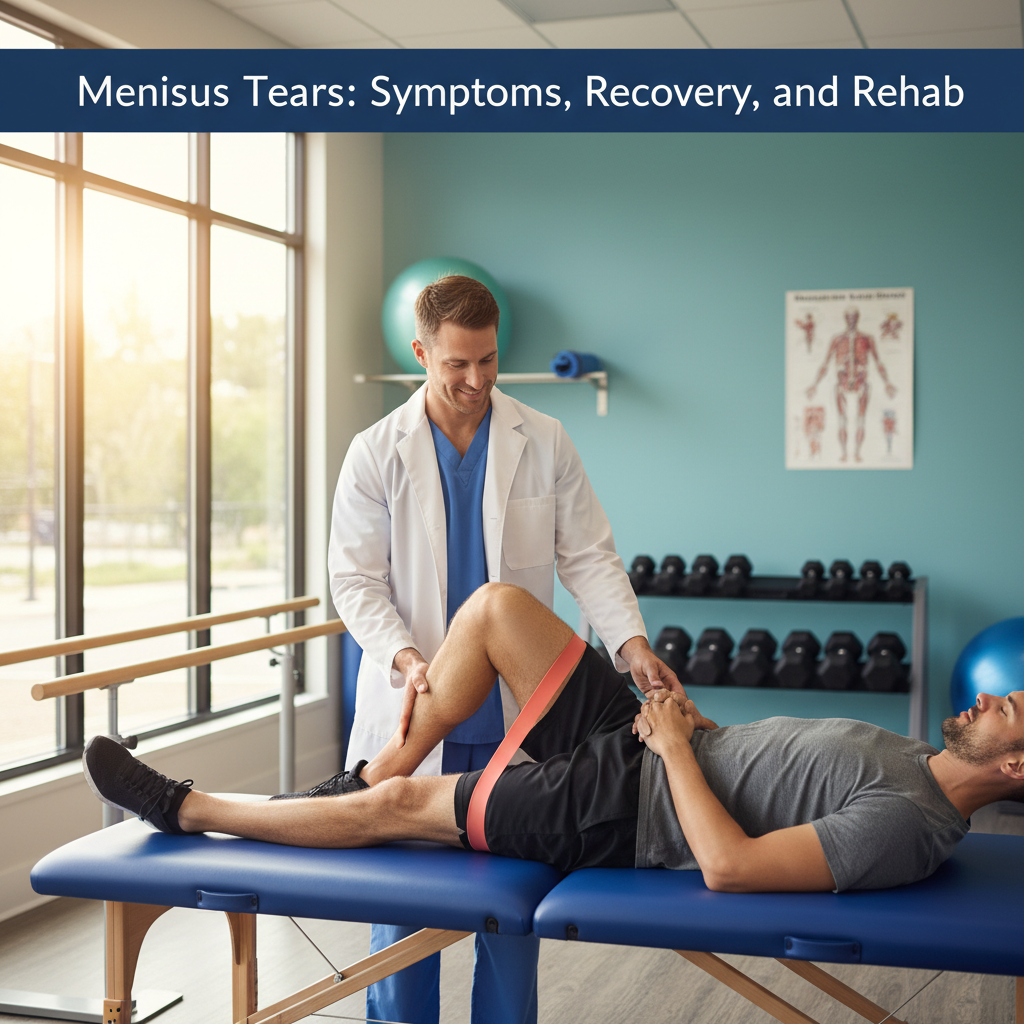
Physical therapy plays a pivotal role in the conservative management and post-surgical rehabilitation of meniscus tears. The goal is to reduce pain, restore range of motion, improve strength, and facilitate a safe return to daily activities and sport. At Physical Therapy NOW™, our approach is tailored to each individual, considering the type of tear, your activity level, and overall health.
Phases of Care:
1. Acute Phase (Pain and Swelling Management): Immediately following injury or surgery, the focus is on reducing pain and swelling. Interventions may include RICE (Rest, Ice, Compression, Elevation), gentle range-of-motion exercises to prevent stiffness, and modalities like electrical stimulation or therapeutic ultrasound to manage discomfort.
2. Recovery Phase (Restoring Mobility and Strength): Once pain and swelling are controlled, the emphasis shifts to restoring full knee mobility and building strength. This phase includes progressive stretching exercises to improve flexibility, and strengthening exercises targeting the quadriceps, hamstrings, and gluteal muscles. Examples include gentle knee bends, hamstring curls, straight leg raises, and hip abduction/adduction exercises. We gradually introduce exercises that challenge the knee more, such as stationary cycling or swimming.
3. Functional and Return-to-Activity Phase: This final phase focuses on sport-specific or activity-specific training. Exercises become more dynamic and challenging, mimicking movements required for your daily life or athletic pursuits. This might include balance training, agility drills, plyometrics, and simulated sport activities. The goal is to ensure the knee is strong, stable, and ready for a safe return to your desired level of function, minimizing the risk of re-injury.
Realistic Recovery Timelines
The recovery timeline for a meniscus tear varies significantly based on several factors: the type and location of the tear (some tears, like those in the
Ready to feel better? Physical Therapy NOW™ has 40+ Florida locations, most with same-week appointments and no referral required in most cases.
Schedule now at https://physicaltherapynow.com/schedule · Call 800.481.4582
Ready to start feeling better?
Physical Therapy NOW™ has 40+ Florida locations with same-week appointments. Most insurance, auto accident (PIP), workers' compensation and Medicare accepted.