Understanding Meniscus Tears: What You Need to Know
TheA meniscus tear is a common knee injury that can cause pain, swelling, and stiffness. For individuals experiencing knee discomfort or healthcare professionals seeking to understand the typical recovery journey, grasping the nature of this injury is key. This article from Physical Therapy NOW™ will delve into what a meniscus tear is, its common causes, how it's diagnosed, and the pivotal role physical therapy plays in recovery. What is the Meniscus?
The meniscus consists of two C-shaped pieces of cartilage that act as shock absorbers between your shinbone (tibia) and thighbone (femur). Each knee has two menisci: the medial meniscus (on the inner side of the knee) and the lateral meniscus (on the outer side). They help stabilize the knee joint, distribute weight, and facilitate smooth movement. A tear in one of these structures can significantly impair knee function and quality of life. Common Causes of Meniscus Tears
Meniscus tears can occur in people of all ages and activity levels, often resulting from two primary mechanisms: • Traumatic Injury: This is common in athletes and younger individuals. It typically happens with sudden twisting or rotating movements of the knee while the foot is planted, often during sports activities like football, basketball, or soccer. A direct blow to the knee can also cause a tear. • Degenerative Changes: As we age, the meniscus can weaken and become less resilient, making it more susceptible to tearing. Even a seemingly minor activity, such as getting up from a squatting position or walking, can lead to a tear in an older, degenerated meniscus. This type of tear is often associated with osteoarthritis. Recognizing the Signs: Symptoms and Red Flags
The symptoms of a meniscus tear can vary depending on the size and location of the tear, as well as the individual's activity level. Common symptoms include: • Pain: Often localized to the knee joint line, especially when twisting or squatting. • Swelling: May develop gradually over several hours after the injury. • Stiffness: Difficulty fully straightening or bending the knee. • Catching or Locking: A sensation that the knee is getting stuck or giving way. • Popping Sensation: Sometimes heard or felt at the time of injury. • Tenderness: When pressing on the joint line.
Red Flags that Warrant Medical Evaluation:
Immediate medical attention should be sought if you experience: • Severe pain that prevents weight-bearing. • Rapid or significant swelling in the knee. • Inability to move the knee through its full range of motion. • Feeling that your knee is unstable or will collapse. • Persistent catching, locking, or giving way of the knee. Diagnosis: How Meniscus Tears Are Identified
Diagnosing a meniscus tear typically involves a multi-faceted approach:
1. Clinical Examination: A healthcare provider will perform a thorough physical exam, evaluating range of motion, stability, and tenderness. Specific tests, such as the McMurray's test, may be used to assess for meniscal involvement. 2. Medical History: The doctor will ask about the onset of symptoms, how the injury occurred, and your activity level. 3. Imaging: X-rays: While X-rays cannot visualize the meniscus, they are useful for ruling out other conditions, such as fractures or arthritis. Magnetic Resonance Imaging (MRI): An MRI is the most common and effective imaging test for confirming a meniscus tear and assessing its severity and location. It provides detailed images of soft tissues, including the menisci. Physical Therapy: Your Path to Recovery
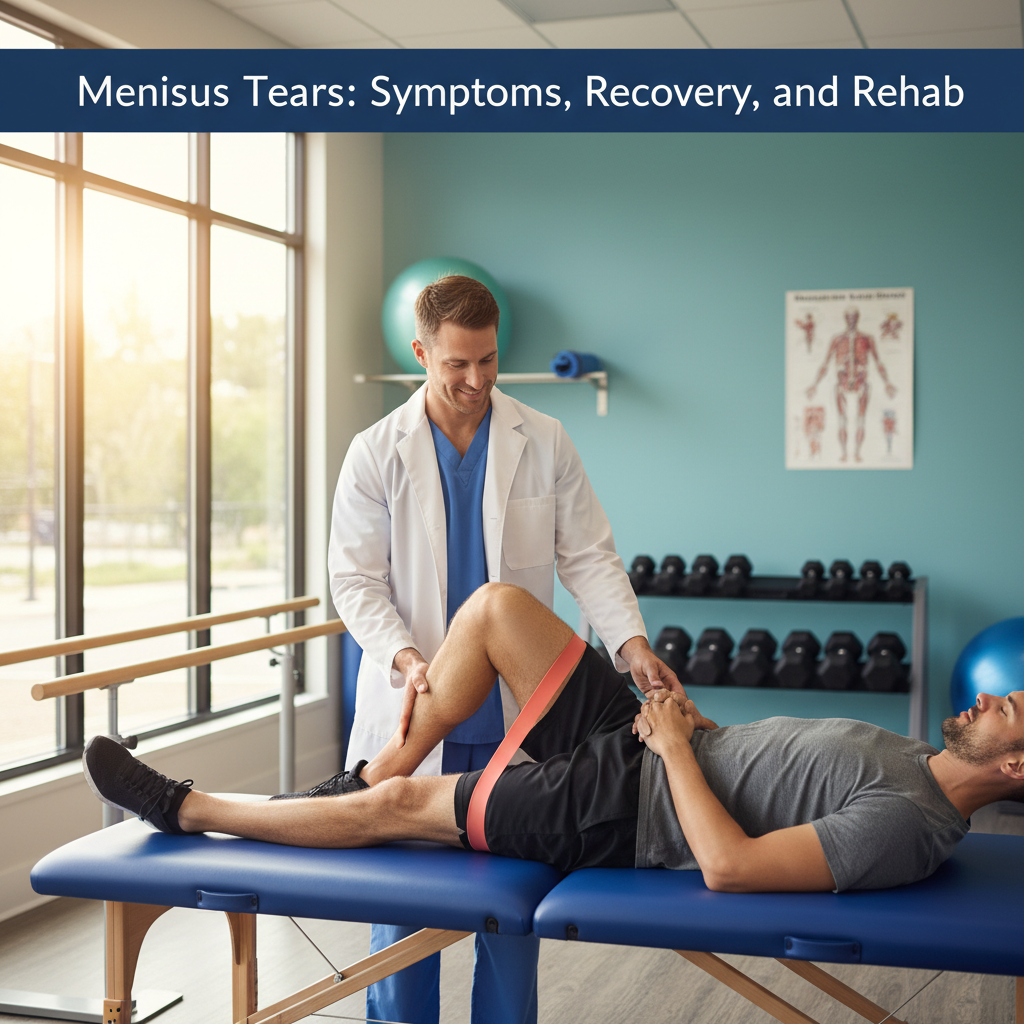
Whether a meniscus tear is managed conservatively or surgically, physical therapy is almost always a crucial component of recovery. The goals of physical therapy are to reduce pain and swelling, restore full knee function, and prevent re-injury. Phases of Care and Example Interventions
Physical therapy for a meniscus tear typically progresses through several phases:
Phase 1: Acute Phase (Initial Recovery) • Goal: Control pain and swelling, protect the healing tissue. • Interventions: RICE protocol: Rest, Ice, Compression, Elevation. Gentle range of motion exercises: To prevent stiffness without stressing the tear. Examples include heel slides and gentle knee extensions. Pain management modalities: Such as electrical stimulation or therapeutic ultrasound, if indicated. Patient education: Guidance on activity modification and safe movement patterns.
Phase 2: Subacute Phase (Restoring Strength and Mobility) • Goal: Improve knee strength, restore full range of motion, and enhance neuromuscular control. • Interventions: Progressive strengthening exercises: Focusing on the quadriceps, hamstrings, glutes, and calf muscles. Examples include wall squats, mini-squats, hamstring curls, straight leg raises, and glute bridges. Flexibility exercises: To regain normal knee and surrounding joint mobility. Balance and proprioception training: Standing on one leg, wobble board exercises. Gait training: To normalize walking patterns and reduce limping.
Phase 3: Advanced/Return to Activity Phase (Functional Training) • Goal: Prepare the knee for high-level activities, sports, or demanding daily tasks. • Interventions: Plyometric exercises: Jumping, hopping, and bounding, gradually increasing intensity. Agility drills: Lateral shuffles, cutting maneuvers, sport-specific movements. Advanced strengthening: Including resistance band exercises, lunges, and step-ups. Endurance training: Cycling, elliptical, swimming. Sport-specific rehabilitation: Tailored drills for athletes returning to competition. Injury prevention strategies: Continued focus on proper biomechanics and strength maintenance. Realistic Recovery Timeframes
The recovery timeline for a meniscus tear varies widely based on several factors, including the type and severity of the tear, whether surgery was performed, the individual's age and overall health, and adherence to the rehabilitation program. • Conservative Management (No Surgery): For small, stable tears, or degenerative tears, recovery with physical therapy alone can range from 6 to 12 weeks, potentially longer for complete symptom resolution and return to demanding activities. • Post-Surgical Recovery (Meniscectomy): If part of the meniscus is removed (meniscectomy), recovery often takes 4 to 8 weeks to return to light activities, with full return to sports potentially taking 2 to 4 months. • Post-Surgical Recovery (Meniscus Repair): A meniscus repair, which involves stitching the tear back together, requires a longer and more conservative recovery period to allow the tissue to heal. This can range from 4 to 6 months for a full return to unrestricted activity, with initial weight-bearing often restricted for several weeks.
Consistent adherence to your physical therapy program is crucial for optimizing your outcome and minimizing the risk of re-injury. When to Refer / When to Seek Care
For Patients: If you experience any of the symptoms described above, especially persistent pain, swelling, catching, or locking of the knee, it is important to seek medical evaluation. Early diagnosis and intervention can prevent further damage and improve recovery outcomes.
For Referring Physicians: Consider referring patients to physical therapy for a comprehensive evaluation and treatment plan under the following circumstances: • Conservative Management: For confirmed or suspected meniscus tears that do not require immediate surgical intervention. • Pre-Operative Preparation: To improve strength, flexibility, and educate the patient on post-operative expectations, potentially leading to better surgical outcomes. • Post-Operative Rehabilitation: Essential for all patients following meniscectomy or meniscus repair to restore function, reduce pain, and facilitate a safe return to activity. • Persistent Knee Pain: When the source of knee pain is unclear, a physical therapist can provide a differential diagnosis and appropriate management. Practical Self-Care Guidance
While professional guidance is paramount, certain self-care measures can aid in recovery and prevent further irritation: • Follow RICE: Especially in the acute phase. • Avoid aggravating activities: Listen to your body and avoid movements that cause sharp pain or discomfort, such as deep squats, twisting, or pivoting on the affected knee. • Maintain activity: Engage in pain-free, low-impact activities as advised by your physical therapist to promote circulation and prevent stiffness. • Proper footwear: Wear supportive shoes that provide good cushioning. • Weight management: Maintaining a healthy weight reduces stress on your knee joints. • Patience: Healing takes time. Stick to your rehabilitation plan diligently.
Dealing with a meniscus tear can be challenging, but with proper diagnosis and a dedicated physical therapy program, a full return to your daily activities and preferred lifestyle is often achievable. Your commitment to rehabilitation, guided by experts at Physical Therapy NOW™, is your best ally in recovery.
Ready to feel better? Physical Therapy NOW™ has 40+ Florida locations, most with same-week appointments and no referral required in most cases.
Schedule Now · Call 800.481.4582
Ready to start feeling better?
Physical Therapy NOW™ has 40+ Florida locations with same-week appointments. Most insurance, auto accident (PIP), workers' compensation and Medicare accepted.