Managing Chronic Back Pain With Physical Therapy
Back pain that lingers or repeatedly returns can affect sleep, work, exercise, and everyday routines. It may also leave you unsure which movements are safe. Physical therapy offers a practical, individualized approach: a licensed physical therapist can assess how you move, identify factors that may be contributing to your symptoms, and help you build a plan for improved strength and function.
At Physical Therapy NOW™ in Cutler Bay, Miami, FL, care begins with understanding your goals and how back pain affects your life. Treatment is tailored to your needs and may support pain relief, mobility, and confidence with daily activities. Results vary, and your therapist can help you decide what is appropriate for your situation.
Why Back Pain Can Persist
Chronic back pain can have more than one contributing factor. Muscle weakness, reduced mobility, repetitive tasks, prolonged sitting, stress, sleep difficulties, or a previous injury may influence how your back feels and functions. In many cases, there is not one simple cause. An evaluation helps your physical therapist understand your symptoms, health history, movement patterns, and personal goals rather than relying on a one-size-fits-all routine.
A therapist may ask when symptoms began, what makes them better or worse, and how they affect activities such as lifting, walking, or getting dressed. They may also assess posture, flexibility, strength, balance, and movement. This information helps guide a rehabilitation plan and gives you a way to track progress over time.
How Physical Therapy May Help
Physical therapy for chronic back pain often combines supervised movement with education and a home program. Depending on your evaluation, your plan may include exercises to improve strength, flexibility, coordination, or endurance. Your therapist can teach you how to perform each movement comfortably and adjust it as your abilities change.
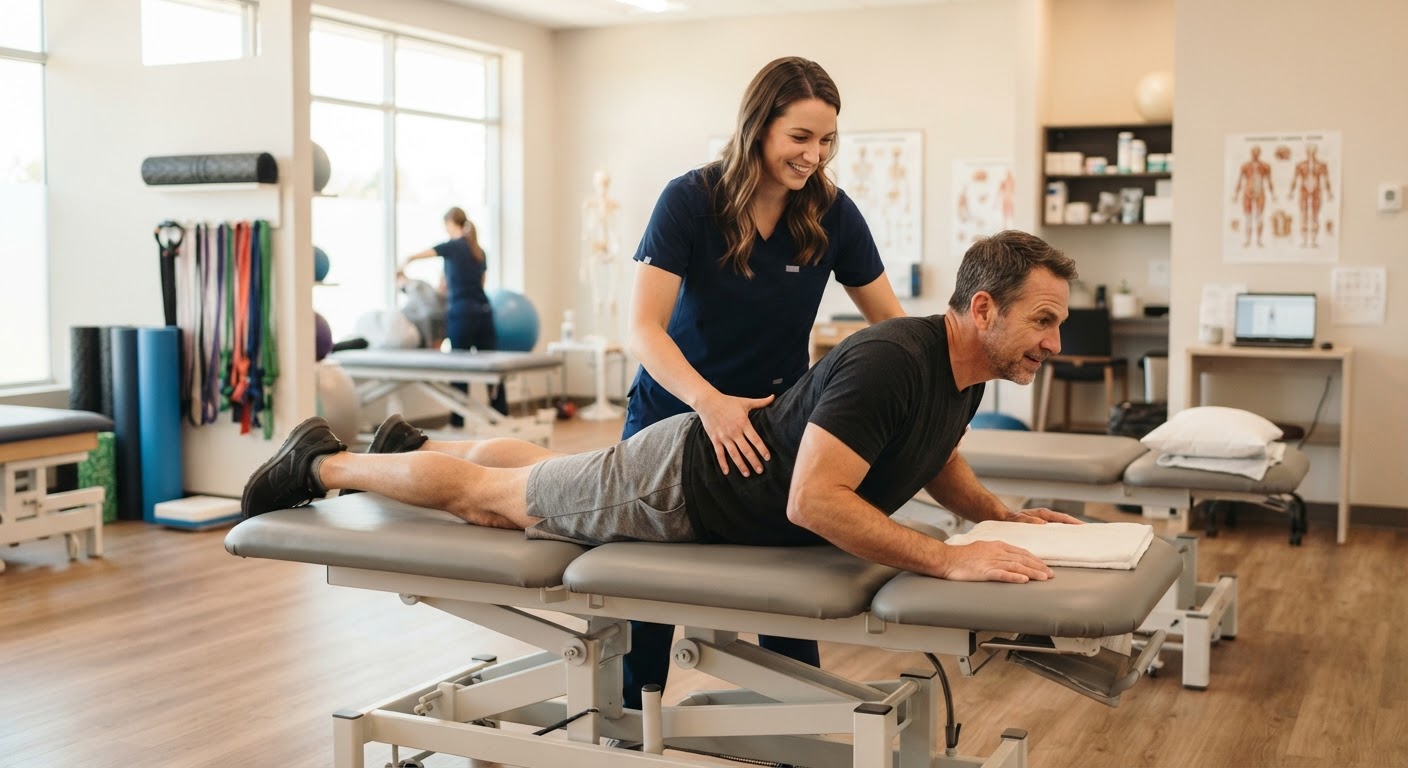
Treatment may also address how you approach everyday tasks. For example, a therapist can help you practice lifting, reaching, or changing positions in a way that feels manageable. Hands-on techniques may be considered when appropriate, but they are typically used as one part of a broader plan that supports active participation.
Rehabilitation is not about forcing your body through pain. Your therapist can help you distinguish expected effort from symptoms that warrant a change in activity. Consistent, gradual practice can help you build capacity, but the pace should reflect your condition and response to treatment.
Practical Habits To Try At Home
Small adjustments can make daily routines easier while you work on a longer-term plan. These tips are general and may not fit every condition, so ask your therapist how to adapt them to your needs.
Keep moving in a comfortable range. Short walks or gentle position changes may be easier to maintain than staying in one position for a long time. Begin at a level you can tolerate and increase activity gradually, based on how you feel.
Break up long periods of sitting. If your day involves desk work or driving, try changing positions regularly. Set a reminder to stand, stretch gently, or take a brief walk when practical. There is no single perfect posture; variety and comfort can matter more than holding one rigid position.
Use a comfortable lifting strategy. Bring an item close to your body, move deliberately, and avoid twisting while carrying a heavy load. When possible, divide a load, use a cart, or ask for help. Your physical therapist can coach you through movements that match your work and home activities.
Follow your exercise plan as directed. A few well-chosen exercises done consistently may be more useful than trying many unfamiliar movements. Keep track of which activities feel helpful and which increase symptoms, and share that information with your therapist. Do not push through sharp, worsening, or unusual pain.
Support recovery with everyday routines. Regular sleep, manageable activity, and time for relaxation may complement your rehabilitation plan. These habits are not a substitute for care, but they can help you pay attention to how your body responds throughout the day.
When To Seek Professional Guidance
Consider an evaluation if back pain is limiting your daily activities, repeatedly returning, or not improving with the strategies you have tried. A physical therapist can assess your movement and discuss whether physical therapy is appropriate or whether you should consult another healthcare professional. If you have a new or rapidly worsening problem, contact a medical provider for guidance.
Seek urgent medical care for back pain accompanied by concerning symptoms such as new loss of bowel or bladder control, progressive leg weakness, numbness around the groin or saddle area, fever, or pain following a significant injury. This list is not exhaustive. If symptoms feel severe or alarming, get prompt medical attention.
A Personalized Path Toward Better Movement
Living with chronic back pain can be frustrating, but you do not have to navigate every activity by guesswork. A personalized physical therapy program can help you understand your movement, practice strategies for daily life, and work toward meaningful functional goals. Progress may take time, and your plan can be adjusted as your needs change.
Physical Therapy NOW™ is ready to help you explore your options. Visit or call the Cutler Bay location in Miami, FL to ask about an evaluation and take a practical next step toward improved movement and pain relief.
Ready to start feeling better?
Physical Therapy NOW™ has 40+ Florida locations with same-week appointments. Most insurance, auto accident (PIP), workers' compensation and Medicare accepted.