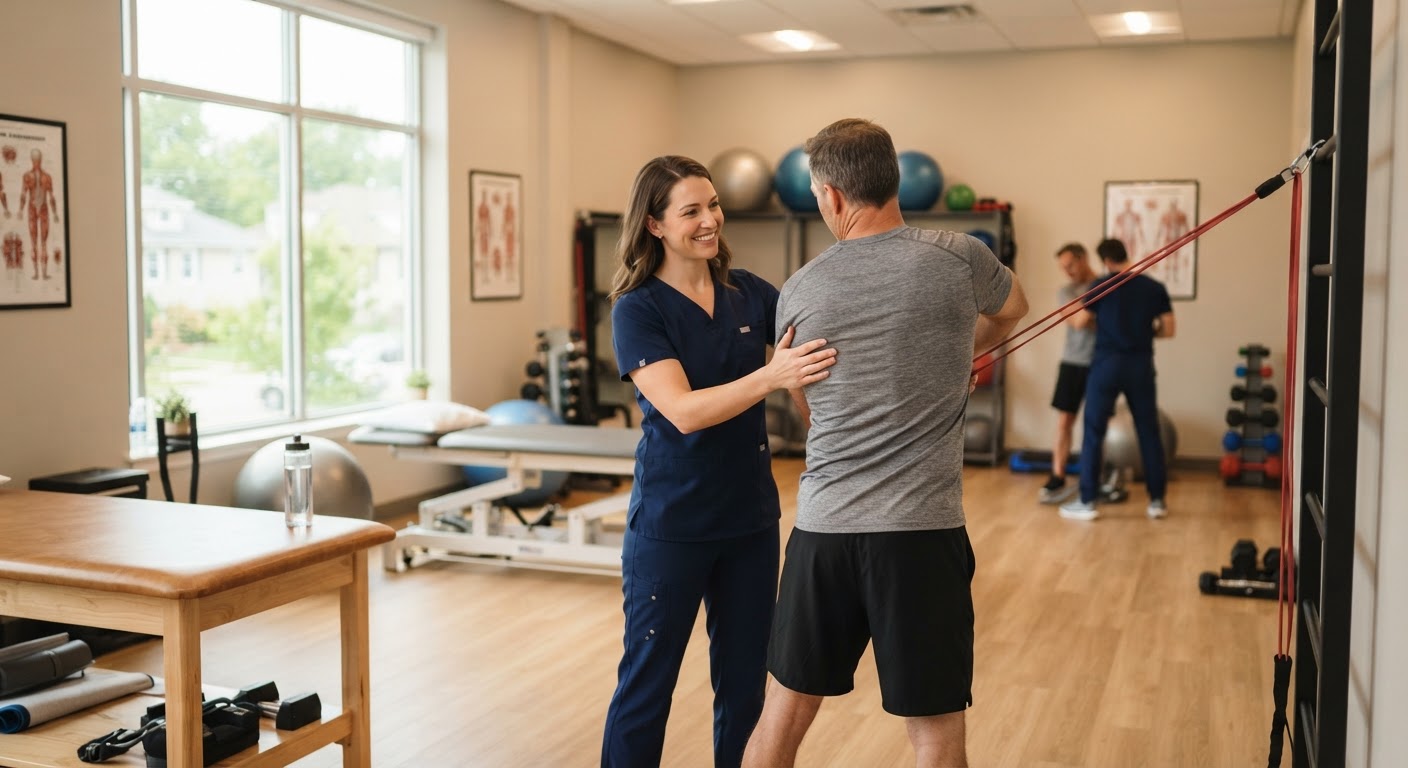
Understanding Chronic Back Pain
Chronic back pain can make everyday activities feel difficult, from getting dressed and driving to working, sleeping, or enjoying time with family. Pain that continues for weeks or repeatedly returns may affect your movement, strength, and confidence. While it can be tempting to avoid activity altogether, prolonged rest may contribute to stiffness and reduced conditioning for some people.
Physical therapy offers a guided way to understand what may be affecting your movement and build practical skills for managing symptoms. At Physical Therapy NOW™, the team can work with you to develop a rehabilitation plan based on your goals, abilities, and clinical needs. Treatment is individualized, and progress can take time, but small, consistent steps may help you move more comfortably and participate in daily life.
How Physical Therapy Can Help
A physical therapist typically begins by learning about your symptoms, health history, daily routines, and goals. An evaluation may include observing how you move and assessing flexibility, strength, balance, and functional activities. This information helps guide a plan that is appropriate for you rather than relying on a one-size-fits-all approach.
Your program may include therapeutic exercise to improve strength, mobility, and endurance. A therapist may also use hands-on techniques or other interventions when appropriate, while helping you understand how to manage your symptoms between visits. The focus is not only on short-term pain relief. Physical therapy can also help you develop strategies for moving with greater confidence and reducing the impact of recurring discomfort.
Rehabilitation may involve practicing everyday movements, such as bending, lifting, reaching, or getting up from a chair. Your therapist can show you ways to adjust these activities and gradually build your capacity. Exercises should be selected and progressed according to your response, so let your therapist know if an activity increases your symptoms or feels difficult to perform safely.
Practical Steps You Can Try
Stay gently active. If your healthcare provider has not advised you to restrict activity, try to keep up with comfortable movement rather than spending long periods in bed. A short walk or a few minutes of easy movement may be a manageable starting point. Increase activity gradually, and take breaks as needed.
Change positions regularly. Staying in one position for a long time may leave you feeling stiff. When possible, stand, stretch gently, or walk briefly during the day. If you work at a desk, adjust your setup so your feet are supported and your screen is at a comfortable height. There is no single perfect posture; changing positions can be more useful than trying to hold one rigid position all day.
Use pacing for household tasks. Break larger jobs into smaller parts, alternate demanding tasks with lighter ones, and avoid rushing through activities when you are tired. When lifting, keep the item close to your body and move in a way that feels controlled. Ask for help with heavy or awkward objects.
Follow your exercise plan consistently. If a therapist gives you home exercises, ask how often to do them, how they should feel, and what to do if symptoms change. Choose a routine you can realistically maintain. Consistency and gradual progression are generally more practical than trying to do too much at once.
Notice your patterns. A simple record of activities, sleep, stress, and symptoms may help you recognize what makes your back feel better or worse. Share these observations with your therapist so the plan can be adjusted to your experience.
Addressing Common Concerns
Many people worry that movement will damage their back. The right approach depends on the person and the cause of symptoms, but a physical therapist can help identify appropriate ways to stay active and progress safely. Some temporary soreness can occur as activity changes, yet sharp, worsening, or unusual symptoms deserve attention. Do not push through severe pain just to complete an exercise.
Back pain can also be influenced by more than one factor, including physical demands, sleep, stress, and general health. A supportive rehabilitation plan can account for your routine and priorities. Tell your provider about barriers that make exercises difficult, such as limited time, equipment, or uncertainty about technique. Together, you can discuss realistic options.
When To Seek Medical Attention
Physical therapy is not a substitute for urgent medical care. Seek prompt medical advice for new or worsening symptoms such as significant weakness, numbness in the groin or saddle area, loss of bladder or bowel control, fever with back pain, or pain following a serious injury. If you are unsure whether physical therapy is appropriate, consult a healthcare professional for guidance.
Care Close To Home
If you live in Hialeah, FL, and are looking for support with persistent back discomfort, ask how a physical therapy evaluation may fit your needs. Physical Therapy NOW™'s Miramar location serves people in the surrounding community with rehabilitation care focused on individual goals. Your first step can be a conversation about what you are experiencing and what you hope to do more comfortably.
Take The Next Step
You do not have to figure out chronic back pain management on your own. A physical therapist can help you explore movement strategies, build a personalized exercise routine, and track progress over time. Contact or visit the Physical Therapy NOW™ Miramar location to ask about getting started. Call the clinic to discuss an evaluation and take a practical step toward improved movement and pain relief.
Ready to start feeling better?
Physical Therapy NOW™ has 40+ Florida locations with same-week appointments. Most insurance, auto accident (PIP), workers' compensation and Medicare accepted.