
Understanding this injury
Cervical spinal stenosis occurs when the spaces within the spine in your neck begin to narrow. This narrowing can put extra pressure on your spinal cord and the nerves that travel from your neck down into your arms. Think of your spinal canal as a tunnel; when that tunnel gets smaller, the nerves inside don't have enough room to function properly. This can lead to persistent neck pain, stiffness, and even a heavy feeling in your limbs.
While many people develop this condition slowly as they age, it can significantly impact your daily life. You might notice that simple tasks, like buttoning a shirt or walking with balance, become more difficult. At Physical Therapy Now, we focus on helping you regain space in the neck and reducing the irritation on your nerves so you can get back to your regular routine without constant discomfort.
Common symptoms
- Neck pain and stiffness
- Numbness in the arms or hands
- Balance and coordination problems
- Weakness in the extremities
What causes it
- Age-related wear and tear resulting in bone spurs
- Degeneration of the spinal discs (bulging or herniated discs)
- Thickening of the ligaments that support the spine
- Congenitally narrow spinal canal from birth
- Past neck injuries like whiplash or fractures
- Chronic poor posture leading to structural changes
Who's most at risk
- Ages 50 and older due to natural spinal changes
- Individuals with a history of heavy lifting or manual labor
- Frequent smokers, which can speed up disc degeneration
- Those with existing osteoarthritis or rheumatoid arthritis
- Genetic predisposition to narrow spinal canals
- Sedentary lifestyles with forward-head posture
How we treat it
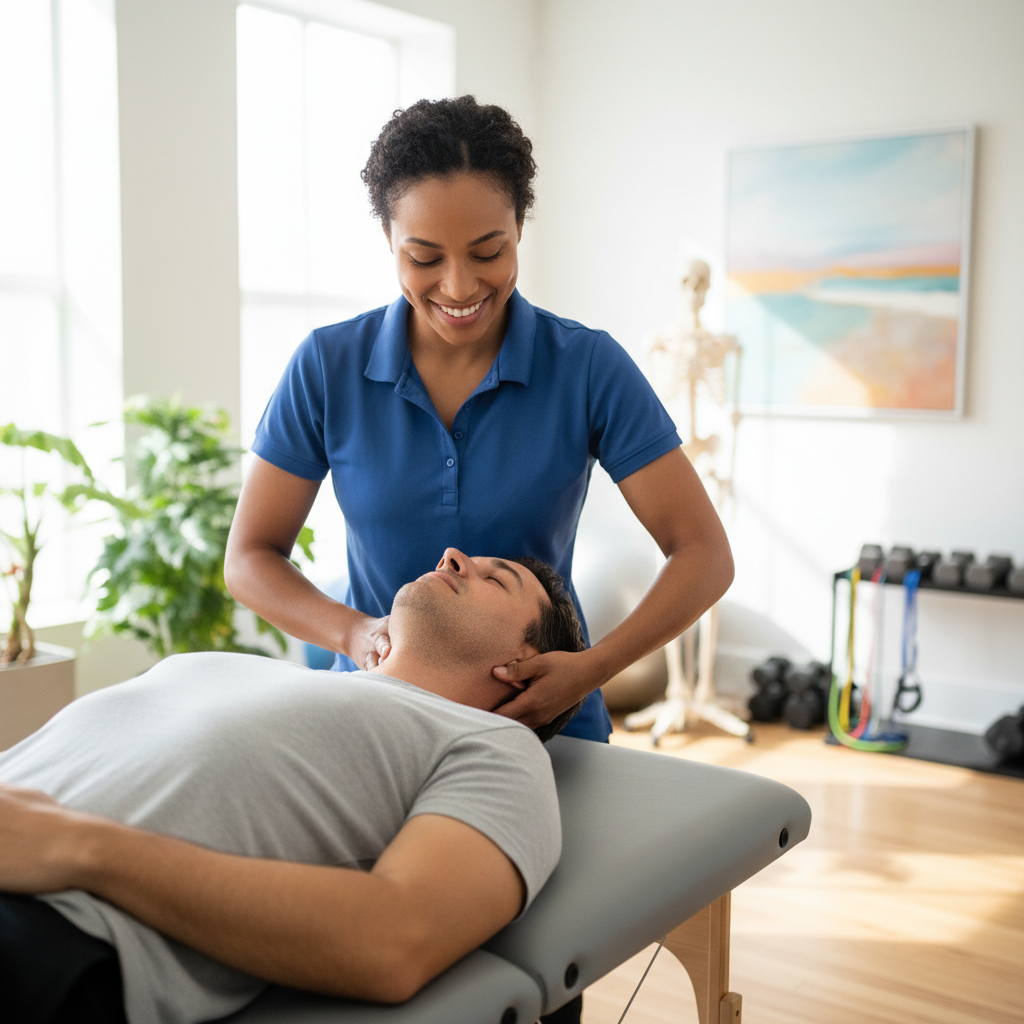
Physical therapy is a highly effective, conservative approach to managing cervical spinal stenosis. When you visit Physical Therapy Now, you will work 1-on-1 with a licensed physical therapist to create a custom plan. Initial treatment typically focuses on reducing inflammation and opening up space in the cervical spine. We use manual therapy techniques, such as gentle joint mobilizations and soft tissue massage, to improve your neck's range of motion and decrease muscle guarding. Modalities like heat or electrical stimulation may also be used to provide immediate pain relief.
As your symptoms stabilize, we progress to specific strengthening and postural exercises. We focus on the deep neck flexors and the muscles surrounding your shoulder blades (scapular stabilizers). Strengthening these areas takes the physical load off your spinal joints and places it on your muscles. We also teach you 'nerve gliding' exercises, which help the nerves move smoothly through the narrow canal without getting pinched. This progression ensures that you aren't just treating the pain, but also addressing the underlying mechanics that caused it. If your neck pain persists, isn't improving after 2-3 weeks, or is getting worse, call us today or schedule an appointment online to start your recovery.
Recovery timeline
Recovery from cervical spinal stenosis is usually a gradual process rather than a quick fix. Most patients begin to feel initial relief from nerve irritation within 4 to 6 weeks of consistent physical therapy. Building the necessary muscle strength and improving posture to maintain these results generally takes 3 to 4 months. While structural narrowing is permanent, PT helps most patients manage their symptoms long-term and avoid the need for invasive procedures.
What you can do at home today
- Use a supportive pillow that keeps your neck neutral while sleeping
- Take frequent 'posture breaks' by tucking your chin slightly every 30 minutes
- Apply moist heat to the neck for 15 minutes to relax tight muscles
- Avoid holding your phone at chest level; bring it up to eye level
- Avoid sleeping on your stomach, which twists the cervical spine
- Perform gentle shoulder rolls to reduce tension in the upper back
- Set up an ergonomic workstation with your monitor at eye height
- Engage in low-impact walking to maintain overall circulation
These tips support recovery but don't replace a professional evaluation. If you're unsure or symptoms worsen, please reach out.
When to call us right away
While physical therapy is the primary treatment, some symptoms require immediate attention. Seek medical help or call us immediately if you experience a sudden loss of bowel or bladder control, severe worsening of balance, significant weakness in your hands that makes you drop objects, or a 'shooting' electric sensation down both arms simultaneously.