
Understanding this injury
Post-Concussion Syndrome (PCS) happens when the symptoms of a concussion—like headaches, dizziness, and fatigue—last longer than the normal recovery period. While most people feel better after a week or two, some continue to struggle for weeks or even months. This occurs because the brain and the nervous system are still working to regain their natural balance after an impact. It is not just about the brain; your neck and visual system often play a huge role in why these symptoms stick around.
At Physical Therapy Now, we look at PCS as a treatable condition rather than something you just have to wait out. Many patients feel frustrated or stuck, but understanding that your brain, eyes, and neck need to learn how to work together again is the first step toward feeling like yourself. We focus on calming the nervous system and retraining your body to handle light, sound, and movement without triggering a flare-up.
Common symptoms
- Lingering headaches
- Balance problems and dizziness
- Difficulty with concentration and memory
- Sensitivity to light and noise
What causes it
- A direct blow to the head during sports or a fall
- Whiplash injuries that strain the neck and displace the head quickly
- Motor vehicle accidents causing a rapid back-and-forth motion
- Blast injuries or concussive force from nearby explosions
- Physical assaults or heavy impacts to the upper body
- Accidental striking of the head against hard objects
Who's most at risk
- Individuals with a history of previous concussions
- People who struggle with anxiety or depression prior to the injury
- Those who suffer from chronic migraines or tension headaches
- Older adults who have a higher risk of falls and slower healing times
- Athletes in high-contact sports like football, soccer, or hockey
- Patients who did not get enough physical or cognitive rest immediately after the injury
How we treat it
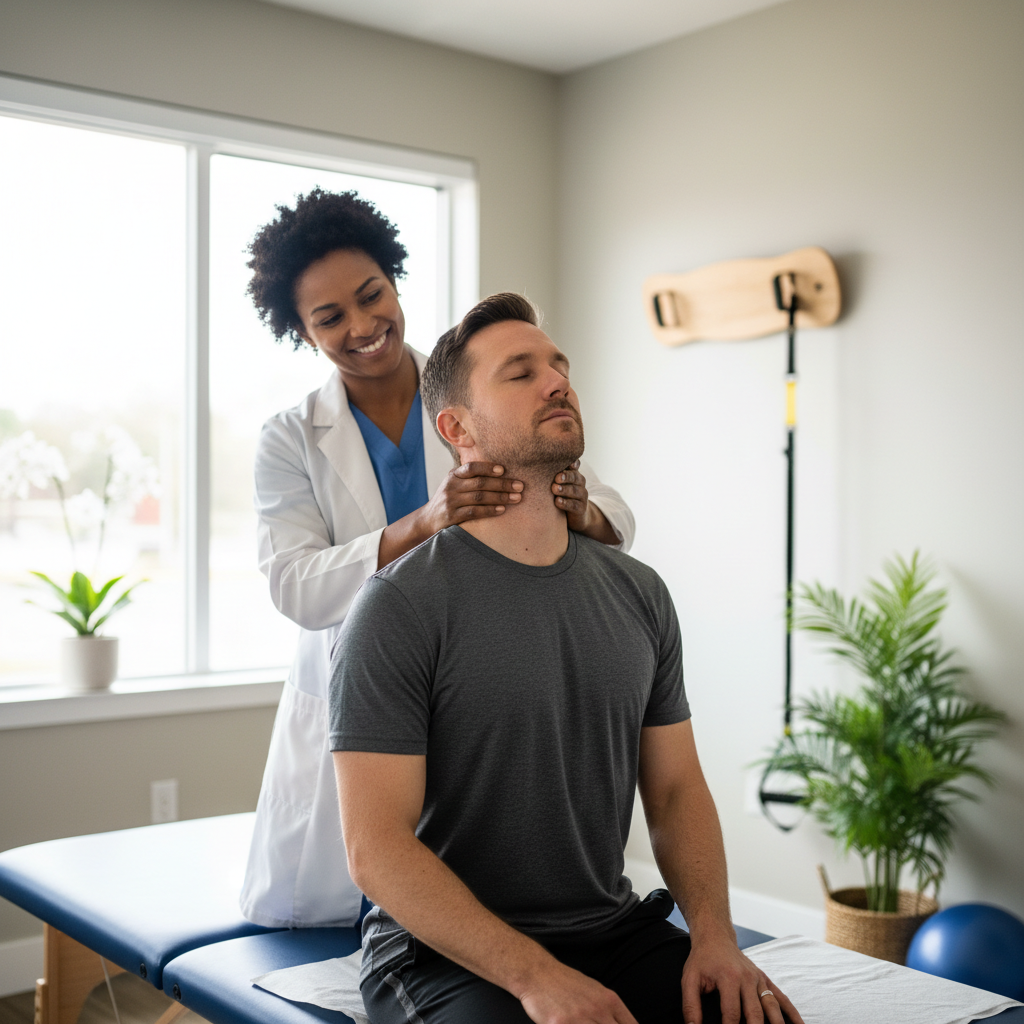
Physical therapy is a leading evidence-based treatment for Post-Concussion Syndrome. When you visit us, you will work 1-on-1 with a licensed physical therapist who will evaluate three main areas: your neck, your balance, and your vision. Many PCS symptoms actually stem from the upper neck (cervical spine), which can mimic concussion symptoms. We use gentle manual therapy and spinal mobilization to reduce neck pain and headaches. We also use vestibular therapy, which involves specific head and eye exercises to stop dizziness and help you feel steady on your feet again.
As you progress, we safely introduce 'sub-symptom' aerobic exercise. This means we help you get your heart rate up just enough to improve blood flow to the brain without making your symptoms worse. We also utilize 'habituation' exercises, which slowly desensitize you to busy environments like grocery stores or office settings. Your therapist will guide you through a personalized plan that moves from basic balance tasks to complex activities that mimic your daily routine or sport. This structured approach ensures you aren't doing too much too soon, which is the most common mistake in recovery.
Our goal is to build your resilience so you can return to work, school, and play with confidence. If your symptoms persist, are not improving in 2-3 weeks, or seem to be getting worse, please call Physical Therapy Now or schedule an appointment with our team today.
Recovery timeline
Recovery from Post-Concussion Syndrome is unique for everyone, but most patients see significant improvement within 4 to 8 weeks of starting a specialized physical therapy program. The first phase focuses on reducing pain and calming the system. The second phase involves increasing activity levels and tolerance for screens and light. The final phase is a full return to work or sports. While some cases take longer, consistent therapy often speeds up the process significantly.
What you can do at home today
- Stick to a consistent sleep schedule to help your brain rest and recover.
- Limit screen time on phones and computers if they trigger a headache.
- Take short, frequent 'brain breaks' throughout the day in a quiet room.
- Stay hydrated and eat small, regular meals to keep your energy stable.
- Perform gentle neck stretches only as directed by your physical therapist.
- Wear sunglasses outdoors if light sensitivity is a frequent trigger.
- Avoid high-intensity exercise until cleared by a professional.
- Keep a symptom diary to help identify specific triggers for your therapist.
These tips support recovery but don't replace a professional evaluation. If you're unsure or symptoms worsen, please reach out.
When to call us right away
While most symptoms are manageable, you should seek emergency care if you experience a worsening headache that won't go away, seizures, repeated vomiting, slurred speech, or profound weakness in your arms or legs. If your dizziness is making it unsafe to walk or if you feel a sudden decline in mental clarity, contact us or a medical provider immediately.