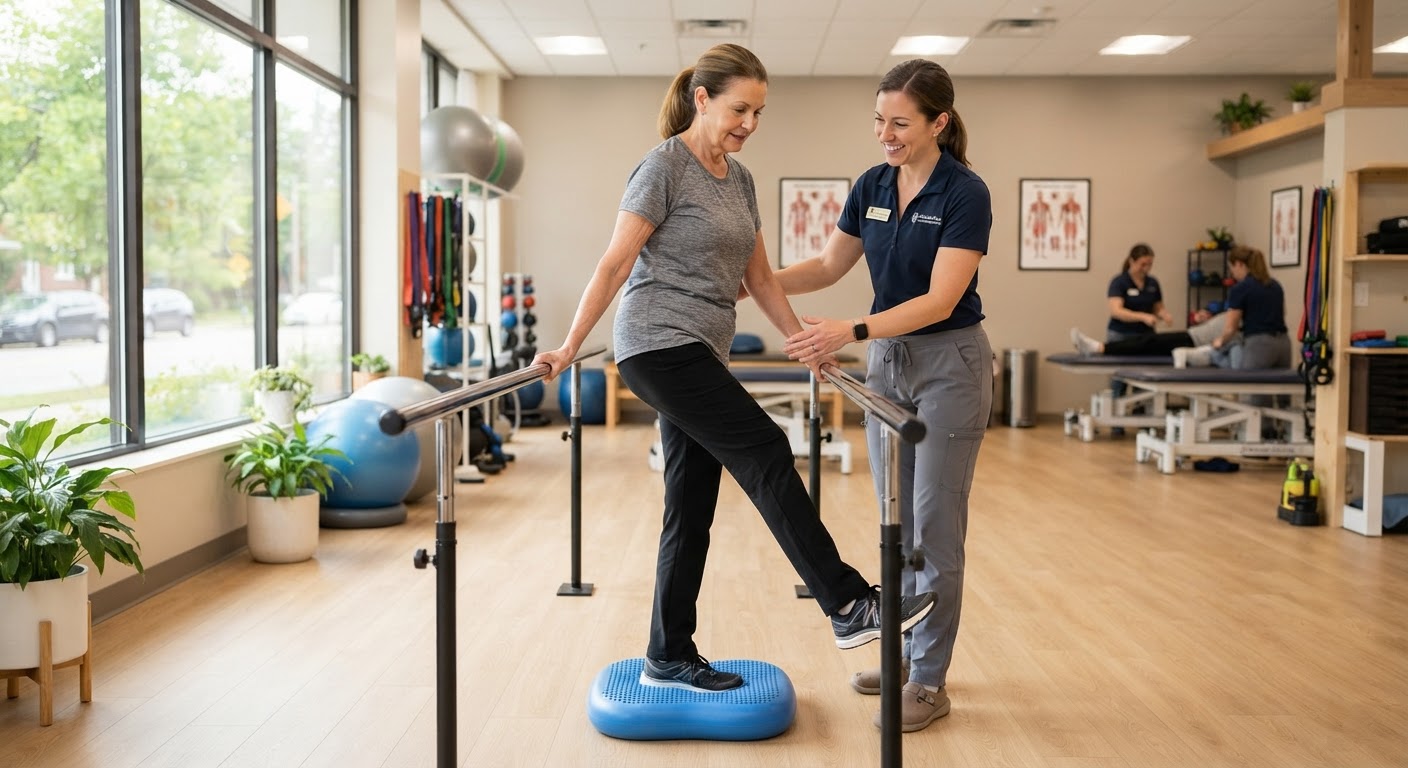
A slip or fall can happen in an instant, but soreness, stiffness, and reduced confidence may last much longer. Even a fall that seems minor can lead to pain or difficulty with everyday activities such as walking, climbing stairs, or getting out of a chair. Physical therapy can help you recover safely, improve mobility, and reduce the risk of another fall.
At Physical Therapy NOW™ in Palm Beach Gardens, care starts with understanding your injury, your health, and the activities you want to return to. A physical therapist can assess how you move and create a rehabilitation plan tailored to your needs.
Common Injuries After a Fall
Falls can affect different parts of the body. Common problems include sprains and strains, bruises, joint pain, back or neck discomfort, and fractures. A fall may also aggravate an existing condition or cause symptoms to appear gradually over the next day or two.
Pain is not the only sign of an injury. You may notice swelling, stiffness, weakness, tenderness, reduced balance, or difficulty putting weight on a leg. These changes can interfere with work, household tasks, exercise, and other routines. If symptoms persist or limit your movement, consider speaking with a healthcare professional about next steps.
When to Seek Urgent Medical Care
Some injuries need prompt medical attention before beginning exercise or rehabilitation. Call emergency services or seek urgent care for severe pain, visible deformity, heavy bleeding, loss of consciousness, confusion, repeated vomiting, or difficulty breathing. After a head injury, new or worsening headache, unusual drowsiness, or changes in vision or behavior also warrant immediate medical evaluation.
If you suspect a fracture or cannot safely bear weight, do not try to push through the pain. A medical provider can determine whether imaging or other treatment is needed. Follow any medical instructions you receive, and let your physical therapist know about your diagnosis and restrictions.
How Physical Therapy Supports Recovery
A physical therapist will typically begin by asking how the fall happened, what symptoms you have, and which activities are difficult. They may assess your range of motion, strength, balance, walking pattern, and ability to perform everyday movements. This evaluation helps guide treatment and identify factors that may have contributed to the fall.
Your plan may include gentle mobility exercises, progressive strengthening, balance training, walking practice, or guidance on returning to specific activities. Treatment is adjusted to your symptoms and abilities. As you improve, exercises can progress to help build endurance and confidence with more challenging tasks, such as stairs or uneven surfaces.
Physical therapy may also address movement habits that place extra strain on an injured area. Your therapist can teach you ways to move more comfortably and safely while you heal. The goal is not simply to reduce pain; it is to help you regain useful movement and participate in daily life with greater confidence.
Practical Steps You Can Take
After a fall, avoid rushing back into strenuous activity. Follow the advice of your healthcare provider, and pay attention to pain, swelling, and changes in function. If an activity sharply increases symptoms, stop and ask your provider or therapist how to modify it.
Keep a simple record of what hurts, when symptoms occur, and which tasks are difficult. This information can help your care team understand your progress. Wear supportive, well-fitting shoes, use prescribed mobility aids as instructed, and keep frequently used items within easy reach while you recover.
Make your home easier to navigate. Clear walkways of loose cords and clutter, secure or remove slipping rugs, improve lighting, and use handrails on stairs. In bathrooms, consider nonslip surfaces and appropriate grab bars. These changes can reduce common hazards, but they do not replace an assessment if you are experiencing balance problems or repeated falls.
Preventing Another Fall
A fall can make people hesitant to move, but avoiding activity altogether may contribute to weakness and reduced confidence. With guidance, gradual movement can help you rebuild strength and balance. A therapist can recommend exercises suited to your current ability and teach you how to progress safely.
It can also help to review factors that may affect steadiness, including footwear, vision, medication side effects, and the layout of your home. Discuss concerns with your healthcare provider rather than changing medications or starting a demanding exercise routine on your own. If you have fallen more than once, tell your provider and ask whether a fall-risk assessment is appropriate.
Start Your Recovery With a Personalized Plan
Recovery after a slip or fall is different for everyone. The right rehabilitation approach depends on the injury, your overall health, and the activities that matter to you. With professional guidance, you can work toward pain relief, improved mobility, and safer movement at a pace that respects your symptoms.
Physical Therapy NOW™ welcomes people seeking support after a slip or fall. Contact or visit the Palm Beach Gardens location to discuss your concerns and learn how physical therapy may fit into your recovery. Call today to take the next step toward moving with greater comfort and confidence.
Ready to start feeling better?
Physical Therapy NOW™ has 40+ Florida locations with same-week appointments. Most insurance, auto accident (PIP), workers' compensation and Medicare accepted.