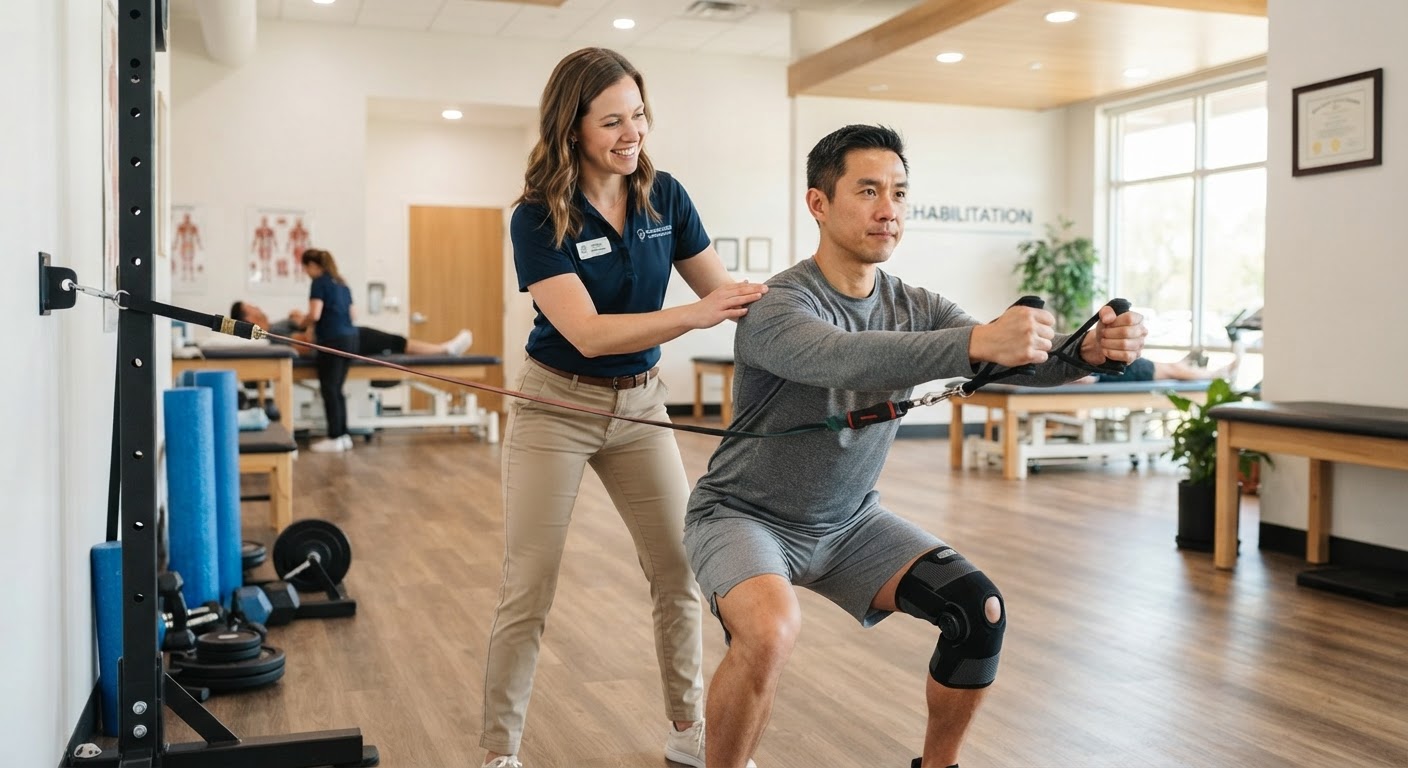
A workplace injury can disrupt your routine, affect your ability to earn a living, and make even familiar tasks feel challenging. Physical therapy can be an important part of workers’ compensation recovery by addressing pain, restoring movement, and helping you build the strength and confidence needed for daily activities and work. With an individualized rehabilitation plan, progress can be steady, purposeful, and aligned with your care team’s recommendations.
At Physical Therapy NOW™ in Pembroke Pines, FL, our therapists work with people recovering from a range of work-related injuries. Understanding what to expect from physical therapy can help you take an active role in your recovery.
How Physical Therapy Supports Recovery
Pain, stiffness, weakness, and reduced mobility can follow a workplace injury. A physical therapist evaluates how the injury affects movement and function, then develops a plan based on your needs, symptoms, and recovery goals. Treatment may include therapeutic exercises, mobility work, balance training, hands-on techniques, and education about managing symptoms.
The goal is not simply to reduce discomfort for a short time. Rehabilitation can also help improve the abilities you need for everyday tasks, such as walking, lifting, reaching, or standing for longer periods. Your therapist can adjust the plan as your abilities change and communicate relevant progress with your referring provider when appropriate.
Your Care Plan Is Individualized
No two injuries or jobs are exactly alike. Recovery needs may differ depending on the affected area, the demands of your position, your health history, and how symptoms respond to treatment. Your therapist may ask about tasks you perform at work, including repetitive motions, carrying, pushing, pulling, or maintaining a particular posture.
Be open about what feels difficult and what activities increase your symptoms. That information helps your therapist select exercises and strategies that fit your situation. Follow the guidance of your healthcare provider and care team, and ask before changing activity levels or adding exercises that were not part of your plan.
Practical Ways To Support Your Progress
Attend scheduled appointments and arrive ready to discuss changes in your symptoms. If pain, swelling, numbness, or difficulty with a movement has changed, let your therapist know. Clear communication helps the care team determine whether your program should be adjusted.
Complete your home exercises as instructed. Consistency can help reinforce what you practice during appointments, but more is not always better. Use the recommended repetitions and technique, and contact your therapist if an exercise causes unexpected or increasing symptoms.
Pace activities throughout the day. If a task tends to aggravate your symptoms, ask your therapist whether changing your position, taking brief movement breaks, or dividing the task into smaller steps may be appropriate. Avoid pushing through sharp or worsening pain without guidance.
Use safe movement strategies. Your therapist can coach you on body mechanics for activities relevant to your job and daily life. This might include practicing a lifting approach, improving balance, or finding a more comfortable way to reach or carry. Follow workplace safety procedures and any restrictions provided by your healthcare team.
Keep track of progress. Note which activities are becoming easier, what still feels challenging, and how long symptom flare-ups last. These observations can make treatment discussions more specific and help you recognize gradual improvements that may be hard to notice from one day to the next.
Preparing For A Return To Work
Returning to work may involve more than feeling less pain. You may need to rebuild endurance, coordination, strength, or confidence for the physical demands of your role. Your therapist can help you work toward functional goals that reflect those demands, while taking any medical instructions and work restrictions into account.
Talk with your care team about tasks that remain difficult and any concerns you have about returning to specific duties. Do not assume that you should resume every activity at once. Decisions about work status and restrictions should be made with the appropriate healthcare and workers’ compensation professionals involved in your case.
When To Contact Your Care Team
Recovery does not always follow a perfectly straight line. Symptoms can vary as activity changes, but new or worsening concerns deserve attention. Contact your therapist or healthcare provider if you experience a significant change, have questions about your exercise plan, or are unsure whether an activity is appropriate. Seek urgent medical care for severe or sudden symptoms according to your provider’s instructions.
Start Your Recovery With Support
Physical therapy can provide structure, guidance, and practical tools as you work through a workplace injury. A personalized rehabilitation plan may help you pursue pain relief, improve function, and prepare for the activities that matter to you. Physical Therapy NOW™ is here to help you understand your options and take the next step.
Contact or visit the Physical Therapy NOW™ Pembroke Pines location to discuss getting started. Call the clinic to ask about scheduling and what information to bring to your first appointment.
Ready to start feeling better?
Physical Therapy NOW™ has 40+ Florida locations with same-week appointments. Most insurance, auto accident (PIP), workers' compensation and Medicare accepted.