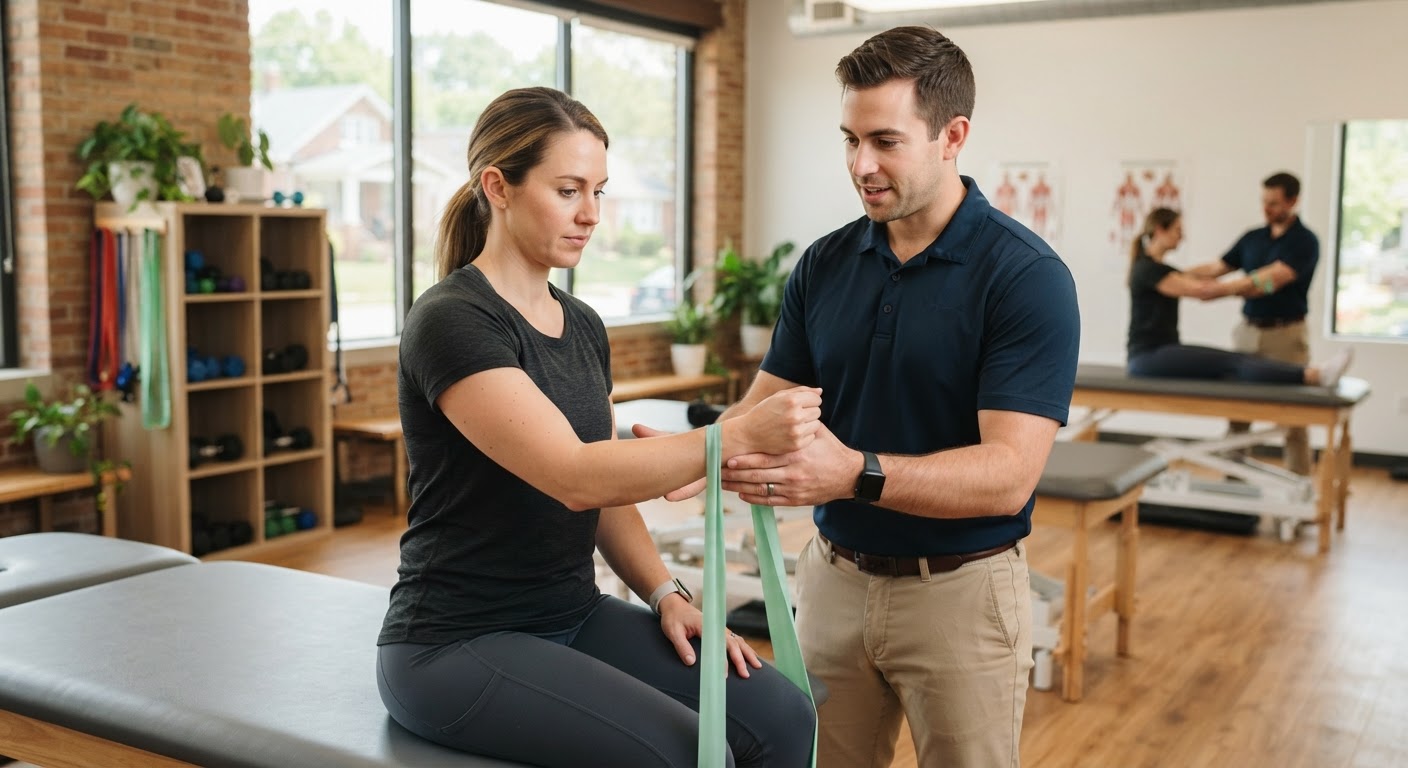
A work injury can affect more than your ability to do your job. Pain, limited movement, and uncertainty about recovery may disrupt everyday routines, too. Physical therapy can be an important part of workers’ compensation care by helping you rebuild strength and mobility while working toward a safe return to work.
At Physical Therapy NOW™, our team helps injured workers understand their rehabilitation options and follow a plan tailored to their needs, job demands, and provider recommendations. Here’s how physical therapy may support recovery and what you can do to make the process more manageable.
How Physical Therapy Supports Recovery
Workers’ compensation physical therapy focuses on improving function after an injury, such as a back strain, shoulder injury, joint sprain, or repetitive-use condition. Your therapist evaluates how the injury affects movement and daily activities, then develops a care plan based on your presentation and goals.
Treatment may include guided exercises, mobility work, balance or coordination activities, and education about managing symptoms. Your therapist may also help you practice movements that relate to your job, such as reaching, lifting, carrying, or standing for longer periods. The specific approach depends on your condition and should fit within guidance from your referring provider and workers’ compensation care team.
The goal is not simply to get through a session. It is to build the capacity to perform everyday tasks and work activities with better control and confidence. Progress varies from person to person, so your plan may be adjusted as your symptoms and abilities change.
Pain Relief With a Personalized Plan
Pain can make it tempting to avoid movement altogether. However, depending on the injury, appropriate movement and exercise may help restore mobility and support a gradual return to activity. A physical therapist can show you how to work within your current abilities, identify movements that may need adjustment, and progress activities safely.
Tell your therapist what increases or eases your symptoms, including how you feel later in the day or the next morning. This information can help the team adjust your exercise level or technique. Do not push through sharp, worsening, or unusual pain without guidance. Contact your therapist or healthcare provider if symptoms change significantly or you have concerns.
Physical therapy may also include practical strategies for managing discomfort during daily tasks. These can include pacing activities, taking planned movement breaks, using comfortable positions, or modifying a task temporarily. Your therapist can help you decide which strategies are appropriate for your injury and job.
Preparing For a Safe Return to Work
Returning to work is often a key recovery goal, but readiness can involve more than having less pain. Your ability to meet the physical demands of your role matters as well. Rehabilitation can help address strength, flexibility, endurance, balance, and movement patterns relevant to your work.
Be specific about your job duties during your evaluation. Describe the tasks you perform, how often you do them, and any equipment or work positions involved. If your job includes lifting, prolonged standing, repetitive movements, or overhead activity, share those details so your treatment plan can reflect real demands.
Your physical therapist may recommend ways to modify an activity while you recover. Follow any work restrictions provided by your authorized healthcare professional or claims team. Do not increase your duties or return to strenuous tasks on your own if you have not been cleared to do so. When appropriate, communication among you, your therapist, your provider, and your employer can help support a coordinated transition back to work.
Practical Tips Between Therapy Visits
Consistency can make it easier to follow your rehabilitation plan. Use these habits to stay engaged between appointments:
Follow your home exercise program as instructed. Ask your therapist to demonstrate an exercise again if you are unsure about the movement, number of repetitions, or frequency.
Keep a simple symptom and activity log. Note what you did, how you felt during the activity, and whether symptoms changed afterward. Bring useful observations to your next visit.
Use pacing. Break demanding tasks into manageable parts and take planned breaks rather than waiting until you are exhausted or symptoms become difficult to manage.
Ask questions about work tasks. If a movement at work causes concern, describe it to your therapist and ask whether there is a safer technique or temporary modification to discuss with your care team.
Attend appointments and communicate scheduling concerns as early as possible. If transportation, work hours, or claim requirements make it difficult to attend, contact the clinic or appropriate claims representative to discuss next steps.
What To Expect From Workers’ Compensation Care
Workers’ compensation processes can include specific requirements for referrals, authorization, and communication. Confirm your coverage and appointment details with the appropriate claims representative or healthcare provider. Bring any relevant referral information and be ready to explain how the injury happened, what tasks are difficult, and what you hope to regain.
Your therapist can explain the purpose of recommended exercises and how progress is being monitored. If you have questions about your treatment plan, work status, or restrictions, raise them with the appropriate member of your care team. Clear communication helps everyone understand your needs and next steps.
Physical Therapy In Altamonte Springs
If a workplace injury is limiting your movement or making your job difficult, rehabilitation may help you work toward improved function and practical pain relief. Physical Therapy NOW™ in Altamonte Springs, Florida, provides physical therapy support for workers’ compensation recovery, with care shaped around your injury, goals, and job demands.
Recovery is a process, and the right plan should reflect your individual situation. Visit or call the Altamonte Springs location to ask about workers’ compensation physical therapy and scheduling. The team at Physical Therapy NOW™ can help you take the next step toward a more confident recovery.
Ready to start feeling better?
Physical Therapy NOW™ has 40+ Florida locations with same-week appointments. Most insurance, auto accident (PIP), workers' compensation and Medicare accepted.