A slip and fall can happen in a moment, but soreness, stiffness, and reduced confidence may last much longer. Whether you slipped on a wet floor, tripped on uneven ground, or fell while moving around your home, the injury may affect everyday activities such as walking, climbing stairs, or getting dressed. Physical therapy can be an important part of rehabilitation after a fall by helping you move safely, restore function, and work toward lasting pain relief.
At Physical Therapy NOW™ in Lake Worth, FL, care is tailored to your symptoms, abilities, and goals. Knowing what to do after a fall—and when to seek professional help—can make the next steps feel more manageable.
Common Injuries After A Fall
The impact of a fall depends on how you land, the surface, and your overall health. Some people experience bruises, muscle strains, or joint sprains. Others may have pain or stiffness in the back, neck, shoulder, wrist, hip, or knee. A fall can also aggravate an existing condition or make it harder to move with confidence.
Symptoms do not always appear immediately. You may notice soreness, swelling, limited movement, or difficulty putting weight on a leg later that day or the next morning. Pay attention to changes in your comfort and mobility, and avoid pushing through sharp or worsening pain.
Seek urgent medical attention after a fall if you suspect a broken bone, cannot bear weight, have a head injury or loss of consciousness, experience severe pain, or notice new numbness, weakness, confusion, or trouble breathing. A medical professional can determine whether imaging or other care is needed. Physical therapy is not a substitute for emergency evaluation.
How Physical Therapy Supports Recovery
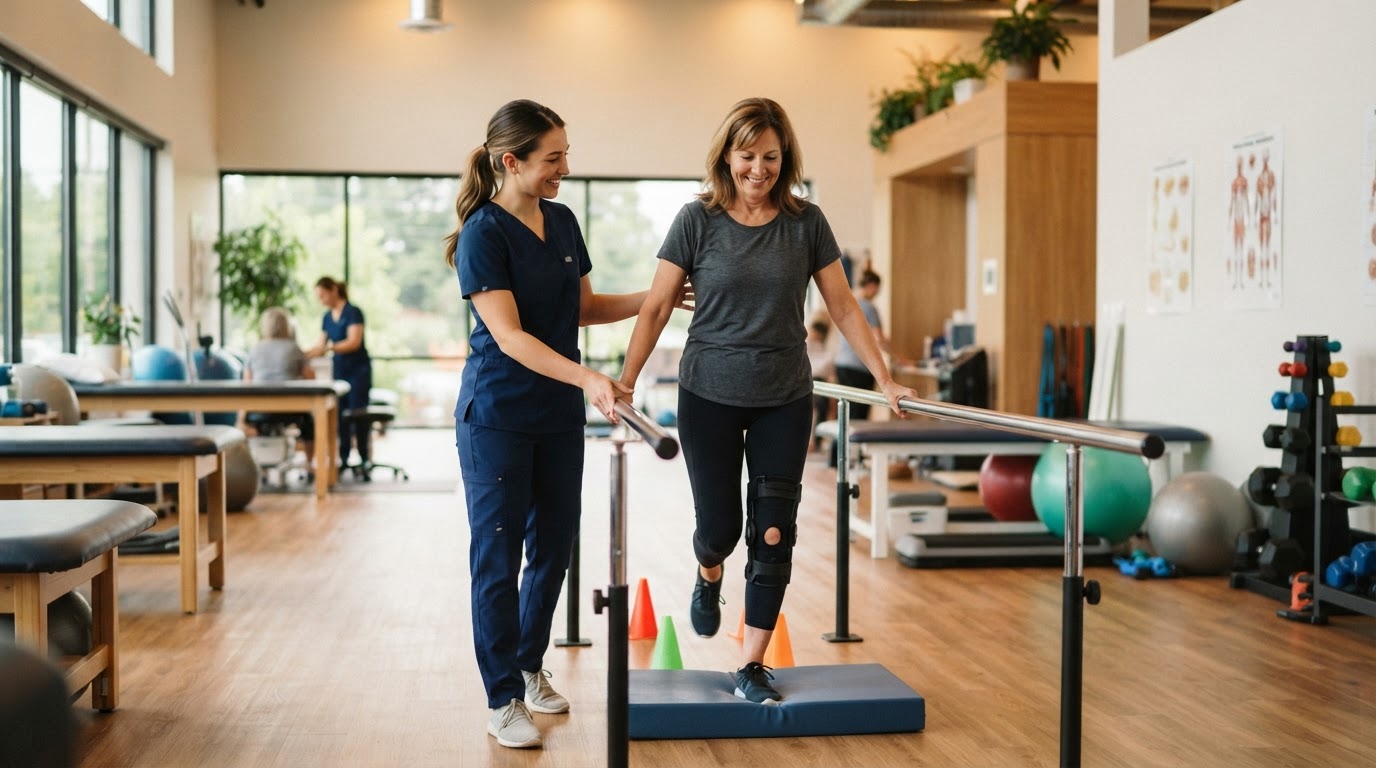
Once serious injuries have been ruled out and it is appropriate to begin, a physical therapist can assess how the fall has affected your movement. Your evaluation may include discussion of your symptoms and daily activities, along with checks of strength, flexibility, balance, walking, and joint motion. The therapist uses this information to build a plan around your needs rather than relying on a one-size-fits-all routine.
Treatment may include gentle mobility exercises, progressive strengthening, balance activities, walking practice, and education on moving comfortably during daily tasks. Your therapist may also recommend adjustments to activities while you heal. The right approach depends on the injury, your medical history, and how your symptoms respond.
Rehabilitation is usually gradual. Exercises that feel appropriate at one stage may need to be modified if pain or swelling increases. Your therapist can help you understand how to progress safely and when to pause or seek medical advice. The goal is not only to reduce discomfort but also to help you regain the movement and confidence needed for your regular routine.
Practical Steps To Take After A Fall
If you have fallen recently, use these tips to make informed, safer choices:
• Check for serious symptoms. If you hit your head, have severe pain, or cannot move or bear weight normally, seek prompt medical care.
• Give yourself time. Avoid rushing back into strenuous activity. Gentle movement may be appropriate for some people, but follow guidance from your healthcare provider.
• Track your symptoms. Note where you feel pain, what activities make it worse, and whether swelling or mobility changes over time. This information can help guide your appointment.
• Make your surroundings safer. Clear walkways, secure loose rugs, improve lighting, and use handrails where available. Wear shoes with stable soles when walking.
• Ask for help when needed. If getting around feels unsteady, arrange support with household tasks or transportation rather than risking another fall.
When To Consider Physical Therapy
Consider asking a healthcare provider about physical therapy if pain, stiffness, weakness, or balance concerns continue to interfere with daily life. You may also benefit from an assessment if you feel hesitant when walking or have changed the way you move to avoid discomfort. These changes can affect more than the injured area; for example, favoring one leg may place extra strain on other parts of the body.
A physical therapist can help identify movement challenges and guide exercises suited to your current abilities. If your symptoms change or do not improve as expected, communicate that with your therapist or medical provider. Your care plan can be adjusted, and additional medical evaluation may be appropriate.
Building Strength And Confidence
After a fall, it is common to feel cautious about moving. Avoiding activity entirely, however, may make it harder to return to the tasks you value. A supervised rehabilitation plan can provide a structured way to work on strength, flexibility, coordination, and balance at a pace that respects your symptoms.
Progress may involve simple movements at first, then activities that more closely match your daily routine. Depending on your goals, this could include practicing safe transfers, walking, reaching, or stair use. Consistent communication matters: tell your therapist what feels manageable, what causes discomfort, and what you hope to do again.
Your recovery is personal. Age, health history, injury severity, and daily demands can all influence the process, so avoid comparing your progress with someone else’s. Follow your clinician’s guidance and give yourself time to rebuild confidence.
Get Support In Lake Worth
A slip and fall can disrupt work, home responsibilities, and the activities you enjoy. With appropriate medical care and an individualized physical therapy plan, you can take practical steps toward improved mobility, pain relief, and safer movement. Physical Therapy NOW™ offers rehabilitation support at its Lake Worth location, with care focused on your symptoms and goals.
If you are recovering from a fall, contact or visit the Physical Therapy NOW™ Lake Worth location to discuss your next steps and schedule an evaluation. Call the clinic today to learn how physical therapy may help you move forward with greater comfort and confidence.
Ready to start feeling better?
Physical Therapy NOW™ has 40+ Florida locations with same-week appointments. Most insurance, auto accident (PIP), workers' compensation and Medicare accepted.