
Understanding Hip Labral Tears
The hip joint is a ball-and-socket joint, designed for significant mobility and stability. A crucial component of this stability is the labrum, a ring of cartilage that lines the rim of the hip socket (acetabulum). This fibrocartilaginous structure deepens the socket, enhancing joint congruence and stability, and also helps to seal the joint, contributing to nutrient distribution for the articular cartilage. A hip labral tear occurs when this ring of cartilage is damaged, either partially or completely.
Common Causes of Hip Labral Tears
Hip labral tears can arise from several mechanisms. One frequent cause is a traumatic injury, such as a fall, direct impact to the hip, or a sudden twisting motion. However, many tears develop gradually over time due to repetitive movements or structural issues within the hip. These include:
Femoroacetabular Impingement (FAI): This condition involves abnormal contact between the femoral head (ball) and the acetabulum (socket). There are three main types: pincer (extra bone on the acetabulum), cam (extra bone on the femoral head), or mixed (both). FAI can lead to repetitive impingement and subsequent labral damage.
Dysplasia: A shallow hip socket can lead to instability and increased stress on the labrum.
Degenerative Changes: Over time, wear and tear can contribute to labral degeneration and tearing, particularly in conjunction with hip osteoarthritis.
Repetitive Microtrauma: Athletes participating in sports requiring frequent hip rotation, pivoting, or extreme ranges of motion (e.g., hockey, soccer, golf, dance) are at higher risk due to chronic stress on the labrum.
Symptoms and Red Flags for Medical Evaluation
The symptoms of a hip labral tear can vary widely depending on the size and location of the tear. Common indicators include:
Pain: Often localized to the groin area, but can also radiate to the buttock, hip, or thigh. The pain may be sharp, aching, or a deep, dull ache. It often worsens with activity, prolonged sitting, or specific hip movements.
Catching, Clicking, or Locking: These sensations within the hip joint can occur when the torn labrum gets caught between the bones.
Stiffness: A feeling of reduced flexibility or movement in the hip joint.
Instability: A sense that the hip might give way or buckle.
Reduced Range of Motion: Difficulty moving the hip through its full normal range, especially into flexion, internal rotation, or abduction.
Red flags that warrant prompt medical evaluation include sudden, severe pain, inability to bear weight on the affected leg, significant deformity around the hip, or signs of infection such as fever, redness, or warmth around the joint. These symptoms could indicate a more serious injury requiring immediate attention.
How a Hip Labral Tear Is Typically Diagnosed
Diagnosing a hip labral tear typically involves a comprehensive approach. It begins with a thorough medical history and physical examination. During the physical exam, the healthcare provider will assess your range of motion, observe your gait, and perform specific hip maneuvers designed to provoke symptoms related to labral pathology, such as the FAI impingement test or the Faber test. These tests aim to compress or stretch the labrum, reproducing pain or mechanical symptoms.
Imaging studies are often crucial for confirming the diagnosis. X-rays are typically ordered first to rule out other bone-related issues, assess hip anatomy for conditions like FAI or dysplasia, and check for signs of arthritis. While standard X-rays do not directly visualize the labrum, they provide essential structural information. The definitive imaging technique for labral tears is Magnetic Resonance Arthrography (MRA). This involves injecting a contrast dye into the hip joint before an MRI scan, which helps to outline the labrum more clearly and highlight any tears or abnormalities. In some cases, a standard MRI or CT scan may also be used.
Physical Therapy Treatment for Hip Labral Tears
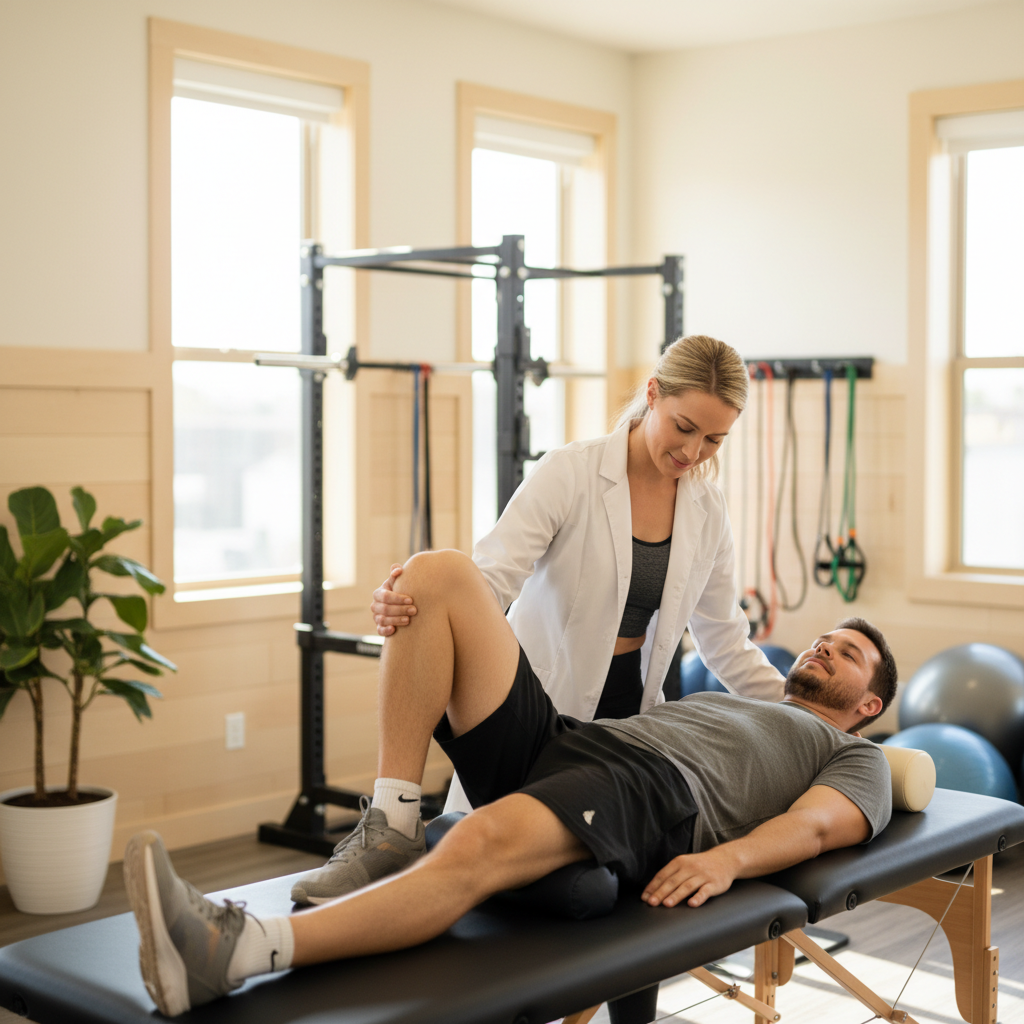
Physical therapy plays a pivotal role in the conservative management of hip labral tears, aiming to alleviate pain, restore function, and prevent further injury. The treatment plan at Physical Therapy NOW™ is highly individualized and progresses through various phases.
Acute Phase (Pain and Swelling Management):
Goal: Reduce pain and inflammation, protect the injured tissue.
Interventions: Rest from aggravating activities, ice application, gentle manual therapy techniques to reduce muscle guarding and improve joint mobility, and pain-free range of motion exercises. Education on activity modification is paramount to avoid positions that stress the labrum.
Subacute Phase (Restoration of Mobility and Initial Strengthening):
Goal: Improve hip range of motion, begin strengthening supporting musculature, and normalize movement patterns.
Interventions: More intensive manual therapy to address joint restrictions and soft tissue tightness. Progressive strengthening exercises for the gluteal muscles (gluteus medius, minimus, maximus), hip rotators, core stabilizers, and hip flexors. Proprioceptive exercises to improve balance and joint awareness. We guide patients in gradually increasing their activity levels while monitoring symptoms.
Advanced Strengthening and Return to Function Phase:
Goal: Achieve full strength, endurance, power, and agility, safely return to desired activities.
Interventions: Advanced sport-specific or activity-specific drills, plyometrics, agility training, and perturbation training. Emphasis on proper movement mechanics during functional tasks and sport activities. This phase focuses on building resilience and ensuring the hip can withstand the demands of daily life, work, and recreational pursuits.
Realistic Recovery Timeframes
The recovery timeframe for a hip labral tear without surgery can vary significantly, typically ranging from 6 to 12 weeks, or even longer for more severe cases or those with underlying structural issues. Consistent adherence to the physical therapy program, combined with appropriate activity modification, is key to a successful outcome. If conservative management is unsuccessful, surgery may be considered, and physical therapy then plays a crucial role in post-surgical rehabilitation.
Activity Modification and Self-Care Guidance
Managing a hip labral tear often involves modifying daily activities to reduce stress on the joint. Avoid activities that provoke pain, especially deep hip flexion, internal rotation, or twisting motions. This might mean adjusting your sitting posture, avoiding crossing your legs, or modifying exercises at the gym. Listen to your body and respect pain signals. Regular, low-impact exercise like swimming or cycling (if pain-free) can help maintain fitness without aggravating the hip. Applying ice to the hip after activity can help manage inflammation. Maintaining a healthy weight also reduces overall stress on the hip joint.
When to Refer / When to Seek Care
For Patients:
Seek medical attention if you experience persistent hip pain that interferes with daily activities, if you hear or feel clicking/locking in your hip, or if pain is accompanied by instability or difficulty bearing weight. If conservative treatments like rest and initial activity modification are not providing relief within a few weeks, it's time to consult a healthcare provider.
For Referring Physicians:
Consider referral for physical therapy for patients presenting with hip and groin pain suggestive of labral pathology. Early PT intervention can optimize non-operative outcomes, address underlying biomechanical dysfunctions, and provide guidance on activity modification. Refer to Physical Therapy NOW™ for comprehensive rehabilitation when imaging confirms a labral tear, or when there is strong clinical suspicion, particularly for patients who wish to pursue conservative management before considering surgical options, or following surgical intervention for post-operative recovery.
Living with a hip labral tear can be challenging, but with the right approach, including dedicated physical therapy and smart activity modification, many individuals find significant relief and return to their desired activities. Our team at Physical Therapy NOW™ is committed to guiding you through every step of your recovery journey, empowering you with the tools and knowledge to manage your condition effectively.
(A 'Schedule Now' call-to-action is appended automatically.)
Ready to feel better? Physical Therapy NOW™ has 40+ Florida locations, most with same-week appointments and no referral required in most cases.
Schedule now at https://physicaltherapynow.com/schedule · Call 800.481.4582
Ready to start feeling better?
Physical Therapy NOW™ has 40+ Florida locations with same-week appointments. Most insurance, auto accident (PIP), workers' compensation and Medicare accepted.